CM Rio thanks President Murmu as FNTA Bill 2026 gets assent

Synopsis
President Droupadi Murmu has granted assent to the FNTA Bill 2026, unanimously passed by the Nagaland Legislative Assembly on September 3. CM Neiphiu Rio hailed it as a key step for Eastern Nagaland's aspirations, with the Ministry of Home Affairs coordinating the process.
Key Takeaways
President Droupadi Murmu granted assent to the FNTA Bill 2026 , announced by CM Neiphiu Rio on October 25, 2026 .
The bill was passed unanimously by the Nagaland Legislative Assembly on September 3, 2026 .
The Ministry of Home Affairs coordinated the presidential assent process.
The legislation addresses long-standing demands from Eastern Nagaland tribal communities for differentiated administrative arrangements.
The Eastern Nagaland People's Organisation has pursued separate governance structures for the region since the early 2010s.
Gazette notification and subsequent MHA administrative orders are the next formal steps before the authority becomes operative.
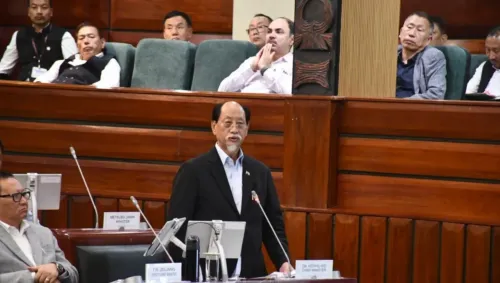
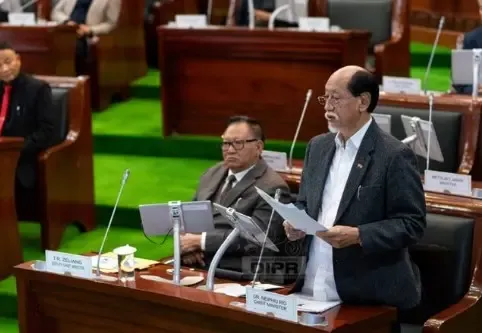
A long-running demand from one of India's most politically distinct regions moved a decisive step closer to reality on Sunday, October 25, 2026, when Nagaland Chief Minister Neiphiu Rio announced that President Droupadi Murmu had granted her assent to the Frontier Nagaland Territorial Authority (FNTA) Bill 2026 — a measure unanimously passed by the Nagaland Legislative Assembly on September 3, 2026.
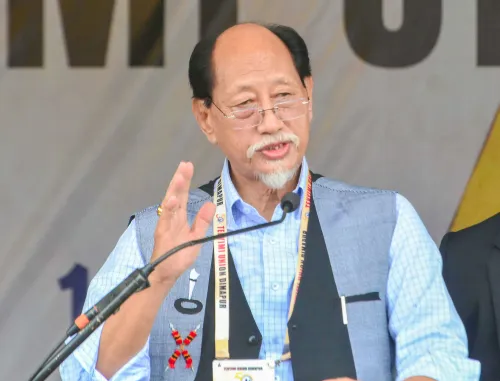
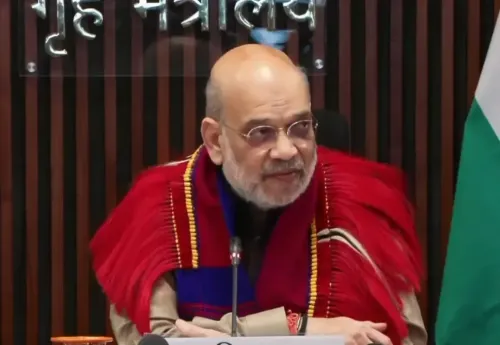
Posting on X, CM Rio expressed gratitude to President Murmu and acknowledged the Ministry of Home Affairs for 'coordinating the process', calling the development 'a key step towards realising the aspirations of the people of Eastern Nagaland.' The presidential assent, coming weeks after the NLA's unanimous vote, signals that both the state and the Centre are aligned on the legislation.What the FNTA Bill means for Eastern Nagaland
Eastern Nagaland — a cluster of districts bordering Myanmar — has long carried a distinct political identity within the state. The region's tribal communities, represented for years by the Eastern Nagaland People's Organisation (ENPO), have since the early 2010s pushed for separate administrative arrangements, arguing that the eastern districts have remained under-developed and under-represented within the broader Nagaland framework. The FNTA Bill is widely understood as a legislative response to those sustained demands, offering a differentiated governance structure while keeping the region firmly within the Indian constitutional fold. Nagaland's special constitutional status under Article 371A — inserted in 1963 — already grants the state protections on land, resources, and customary law. The FNTA framework is intended to layer a regional administrative arrangement onto that existing architecture, addressing eastern district grievances without altering the state's external boundaries.Unanimous NLA vote and the Centre's role
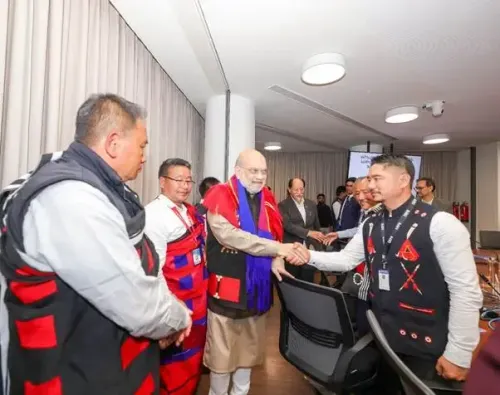
The bill's passage by the Nagaland Legislative Assembly was unanimous — a rare signal in a state where coalition politics and factional pressures frequently fracture votes. That political consensus gave the legislation strong momentum as it moved through the presidential assent process. CM Rio's specific acknowledgment of @HMOIndia — the Ministry of Home Affairs — underlines that Kohima and New Delhi moved in lockstep, with the Centre actively coordinating rather than passively reviewing the bill.What comes next: gazette and administrative orders
Presidential assent is not the final act. The bill's operative provisions will come into effect through a formal gazette notification, and the Ministry of Home Affairs is expected to follow with administrative orders laying out the structure, powers, and jurisdiction of the new territorial authority. Those details will determine the practical difference the FNTA makes for communities in eastern Nagaland — and will be closely watched by tribal groups, civil society, and state officials alike.For a region that has waited more than a decade for structured recognition of its distinct identity, presidential assent is not the finish line — it is the starting gun.
Point of View
Keeping the region within Nagaland's framework while offering substantive administrative recognition. The real test will come at implementation: how robustly the gazette notification defines the authority's powers will determine whether tribal communities view this as meaningful devolution or symbolic concession. In the broader context of India's north-east governance architecture, the FNTA model could serve as a template for other sub-regional identity movements seeking recognition short of statehood.
NationPress
25 Oct 2026
Frequently Asked Questions
What is the FNTA Bill 2026?
The FNTA Bill 2026 — Frontier Nagaland Territorial Authority Bill — is legislation passed by the Nagaland Legislative Assembly to create a differentiated administrative structure for the eastern districts of Nagaland, responding to longstanding demands from tribal communities in the region.
When did the Nagaland Legislative Assembly pass the FNTA Bill?
The Nagaland Legislative Assembly passed the FNTA Bill unanimously on September 3, 2026 .
Why is Eastern Nagaland demanding a separate authority?
Eastern Nagaland's tribal communities, represented by the Eastern Nagaland People's Organisation, have since the early 2010s argued that the eastern districts are under-developed and under-represented within the state's governance structure, and have sought a separate administrative arrangement to address those grievances.
What is the next step after presidential assent to the FNTA Bill?
After presidential assent, a formal gazette notification must be issued detailing the bill's operative provisions. The Ministry of Home Affairs is also expected to issue administrative orders defining the structure, powers, and jurisdiction of the new territorial authority.
What is Article 371A and how does it relate to Nagaland?
Article 371A, inserted into the Indian Constitution in 1963, grants Nagaland special protections regarding land, resources, and customary law. The FNTA framework is designed to build a regional administrative arrangement within this existing constitutional architecture.