Nagaland Assembly Postpones FNTA Bill Following MHA Request
Synopsis
The Nagaland Assembly's FNTA Bill, intended to enhance autonomy for six districts, faces a postponement. Chief Minister Neiphiu Rio cites a request from the Government of India and local organizations as the reason for this delay, emphasizing the need for legal clarity.
Key Takeaways
The FNTA Bill aims to empower six districts in Nagaland.
It has been postponed for further examination due to federal requests.
Local organizations played a significant role in this deferral.
The state government remains committed to the MoA provisions.
Amit Shah plans to inaugurate the FNTA by April 2026.
Kohima, March 27 (NationPress) The Frontier Nagaland Territorial Authority (FNTA) Bill, 2026, proposed in the Nagaland Assembly on March 26 to enhance economic and constitutional authority for six districts representing seven marginalized tribes, has been postponed to the forthcoming urgent session of the House.
Nagaland's Deputy Chief Minister Yanthungo Paton presented the Bill on Thursday (March 26), with an initial plan for it to be reviewed and passed on Friday (March 27).
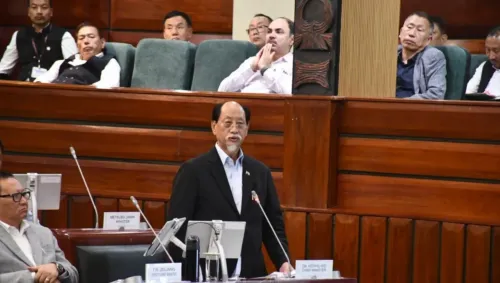
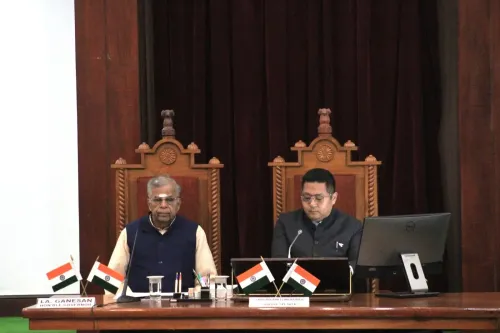
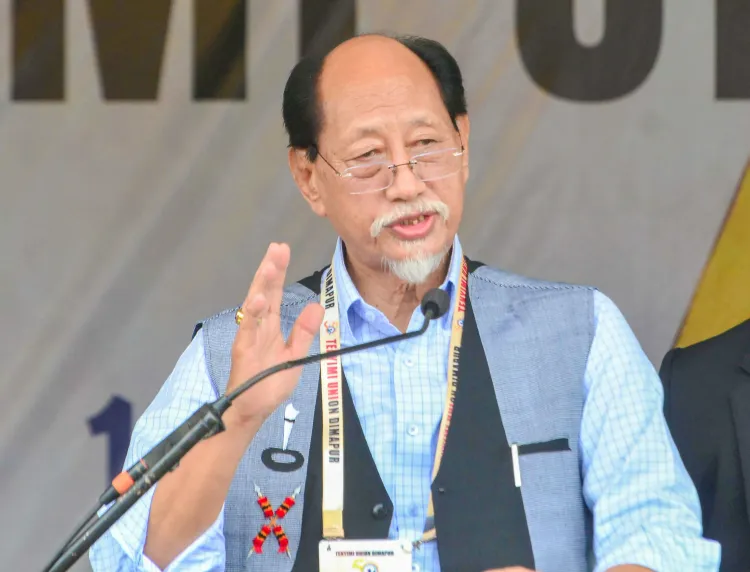
However, Chief Minister Neiphiu Rio informed the assembly that, responding to a request from the Government of India—an entity involved in the Memorandum of Agreement (MoA)—and in light of appeals from both the Eastern Nagaland Peoples’ Organisation (ENPO) and the Eastern Nagaland Legislators’ Union (ENLU), the government opted to defer the Bill.
He highlighted the necessity to ensure that the MoA's provisions are addressed in a legally sound and constitutionally valid manner before moving forward.
The Chief Minister noted that on Thursday evening, the Ministry of Home Affairs (MHA) communicated that the matter regarding legislative powers for the FNTA, previously raised by the state government, is still under review. The MHA is currently seeking the opinion of the Solicitor General of India on this issue.
Following this, the state government has been advised to grant the MHA additional time and to pause any further actions regarding the FNTA Bill until the MHA's insights and recommendations are received, Rio stated.
He further shared that the ENLU had sent a letter to the Minister for Parliamentary Affairs on Thursday evening. This letter referenced an earlier request from the ENPO dated March 26, urging the government to delay the FNTA Bill's passage until all concerns are thoroughly addressed and clarity regarding the MoA is achieved.
An official statement previously indicated that this agreement would facilitate the establishment of the FNTA for the six underdeveloped districts—Tuensang, Mon, Kiphire, Longleng, Noklak, and Shamator—along with the delegation of authority over 46 subjects to the new authority.
Since 2010, the ENPO has been advocating for either the establishment of a separate ‘Frontier Nagaland Territory’ or full statehood for the six eastern districts, which are home to seven backward tribes—Chang, Khiamniungan, Konyak, Phom, Tikhir, Sangtam, and Yimkhiung.
Rio reaffirmed that the state government is dedicated to fulfilling the provisions of the MoA signed on February 5, 2026, between the Government of India, the Nagaland government, and the ENPO for the establishment of the FNTA. He added that the FNTA Bill, 2026, was developed by the Law and Justice Department as part of this initiative.
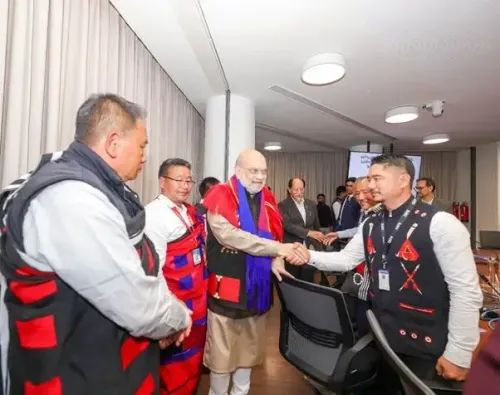
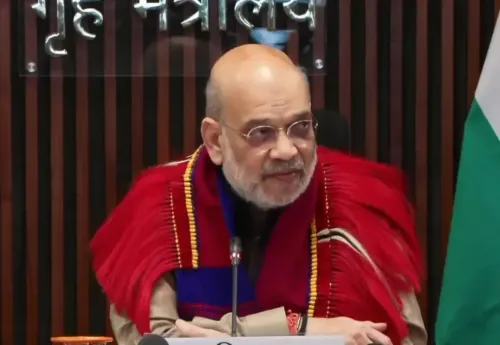
The Chief Minister also observed that Union Home Minister Amit Shah, who attended the signing of the agreement, has expressed his desire to inaugurate the FNTA by April 2026, with the state government making coordinated efforts to adhere to this timeline.
Point of View
The deferral of the FNTA Bill highlights the complex interplay between state governance and federal oversight. The emphasis on legal clarity reflects a cautious approach to constitutional amendments that could significantly impact the socio-economic landscape of the region.
NationPress
2 Oct 2026
Frequently Asked Questions
What is the FNTA Bill?
The FNTA Bill aims to grant greater economic and constitutional powers to six districts in Nagaland, which are home to seven backward tribes.
Why was the FNTA Bill deferred?
The Bill was deferred due to a request from the Government of India and concerns raised by local organizations, emphasizing the need for legal clarity.
What are the six districts involved in the FNTA Bill?
The six districts are Tuensang, Mon, Kiphire, Longleng, Noklak, and Shamator.
Who introduced the FNTA Bill?
The FNTA Bill was introduced by Nagaland's Deputy Chief Minister, Yanthungo Paton.
What is the main goal of the FNTA Bill?
The main goal is to enhance the autonomy and governance of the districts for the benefit of the local tribes.