White House Honors Teen Lifeguard Ryder Williams at Oval Office
Synopsis
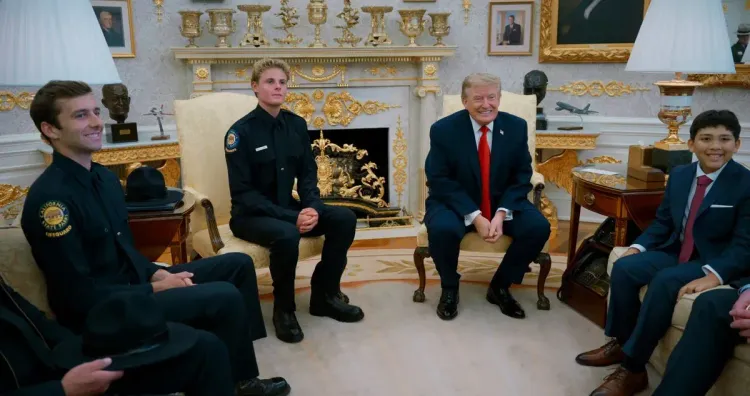
The White House welcomed hero lifeguard Ryder Williams to the Oval Office on August 18, 2026, honoring his life-saving act. Williams urged everyone to 'try to help more people' — a simple message amplified from the most powerful office in the world.
Key Takeaways
Ryder Williams , a teenage lifeguard, was welcomed to the Oval Office by the White House on August 18, 2026 .
The White House described the visit as 'a truly inspiring American story' and called Williams a hero.
Williams's own words — 'I hope that everybody can take away from this and try to help more people' — were quoted directly by the White House.
Presidential recognition of civilian heroes is a bipartisan American tradition used to project shared civic values.
No political statement accompanied the honor; the administration let Williams's act and words carry the moment.
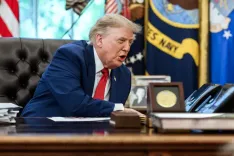
A teenage lifeguard who pulled someone from danger walked into the Oval Office — and walked out with a message for the world. The White House welcomed Ryder Williams, described as a hero lifeguard, to meet with the President on Tuesday, August 18, 2026, celebrating what it called 'a truly inspiring American story.'
Williams, honored for his life-saving act, kept his message simple and universal: 'I hope that everybody can take away from this and try to help more people.' Few sentences land harder in the marble corridors of the world's most powerful office.
From the water's edge to the West Wing
Lifeguards occupy a quiet, unglamorous post — long hours under the sun, watching strangers, waiting for a moment they hope never comes. When it did come for Ryder Williams, he acted. That act earned him a rare invitation: a personal reception at the Oval Office, the symbolic center of American executive power.
The White House framing of the visit — 'an honor' to welcome him — signals the administration's intent to hold up civilian heroism as a national value worth amplifying from the highest platform available.
Why the Oval Office spotlight matters
Presidential recognition of everyday heroes is a long-standing American tradition, used by administrations across party lines to project shared values beyond the partisan divide. By bringing Williams into the Oval Office and amplifying his own words — rather than a political statement — the White House lets the story speak entirely through the act of rescue and the young man's own voice.
Williams's call for people to 'try to help more people' is the kind of civic message that transcends geography. For audiences far beyond American shores, it is a reminder that heroism rarely announces itself — it just shows up, usually in a red swimsuit, at the edge of the water.
Point of View
Reminding the public of shared values during politically charged periods. Williams's message, amplified from the West Wing, functions as an implicit call to community responsibility — a theme administrations across the spectrum reach for when seeking common ground. The absence of any policy hook keeps the moment clean and broadly shareable, which is itself a communications strategy.
NationPress
18 Aug 2026
Frequently Asked Questions
Who is Ryder Williams the lifeguard?
Ryder Williams is a young American lifeguard recognized as a hero for saving a life. He was invited to the Oval Office by the White House on August 18, 2026, in honor of his act of rescue.
Why did the White House invite Ryder Williams to the Oval Office?
The White House honored Ryder Williams for his heroic act as a lifeguard, calling his story 'a truly inspiring American story' and using the visit to celebrate civilian courage.
What did Ryder Williams say at the White House?
Williams said, 'I hope that everybody can take away from this and try to help more people' — a message the White House quoted directly in its official post.
Is it common for the US President to honor everyday heroes at the Oval Office?
Yes. Presidential recognition of civilian heroes — first responders, volunteers, and ordinary people who acted in extraordinary moments — is a long-standing tradition across US administrations.
When did Ryder Williams visit the White House?
Ryder Williams visited the White House on Tuesday, August 18, 2026 , when the official White House account posted about the Oval Office meeting.