Trump cites India's 646 million-voter system to push SAVE America Act
Synopsis
Trump has turned to India’s 646-million-voter election — where every voter required a photo ID and fewer than 1% voted by mail — as his primary exhibit for overhauling US election law. With the SAVE America Act already through the House by a razor-thin margin, the India comparison is now the centrepiece of a high-stakes Senate battle over who gets to vote in America.
Key Takeaways
President Donald Trump cited India’s Chief Election Commissioner Gyanesh Kumar on 18 August to argue the US needs mandatory photo ID for federal elections.
India’s last general election had 646 million voters ; fewer than 1% voted by mail, according to Trump’s post on Truth Social.
The SAVE America Act passed the Republican-led House in February by a 218-213 vote; it faces strong Senate opposition.
The bill would require documentary proof of US citizenship and photo ID to register and vote in federal elections.
US Ambassador Sergio Gor endorsed the push in a post on X, calling Trump ‘absolutely correct.’ Senate Democratic leader Chuck Schumer has said the bill will be ‘dead on arrival’ in the Senate.
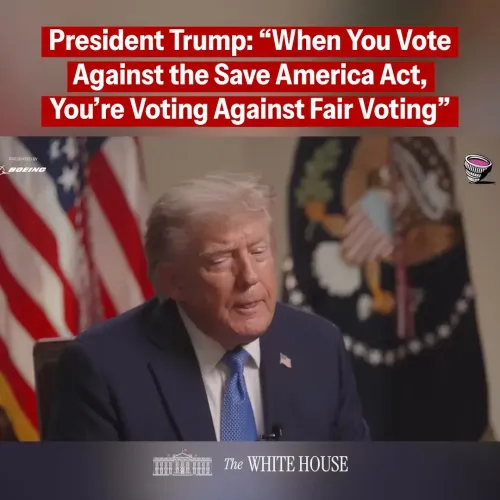
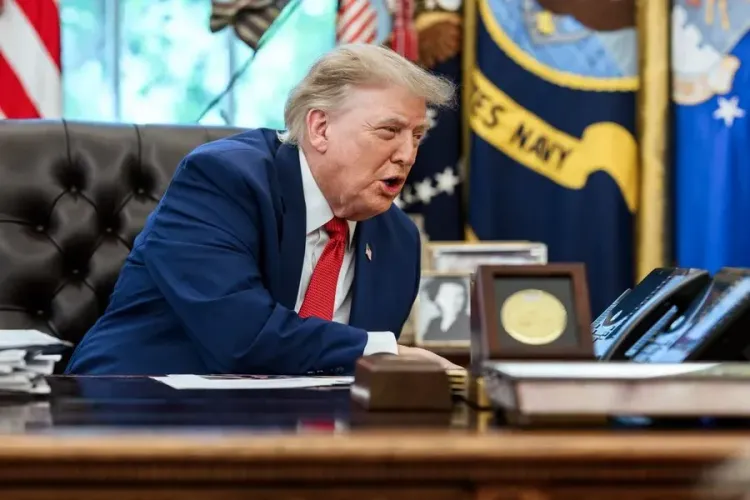
US President Donald Trump on 18 August held up India's electoral framework as a benchmark for American democracy, invoking remarks attributed to India's Chief Election Commissioner Gyanesh Kumar to press Congress into passing the SAVE America Act — legislation that would mandate documentary proof of citizenship and photo identification for federal elections.
What Trump Said
In a post on Truth Social, Trump quoted a question he said Chief Election Commissioner Gyanesh Kumar had recently put to his administration. “How can you have Elections in the U.S. without a valid Photo ID?” Trump cited Kumar as asking.
Trump then pointed to the scale of India’s last general election to reinforce his argument. “India’s last Election had 646,000,000 Voters! Less than 1% voted by mail, and every single Voter had to have a VALID Photo Identity Document. We need to pass THE SAVE AMERICA ACT, now!” he wrote.
US Ambassador Backs the Call
US Ambassador to India Sergio Gor amplified Trump’s post on X, writing: “President Donald J. Trump is absolutely correct! 646 MILLION voters, every single one required an ID in India’s last election. Congress should pass THE SAVE AMERICA ACT!”
What the SAVE America Act Proposes
The Republican-led House passed the revised legislation in February by a 218-213 vote, with one Democrat crossing the aisle. An earlier version — the SAVE Act — had cleared the House in April but stalled in the Senate.
The bill would require voters to present documentary proof of US citizenship at the point of voter registration, along with valid photo identification at polling stations. Acceptable citizenship documents would include a US passport, certain government-issued identity cards, a birth certificate, or a military identification card accompanied by a service record showing a US birthplace.
The legislation would also direct states to identify and remove non-citizens from voter rolls, drawing on data from state agencies, the Social Security Administration, and the Department of Homeland Security. Trump has separately called for mail-in voting to be restricted to cases involving illness, disability, military service, or travel.
The Political Divide
Republicans argue the measure is essential to election security and ensuring only citizens participate in federal contests. Notably, non-citizens are already prohibited from voting in both federal and state elections, and election experts say such violations are rare.
Democrats counter that the legislation risks disenfranchising eligible citizens — particularly low-income voters and those who may struggle to obtain government-issued identity documents. Senate Democratic leader Chuck Schumer has declared the bill would be “dead on arrival” in the Senate, signalling a sharp legislative battle ahead.
What Happens Next
The bill’s prospects in the Senate remain uncertain, with Democratic opposition firm. The invocation of India’s electoral model — one of the world’s largest democratic exercises — is likely to keep the debate in sharp focus as both parties prepare for the next legislative session.
Point of View
Even if the two democracies’ administrative, legal, and demographic contexts are vastly different. What the comparison obscures is that India’s voter ID programme was built over decades with a dedicated infrastructure; the SAVE America Act proposes no equivalent rollout mechanism, raising legitimate questions about implementation. Election experts consistently note that non-citizen voting in US federal elections is already vanishingly rare, which means the bill’s security dividend may be marginal while its disenfranchisement risk — particularly for low-income and minority voters — is real and measurable. The Senate arithmetic suggests this is as much a campaign message as a legislative strategy.
NationPress
18 Aug 2026
Frequently Asked Questions
What is the SAVE America Act?
The SAVE America Act is US federal legislation that would require documentary proof of citizenship and valid photo identification to register and vote in federal elections. It passed the Republican-led House in February by a 218-213 vote but faces strong Democratic opposition in the Senate.
Why did Trump cite India’s election system?
Trump cited India’s last general election — which had 646 million voters, all required to carry photo ID, with fewer than 1% voting by mail — to argue that the United States should adopt similar requirements. He attributed the comparison to a question reportedly posed by India’s Chief Election Commissioner Gyanesh Kumar.
What documents would the SAVE America Act require?
The bill would require acceptable citizenship documents such as a US passport, certain government-issued identity cards, a birth certificate, or a military ID with a service record showing a US birthplace, alongside valid photo identification at polling stations.
What is the Democratic position on the bill?
Democrats argue the legislation could prevent eligible citizens — especially low-income individuals — from voting due to difficulty obtaining required documents. Senate Democratic leader Chuck Schumer has said the bill would be ‘dead on arrival’ in the Senate.
Is non-citizen voting a widespread problem in US federal elections?
According to election experts, non-citizen voting in US federal and state elections is already prohibited by law and is considered rare in practice. Republicans argue the bill is a necessary safeguard; Democrats and experts say the scale of the problem does not justify the potential disenfranchisement risk.