India's industrial corridors: Govt pushes for execution over approvals
Synopsis
India's top industrial corridor body met on 18 August with a blunt message: approvals are no longer enough. Finance Minister Sitharaman, Commerce Minister Goyal, and Ports Minister Sonowal each flagged execution gaps — from empowering SPVs to integrating waterways — signalling that the Centre is shifting from project launches to delivery accountability.
Key Takeaways
The NICDIT apex monitoring authority held its third meeting on 18 August , directing a shift from approvals to timely execution of industrial corridor projects.
Finance Minister Nirmala Sitharaman urged states to clear bottlenecks on land, connectivity, utilities, and statutory clearances .
Commerce Minister Piyush Goyal called for plug-and-play industrial ecosystems aligned with PM GatiShakti and stronger investor outreach via FTAs .
Union Minister Sarbananda Sonowal proposed integrating national waterways as a corridor development spine and prioritising North-Eastern States .
NITI Aayog Vice-Chairman Ashok Kumar Lahiri called for empowering project SPVs with adequate planning and municipal powers.
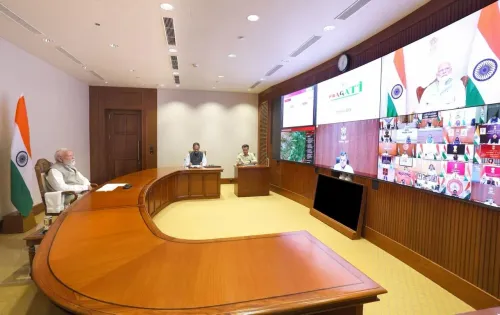
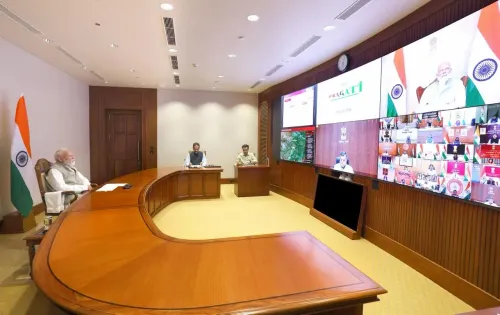
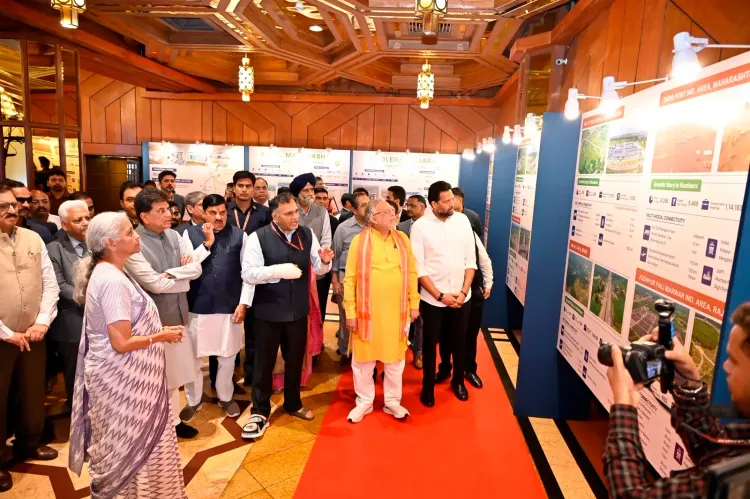
The Union government on 18 August signalled a decisive shift in its industrial corridor strategy, directing stakeholders to move beyond project approvals and focus on timely completion of infrastructure, land allotment, investment, and commencement of production. The directive came at the third meeting of the apex monitoring authority of the National Industrial Corridor Development and Implementation Trust (NICDIT) in New Delhi.
Sitharaman's Push on Bottlenecks
Finance Minister Nirmala Sitharaman urged state governments to resolve persistent bottlenecks relating to land, connectivity, utilities, statutory clearances, and the powers of project special purpose vehicles (SPVs). She stressed the need for integrated planning through PM GatiShakti and continued use of investor-friendly land allotment mechanisms.
Sitharaman also underlined that worker housing, healthcare, skilling, public transport, and other social amenities must form an integral part of industrial development — not afterthoughts. She highlighted the government's support through enhanced public capital expenditure, assistance to states under SASCI, improved credit support for manufacturing MSMEs, and targeted tax and customs measures to strengthen domestic supply chains.
Goyal on Investor Outreach and Plug-and-Play Infrastructure
Commerce Minister Piyush Goyal called for aligning 'BHAVYA' and future industrial developments with PM GatiShakti through an integrated area-development approach. He emphasised focused investor outreach and stronger marketing of industrial nodes, including leveraging opportunities arising from India's Free Trade Agreements (FTAs) and exploring country- and sector-specific industrial enclaves.
Goyal stressed the importance of matching investor requirements with suitable locations and developing ready-to-use industrial ecosystems with plug-and-play infrastructure, flatted factories, worker housing, and supporting economic and social infrastructure.
Waterways and the North-East in Focus
Union Minister Sarbananda Sonowal emphasised the integration of national waterways with industrial corridors, suggesting that waterways be examined as a potential spine for corridor development. He also called for developing industrial infrastructure in the North-Eastern States to broaden India's industrial base, particularly at locations offering strong connectivity, land availability, local resource advantages, and market potential.
NITI Aayog Flags SPV Empowerment
Ashok Kumar Lahiri, Vice-Chairman of NITI Aayog, urged state governments to give greater priority to empowering project SPVs with adequate planning, development, and municipal powers, in line with the approved institutional and legal framework of the Industrial Corridor Programme. Without adequately empowered SPVs, critics have long argued, corridor projects risk becoming land banks rather than functioning industrial zones.
What Comes Next
The NICDIT apex meeting signals that the Centre is tightening accountability on corridor timelines. With multiple industrial nodes across corridors such as the Delhi-Mumbai Industrial Corridor (DMIC) and the Chennai-Bengaluru Industrial Corridor (CBIC) still in varying stages of completion, the emphasis on operationalisation over paper approvals marks a notable course correction. Industry bodies and state governments are now expected to respond with concrete timelines for investment and production commencement.
Point of View
'operationalisation', 'timely completion' — is an implicit acknowledgement that India's industrial corridor programme has been long on announcements and short on live factories. The SPV empowerment gap flagged by NITI Aayog is particularly telling: without statutory and municipal teeth, corridor authorities cannot function as genuine industrial townships. The integration of waterways and the North-East push are strategically sound but will require sustained political will beyond a single apex meeting. The real test is whether this session produces binding timelines — or becomes one more well-attended review that corridors have seen before.
NationPress
2 Oct 2026
Frequently Asked Questions
What is NICDIT and why does it matter?
The National Industrial Corridor Development and Implementation Trust (NICDIT) is the apex body overseeing India's network of planned industrial corridors, including the Delhi-Mumbai and Chennai-Bengaluru corridors. It coordinates between the Centre, states, and project SPVs to drive investment and operationalisation of industrial nodes.
What did Finance Minister Sitharaman say at the NICDIT meeting?
Sitharaman urged states to resolve bottlenecks on land, connectivity, utilities, and statutory clearances, and called for empowering project SPVs. She also said worker housing, healthcare, and skilling must be integrated into industrial planning from the outset.
What is 'BHAVYA' in the context of industrial corridors?
'BHAVYA' is an industrial development initiative referenced by Commerce Minister Piyush Goyal, which he said should be aligned with PM GatiShakti and planned through an integrated area-development approach. Goyal called for it to include plug-and-play infrastructure and sector-specific industrial enclaves.
Why are project SPVs important for industrial corridors?
Special purpose vehicles (SPVs) are the implementing entities for each industrial corridor node. NITI Aayog Vice-Chairman Ashok Kumar Lahiri flagged that without adequate planning, development, and municipal powers, SPVs cannot effectively develop and manage corridor zones, slowing investment and production.
How does the North-East fit into India's industrial corridor plans?
Union Minister Sarbananda Sonowal called for developing industrial infrastructure in North-Eastern States to broaden India's industrial base, focusing on locations with strong connectivity, land availability, local resource advantages, and market potential. He also proposed using national waterways as a development spine for corridor planning.