Trump hints at election emergency powers ahead of US midterms
Synopsis
Trump declined to rule out invoking emergency powers to impose voter ID and citizenship requirements before the US midterms — a move that would bypass the Senate entirely. With the SAVE America Act stalled and Republican senators divided, the interview signals that executive unilateralism on election rules is no longer a fringe idea in the White House.
Key Takeaways
President Trump left open the possibility of declaring a national security emergency to enforce election rules ahead of the US midterm elections .
Host Wayne Allyn Root urged Trump to act within the next month if the Senate failed to pass the SAVE America Act .
Trump claimed the House had passed the legislation five times , with the Senate blocking it each time.
Trump repeated unsubstantiated claims that mail-in voting is 'corrupt' and singled out California for criticism.
The SAVE America Act would require photo identification and proof of citizenship for federal voter registration — a measure critics say could disenfranchise eligible voters.
Federal law already bars non-citizens from voting in federal elections; elections are administered by state and local authorities .
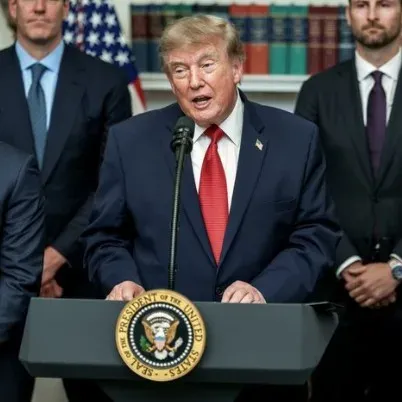
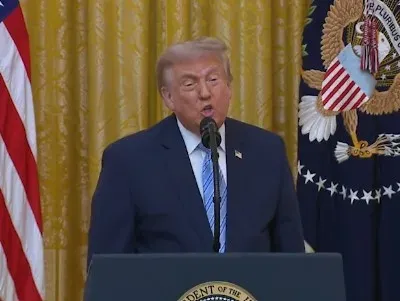
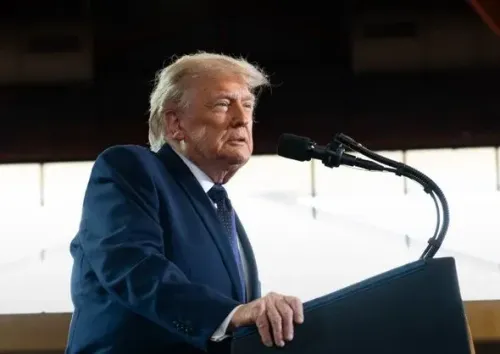
President Donald Trump on 13 August stopped short of ruling out declaring a national security emergency to enforce voter identification and citizenship requirements before the US midterm elections, signalling that executive action remains on the table if the Senate fails to pass the SAVE America Act.
'Stranger things have happened. Okay. I'll leave it at that,' Trump said during an interview on Real America's Voice with host Wayne Allyn Root.
What Root Proposed
Root urged Trump to invoke emergency powers within the next month if the Senate did not act, arguing such a declaration could allow the administration to introduce photo identification, proof-of-citizenship requirements, and limits on mail-in ballots without waiting for Congress. Trump did not explicitly endorse the proposal but did not dismiss it either, keeping the possibility open while pressing the Senate to move first.
Trump's Demands on the Senate
'The Senate has to get going on SAVE America. I really believe that because people expect that to happen and it has to happen,' Trump said. He claimed the House of Representatives had passed the legislation five times, only for it to stall in the upper chamber — 'where it finds a place to die,' in his words. Trump acknowledged that some Republican senators opposed the measures, while praising House Speaker Mike Johnson for his support.
Mail-In Voting and California in the Crosshairs
Trump renewed his long-standing criticism of mail-in voting, alleging without offering evidence that the system was susceptible to fraud. He singled out California, calling it 'one of the most corrupt places for elections' and claiming that Republican voters in certain areas had difficulty obtaining ballots. 'The mail-in ballots are so corrupt,' he said.
The Broader Context
The SAVE America Act is part of a wider Republican push to require documentary proof of US citizenship at the point of federal voter registration. Supporters contend such measures would strengthen election integrity; critics argue they could disenfranchise eligible citizens who lack ready access to the required documents. Notably, federal law already prohibits non-citizens from voting in federal elections, and election administration in the United States is primarily a state and local function, conducted within a framework set by the US Constitution and federal statute.
Root also cautioned Trump that even if Congress approved the legislation, it could face an immediate legal challenge — a concern Trump appeared to factor in, arguing that congressional passage would make any court challenge harder to sustain. 'If you get it passed, it's going to be a big thing,' he said.
With the midterms drawing closer, the question of whether Trump will move unilaterally on election rules — and whether such a move would survive judicial scrutiny — is set to become one of the defining political flashpoints of the coming weeks.
Point of View
A domain the Constitution deliberately disperses to states. Whether or not emergency powers are ultimately invoked, the normalisation of that conversation is itself a significant shift. Courts have consistently struck down federal overreach into state election machinery, so any such declaration would almost certainly face injunctions — which may be precisely the political theatre the White House is prepared to welcome.
NationPress
27 Sept 2026
Frequently Asked Questions
What did Trump say about declaring an election emergency?
Trump stopped short of committing to the idea but left it open, saying 'Stranger things have happened' when asked whether he would declare a national security emergency to impose voter ID and citizenship rules before the midterms. He did not explicitly endorse the proposal but pressed the Senate to pass the SAVE America Act as a preferred first step.
What is the SAVE America Act?
The SAVE America Act is a Republican-backed bill that would require documentary proof of US citizenship when registering to vote in federal elections, along with photo identification requirements and restrictions on mail-in ballots. Trump claims the House has passed it five times, but it has repeatedly stalled in the Senate.
Why are critics opposed to the voter ID and citizenship requirements?
Opponents argue that eligible US citizens who lack ready access to required documents — such as passports or birth certificates — could be prevented from registering to vote. They contend the measures would disproportionately affect low-income and minority voters. Supporters say the requirements are necessary to strengthen election integrity.
Is it legal for non-citizens to vote in US federal elections?
No. Federal law already prohibits non-citizens from voting in federal elections. Critics of the SAVE America Act argue the legislation addresses a problem that existing law has already made illegal, while supporters say additional documentary verification is needed to enforce that prohibition.
What happens next with the SAVE America Act?
The legislation faces an uncertain path in the Senate, where some Republican senators have opposed it. If Congress does not act, Trump has left open — without committing to — the possibility of using emergency powers to implement similar measures, a step that would almost certainly face immediate legal challenges.