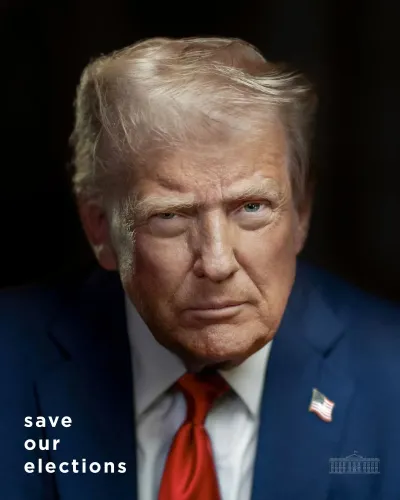
Trump unveils sweeping US election overhaul plan ahead of 2026 midterms
Synopsis
Trump's prime-time White House address on 17 July wasn't just a policy speech — it was a pre-midterm offensive. By pairing declassified intelligence with the SAVE America Act's strict ID and citizenship requirements, the administration is recasting election integrity as a national security issue, raising the stakes considerably ahead of the 2026 congressional elections.
Key Takeaways
President Donald Trump on 17 July unveiled his most sweeping election reform agenda of his second term in a prime-time White House address.
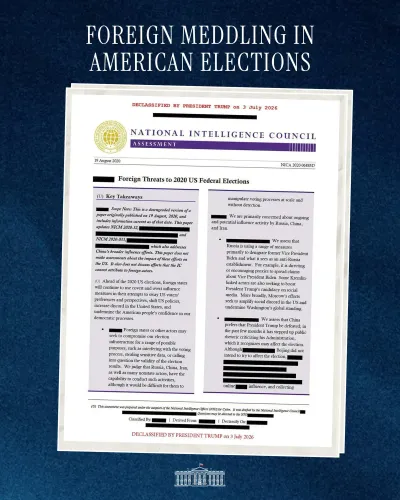
Trump ordered the immediate release of declassified intelligence records alleging foreign exploitation of US election infrastructure vulnerabilities.
The FBI , CIA , Justice Department , and Office of the Director of National Intelligence were directed to investigate why election-threat intelligence was allegedly withheld.
The SAVE America Act would require photo ID and proof of citizenship to vote, and sharply restrict mail-in voting.
DHS has been tasked with patching election system vulnerabilities and notifying states about alleged non-citizens on voter rolls before the 2026 midterms .
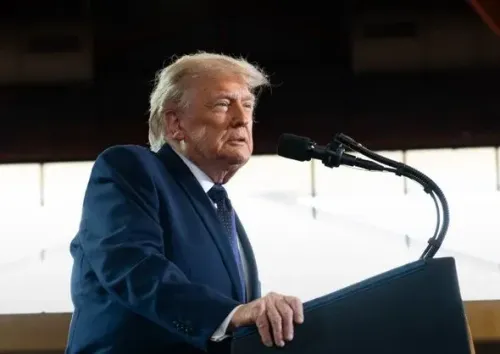
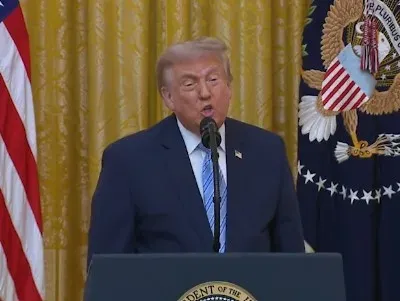
President Donald Trump on Thursday, 17 July delivered a rare prime-time address from the White House, unveiling the most comprehensive election reform agenda of his second term — a package combining declassified intelligence releases, executive directives, and a legislative push aimed at tightening voting rules before the 2026 US midterm elections. Trump framed the move as an urgent response to what he described as a mounting election security crisis.
Key Announcements
At the centre of the address was the immediate release of intelligence and law enforcement records that the administration says expose vulnerabilities in US election infrastructure and alleged foreign efforts to exploit them. Trump said the disclosures were intended 'not to weaken confidence in elections, but to earn that confidence by confronting vulnerabilities and correcting them very, very quickly.'
Trump directed the Office of the Director of National Intelligence, the Justice Department, the FBI, and the CIA to investigate why intelligence relating to alleged election threats had reportedly been withheld — and to determine whether disciplinary action or criminal charges were warranted against those responsible.
Executive Actions Ordered
The Department of Homeland Security (DHS) has been tasked with working alongside state and local election officials to identify and patch known technical weaknesses in election systems before the 2026 midterms. The administration has also begun notifying governors, senators, and members of Congress whose states were flagged in the released records as potentially affected by election-related cyber vulnerabilities.
Additionally, Trump ordered DHS to notify every state about non-citizens allegedly identified on voter rolls and to direct election officials to remove ineligible registrations — a step that critics are likely to challenge in court, given ongoing legal battles over voter roll maintenance.
The SAVE America Act
The centrepiece of Trump's legislative agenda is what he called the SAVE America Act, which he urged Congress to approve without delay. The bill, as described by Trump, would require all voters to present photo identification and provide proof of US citizenship, while sharply limiting mail-in voting to cases involving illness, disability, military deployment, or travel.
'This landmark bill requires that all voters must show photo voter ID,' Trump said. 'All voters must provide proof of citizenship.' He further argued that election security 'should not be a partisan issue' but rather 'a cause to unite us, not to divide us.'
Broader Context and Political Stakes
The speech is Trump's most detailed public statement on election policy since returning to office and signals that voting security, voter eligibility, and election administration will be central battlegrounds in the run-up to the 2026 congressional elections. Notably, similar proposals — particularly photo ID mandates and citizenship proof requirements — have faced sustained legal and political opposition from Democrats and civil liberties groups, who argue such measures disproportionately burden minority and low-income voters.
This comes amid a broader pattern: since 2020, election integrity has remained a defining issue for Trump and his base, and the release of declassified records adds a new dimension by framing the debate around national security rather than purely partisan politics. Whether the intelligence disclosures contain genuinely new revelations or largely repackage known concerns remains to be assessed by independent experts.
What Comes Next
The administration indicated it would continue coordinating with federal, state, and local officials to strengthen election infrastructure ahead of next year's polls. The fate of the SAVE America Act in Congress — where it will face a closely divided Senate — is likely to determine how much of Trump's legislative vision actually becomes law before the 2026 midterms.
Point of View
Using declassified documents to lend institutional weight to claims his critics have repeatedly contested. The SAVE America Act's citizenship-proof and photo-ID requirements mirror legislation that has repeatedly stalled or been struck down in courts, and the administration has yet to demonstrate that the newly released intelligence contains substantively new findings rather than repackaged assessments. The deeper political logic is clear: by keeping election security at the centre of the national conversation, Trump energises his base and forces Democrats to defend a position — opposing ID requirements — that polls show is unpopular with many independent voters. The real test will be whether the Senate can muster the votes, and whether federal courts allow the executive actions on voter rolls to stand.
NationPress
16 Oct 2026
Frequently Asked Questions
What is Trump's election reform plan announced on 17 July?
It is a comprehensive election security agenda unveiled in a prime-time White House address, combining the release of declassified intelligence on alleged election vulnerabilities, executive directives to the DHS, FBI, CIA, and Justice Department, and a push for the SAVE America Act ahead of the 2026 midterm elections.
What does the SAVE America Act propose?
The SAVE America Act, as described by Trump, would require all voters to present photo identification and proof of US citizenship, and would sharply limit mail-in voting to cases involving illness, disability, military deployment, or travel. It requires congressional approval to become law.
Why did Trump release declassified election intelligence?
Trump said the disclosures were intended to expose vulnerabilities in US election infrastructure and alleged foreign efforts to exploit them. He framed the release as a step toward restoring public confidence in the electoral system, not undermining it.
What action is being taken on voter rolls?
Trump ordered the Department of Homeland Security to notify every state about non-citizens allegedly identified on voter rolls and to direct election officials to remove ineligible registrations. Such measures have previously faced legal challenges from civil liberties groups.
How does this plan affect the 2026 US midterm elections?
The administration has set the 2026 midterms as the target deadline for patching election system vulnerabilities and implementing new voter eligibility measures. Whether the legislative component — the SAVE America Act — clears a closely divided Senate in time remains uncertain.