White House Backs SAVE America Act to Require Citizenship Proof for Voting
Synopsis
The White House on June 26, 2026, called on Americans to back the SAVE America Act, a bill requiring documentary proof of US citizenship for federal voter registration. The move signals strong executive support for legislation at the centre of a fierce partisan debate over voter eligibility and election integrity.
Key Takeaways
The White House publicly backed the SAVE America Act on June 26, 2026 , urging Americans to support the bill.
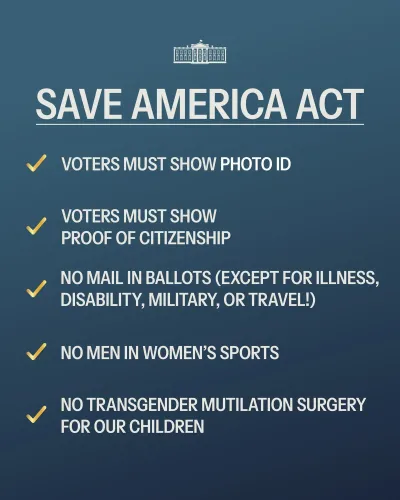
The SAVE Act would require documentary proof of US citizenship for federal voter registration.
Current federal law relies on an attestation system where applicants self-declare citizenship.
The bill is part of a wave of election-integrity legislation that gained momentum in 2021-2022 following the 2020 presidential election .
Key stakeholders include eligible voters and state election officials , with civil liberties groups raising access concerns.
Congressional action and potential state-level legal challenges remain the critical next steps.
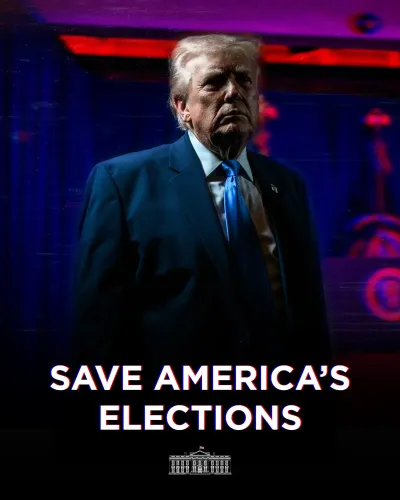
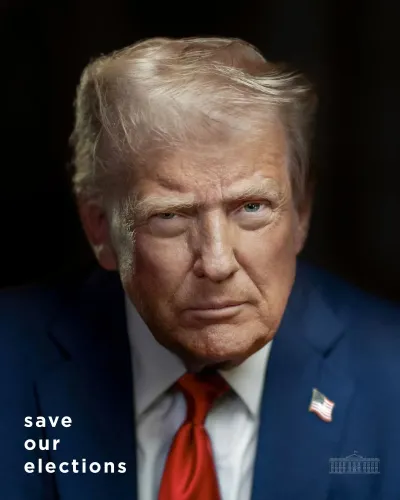
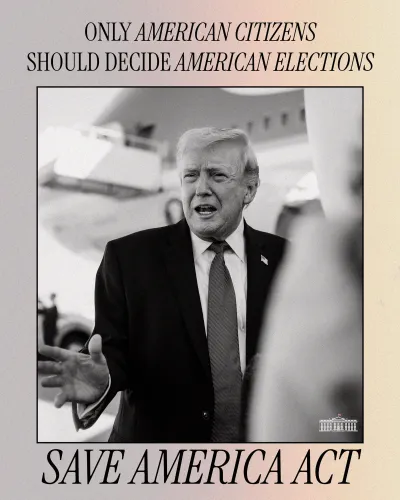
The White House on Friday, June 26, 2026, publicly called on Americans to support the SAVE America Act, a proposed federal law that would require proof of United States citizenship for voter registration in federal elections. The official White House account on X issued the call to action, framing the legislation as essential to protecting American elections.
Context
The post urged followers to 'Fight for the SAVE America Act, and SAVE our elections,' signalling strong executive-branch backing for the bill. The SAVE Act — which stands for Safeguard American Voter Eligibility — would mandate documentary proof of citizenship at the point of federal voter registration, a requirement that currently does not exist under federal law.
The legislation sits within a broader wave of election-integrity measures that gained momentum across several US states between 2021 and 2022, following disputes over the conduct and results of the 2020 presidential election.
Policy Backdrop
Proponents of the SAVE Act argue that existing federal registration forms rely on an attestation system — where applicants simply declare their citizenship — leaving the process open to potential abuse by non-citizens. Supporters contend that a documentary requirement would close this gap and restore public confidence in electoral rolls.
Critics, however, argue that non-citizen voting in federal elections is already illegal and that additional documentation requirements would create barriers for millions of eligible citizens — particularly low-income voters, elderly individuals, and minorities — who may not have ready access to passports or birth certificates. The debate mirrors a long-running partisan divide in the United States: one side prioritising eligibility verification, the other emphasising access and participation.
Stakeholders and Impact
The primary stakeholders are eligible American voters and state election officials, who would bear the administrative burden of implementing any new federal documentation standard. Civil liberties organisations have historically flagged that proof-of-citizenship mandates can disproportionately affect naturalised citizens and first-time voters who may not carry their documents routinely.
For India and the Indian-American diaspora — one of the largest immigrant communities in the United States — the bill carries particular relevance. Many Indian-origin US citizens who became naturalised after immigration would be required to produce citizenship certificates or passports to register, adding a procedural step to their civic participation.
What's Next
Congressional action on the SAVE America Act remains the key variable. A formal White House endorsement of this nature typically precedes or accompanies a legislative push, suggesting the administration may be seeking to build public pressure on lawmakers ahead of a vote. State governments have signalled varying levels of support, with Republican-led legislatures more likely to align with the federal proposal and Democratic-led states expected to resist or challenge it in court.
With the next major US federal election cycle approaching, the fate of the SAVE Act will be closely watched as a bellwether for how the United States resolves its ongoing debate over voter eligibility, documentation, and access — a debate with implications for democratic norms well beyond American borders.
Point of View
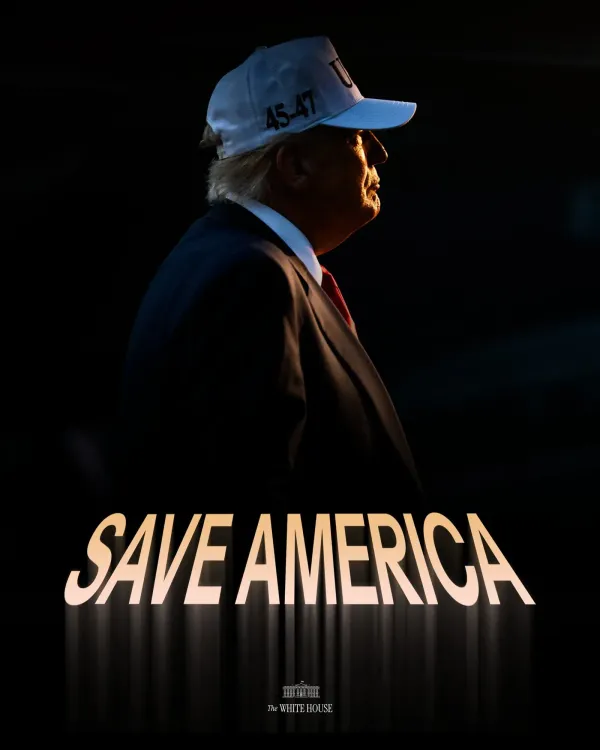
Social-media call to 'fight' for the SAVE America Act is a deliberate mobilisation tactic — bypassing traditional legislative channels to generate grassroots pressure on Congress. This fits a broader pattern of the executive branch using its digital megaphone to shape the public debate on election law, a strategy that has become central to both parties' legislative playbooks since 2020. For the administration, framing the bill as saving 'our elections' is as much a messaging exercise as a policy push, designed to energise a base that remains deeply invested in election-integrity narratives. The outcome will likely hinge less on the bill's legal merits and more on whether it can survive a deeply divided Congress and anticipated judicial scrutiny.
NationPress
24 Sept 2026
Frequently Asked Questions
What is the SAVE America Act?
The SAVE America Act is a proposed US federal law that would require individuals to provide documentary proof of citizenship — such as a passport or birth certificate — when registering to vote in federal elections.
Why is the White House supporting the SAVE Act?
The White House has framed the SAVE Act as essential to election integrity, arguing that requiring citizenship documentation at voter registration would prevent potential non-citizen participation in federal elections.
Does the SAVE Act affect Indian Americans?
Yes, naturalised US citizens of Indian origin would need to produce citizenship certificates or passports to register under the SAVE Act, adding a documentation step compared to the current self-attestation system.
What are the arguments against the SAVE America Act?
Critics argue that non-citizen voting is already illegal and that documentation requirements create barriers for eligible voters — especially low-income, elderly, and minority citizens — who may lack easy access to qualifying documents.
What happens next with the SAVE Act in Congress?
The bill requires Congressional approval, and its passage is uncertain given partisan divisions. Democratic-led states are also expected to mount legal challenges if the bill becomes law.