CM Mohan Yadav: Sleemanabad Tunnel to irrigate 1.85 lakh hectares
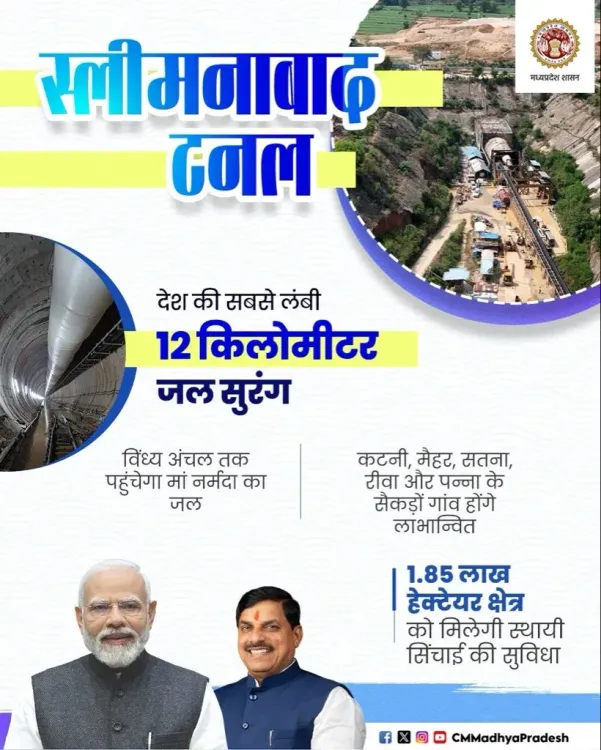
Synopsis
The Chief Minister's Office of Madhya Pradesh announced the Sleemanabad Tunnel will route Narmada waters into the Vindhya region, promising permanent irrigation for 1.85 lakh hectares of farmland — a major step in the state's long-running Narmada infrastructure expansion.
Key Takeaways
The Chief Minister's Office of Madhya Pradesh announced the Sleemanabad Tunnel on 17 July 2026 .
The tunnel will carry Narmada river waters into the Vindhya region of central Madhya Pradesh.
The project aims to provide permanent irrigation to 1.85 lakh hectares of agricultural land.
The announcement was tagged to Chief Minister Dr.
The project is part of Madhya Pradesh's decades-long expansion of Narmada-linked irrigation infrastructure , rooted in the 1979 Narmada Water Disputes Tribunal award .
Key milestones to watch include construction progress, water-release schedules and actual command-area coverage.
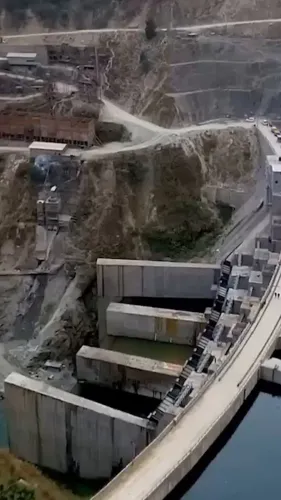
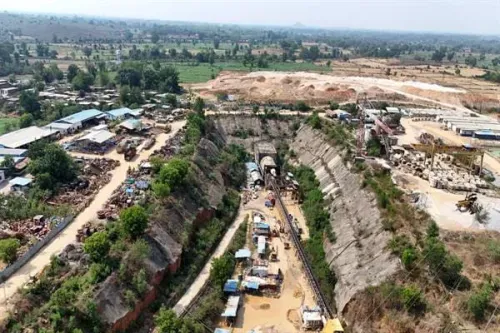
The Chief Minister's Office of Madhya Pradesh announced on Friday, 17 July 2026, that the Sleemanabad Tunnel will channel waters of the Narmada river into the Vindhya region, providing permanent irrigation across 1.85 lakh hectares of agricultural land.
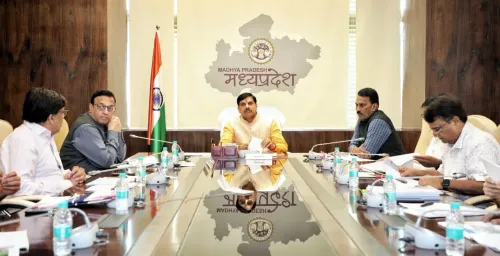
The official post, tagged to Chief Minister Dr. Mohan Yadav, declared in Hindi: 'अब विंध्य अंचल तक पहुंचेगा मां नर्मदा का जल' — 'Now the waters of Mother Narmada will reach the Vindhya region' — framing the tunnel as a transformative infrastructure milestone for a historically water-stressed part of the state.
Context
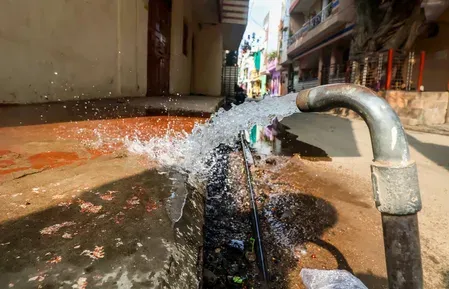
The Vindhya region, spanning central Madhya Pradesh, has long lagged behind other parts of the state in irrigated agricultural coverage. Despite the Narmada flowing through the state, the river's waters have historically been difficult to route northward and eastward into the Vindhya plateau owing to the area's elevated terrain. The Sleemanabad Tunnel is designed to overcome this geographic barrier through an engineered intra-basin transfer. The project carries particular significance for the farming communities of the Vindhya belt, where dependence on rain-fed agriculture leaves crops vulnerable to erratic monsoon patterns. Permanent canal and tunnel irrigation is widely regarded as the most reliable route to agricultural stability in such regions.Policy Backdrop
Madhya Pradesh's use of Narmada waters for irrigation is governed by the Narmada Water Disputes Tribunal award of 1979, which allocated river flows among riparian states and laid the legal foundation for subsequent dam, canal and tunnel projects. Over the decades, successive state governments have incrementally expanded this infrastructure network to reduce regional water imbalances. The Sleemanabad Tunnel fits within this longer arc of Narmada-linked development, which includes major dams and an extensive canal grid. The stated command area of 1.85 lakh hectares — if achieved — would represent a meaningful addition to the state's total irrigated acreage and extend the reach of Narmada waters to communities that have so far remained outside the existing canal network.Stakeholders and Impact
The primary beneficiaries are farmers across the Vindhya region whose landholdings fall within the projected 1.85 lakh hectare command area. Permanent irrigation access typically enables farmers to shift from single-crop to double- or triple-crop cycles, raising agricultural productivity and household incomes. It also reduces dependence on groundwater extraction, which has been under stress in several districts of central Madhya Pradesh. Broader beneficiaries include rural labour markets, agri-input suppliers and the state's food-production statistics. Water security in the Vindhya belt is also considered a factor in moderating distress migration from rural areas to urban centres.What's Next
Attention will now turn to construction milestones, the schedule for first water release into the tunnel system, and the pace at which the targeted command area is brought under actual irrigation. Independent assessments of the project's alignment, engineering progress and budget outlay will be closely watched by farmers' groups and policy observers in the region. If the Sleemanabad Tunnel delivers on its stated coverage, it would mark one of the more significant expansions of Narmada-fed irrigation in the Vindhya region in recent years — and add to Chief Minister Dr. Mohan Yadav's infrastructure record ahead of future electoral cycles in Madhya Pradesh.Point of View
And the 1.85 lakh hectare command area figure gives the project a concrete, measurable benchmark. The move also fits a broader national trend of intra-basin water transfers being positioned as the primary answer to agrarian distress. However, the gap between announced command-area targets and on-ground irrigation delivery has historically been a weak point in Indian canal-irrigation projects, and independent verification of construction timelines will be essential to assessing the project's real impact.
NationPress
17 Jul 2026
Frequently Asked Questions
What is the Sleemanabad Tunnel in Madhya Pradesh?
The Sleemanabad Tunnel is an infrastructure project in Madhya Pradesh designed to transfer water from the Narmada river into the Vindhya region, with the goal of providing permanent irrigation to 1.85 lakh hectares of farmland.
Which area will benefit from the Sleemanabad Tunnel?
The Vindhya region of central Madhya Pradesh is the primary beneficiary, with farmers across a projected command area of 1.85 lakh hectares set to receive permanent irrigation access.
Who announced the Sleemanabad Tunnel project?
The Chief Minister's Office of Madhya Pradesh announced the project on 17 July 2026, with the post tagged to Chief Minister Dr. Mohan Yadav.
How does the Sleemanabad Tunnel relate to the Narmada river?
The tunnel is designed to channel Narmada river water northward and eastward into the elevated Vindhya plateau, overcoming the terrain barrier that has historically limited irrigation in the region.
What is the legal basis for using Narmada water for irrigation in Madhya Pradesh?
The Narmada Water Disputes Tribunal award of 1979 allocated river flows among riparian states and provided the legal foundation for Madhya Pradesh to develop dams, canals and tunnels using Narmada waters.