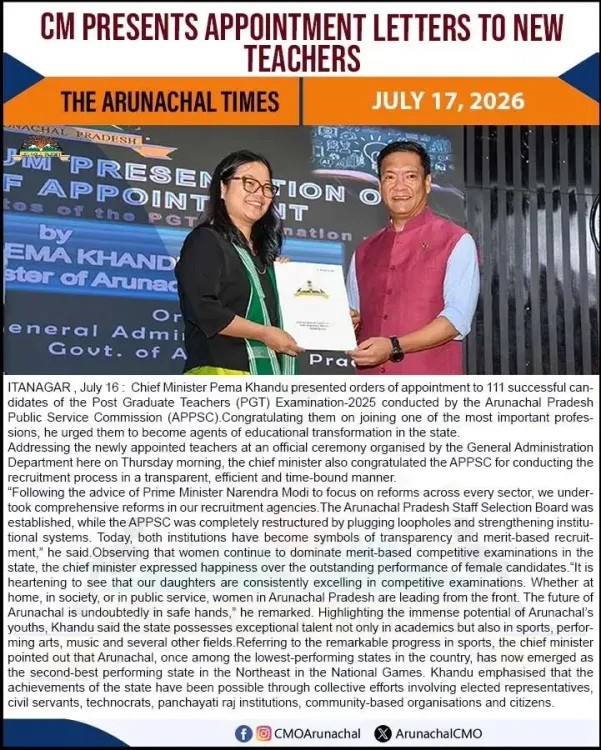
CM Pema Khandu Hands Appointment Orders to 111 PGTs
Synopsis
Chief Minister Pema Khandu of Arunachal Pradesh handed appointment orders to 111 Post Graduate Teachers on 17 July 2026, reinforcing the state's push for transparent, merit-based public recruitment and stronger higher secondary education in a region long marked by teacher shortages.
Key Takeaways
111 Post Graduate Teachers (PGTs) received appointment orders directly from CM Pema Khandu on 17 July 2026 .
PGTs are subject specialists for Classes 11 and 12 in government higher secondary schools across Arunachal Pradesh .
The government described the recruitment as 'transparent' and 'merit-based,' aligning with National Education Policy 2020 mandates.
Arunachal Pradesh has faced persistent teacher shortages, especially in remote tribal and border districts.
CM Pema Khandu has overseen multiple rounds of education sector reforms since taking office in 2016 .
Subsequent phases of teacher recruitment and education infrastructure budgets will be closely watched.
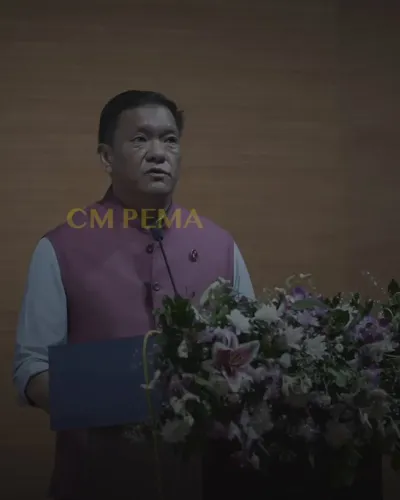
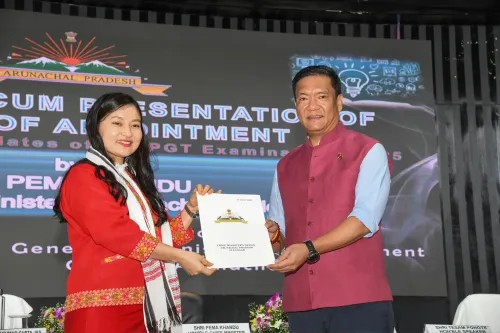
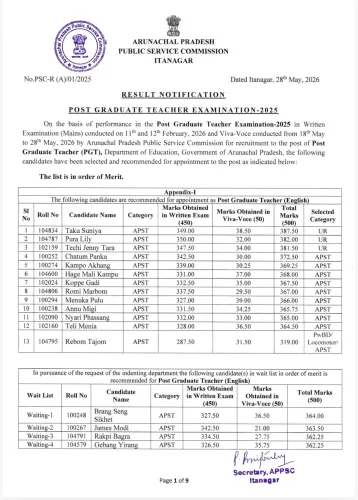
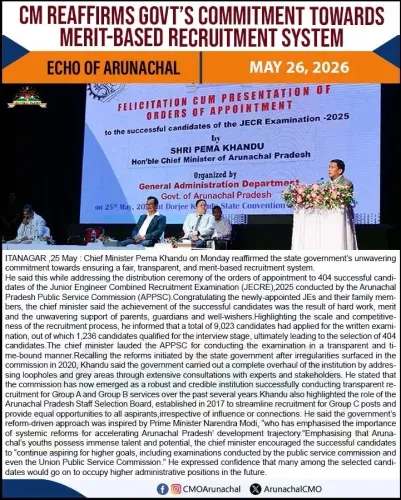
The Chief Minister's Office of Arunachal Pradesh announced on Friday, 17 July 2026, that Chief Minister Pema Khandu personally handed over appointment orders to 111 newly recruited Post Graduate Teachers (PGTs), underscoring the state government's stated commitment to merit-based, transparent public hiring and improved school education quality.
Context
The appointment ceremony saw CM Pema Khandu directly distribute orders to the 111 PGTs, a gesture that signals the administration's intent to treat teacher recruitment as a high-priority, visible act of governance. The CMO stated the move reaffirms 'the Government's commitment to transparent, merit-based recruitment and quality education.' PGTs are subject specialists deployed in government higher secondary schools to teach Classes 11 and 12.
Arunachal Pradesh has historically struggled with acute teacher shortages, particularly in its remote tribal belts and districts along the international border. Large-scale recruitments of this nature are therefore seen as significant milestones for communities whose children depend entirely on state-run schools.
Policy Backdrop
The recruitment aligns closely with the National Education Policy (NEP) 2020, which explicitly called on states to fill teacher vacancies through transparent, merit-driven processes and to strengthen higher secondary education. Arunachal Pradesh has undertaken multiple rounds of education sector reforms under CM Khandu, who has been in office since 2016, with teacher recruitment forming a recurring pillar of those efforts.
Across the northeastern region, state governments have periodically launched large-scale teacher induction drives to address chronic shortfalls in government schools, especially in educationally backward districts. The emphasis on merit and transparency in the current round is consistent with a broader regional push to eliminate irregularities in public-sector hiring — a concern that has dogged teacher recruitment processes in several states.
Stakeholders and Impact
The most direct beneficiaries are the 111 newly appointed PGTs themselves, whose selections were framed as the outcome of a merit-based process. For government school students in Classes 11 and 12 across Arunachal Pradesh, the induction of trained subject teachers is expected to improve instructional quality at the higher secondary level — a stage critical for board examination outcomes and college readiness.
Aspiring teachers who participated in the recruitment process but were not selected will be watching for subsequent phases. Civil society groups and parents' bodies in the state have long demanded faster filling of PGT vacancies, making this appointment round a tangible policy deliverable ahead of future electoral cycles.
What's Next
Attention will now turn to whether the state government announces additional phases of PGT and graduate teacher recruitment to address residual vacancies, particularly in the most underserved districts. Budget allocations for education infrastructure — classrooms, laboratories, and digital learning tools — in the next fiscal year will indicate whether this recruitment drive is part of a sustained reform push or a standalone exercise.
Observers will also monitor the deployment orders issued to the 111 PGTs, specifically whether postings are directed toward high-need remote areas or concentrated in urban and semi-urban centres, as the former would more directly address the state's educational equity challenge.
Point of View
The recruitment fits into a broader northeastern pattern of using large-scale public-sector hiring to signal administrative credibility. The explicit framing around 'merit and transparency' is also notable: it implicitly distances this round from past controversies over irregularities in government hiring across the region. Whether the deployment of these teachers reaches the most underserved border districts will determine whether the exercise translates into genuine educational equity or remains a headline-level win.
NationPress
15 Oct 2026
Frequently Asked Questions
How many Post Graduate Teachers were appointed in Arunachal Pradesh in July 2026?
111 Post Graduate Teachers (PGTs) received appointment orders from Chief Minister Pema Khandu on 17 July 2026 in Arunachal Pradesh .
What is a Post Graduate Teacher (PGT) in India?
A Post Graduate Teacher (PGT) is a subject specialist recruited to teach Classes 11 and 12 in government higher secondary schools. PGTs are required to hold a postgraduate degree in their subject along with a teaching qualification.
How does this PGT recruitment relate to NEP 2020?
The National Education Policy 2020 mandated that states fill teacher vacancies through transparent, merit-based processes. The Arunachal Pradesh government cited these same principles — merit and transparency — in describing the current recruitment round.
Who is Pema Khandu and what has he done for education in Arunachal Pradesh?
Pema Khandu is the Chief Minister of Arunachal Pradesh , in office since 2016 . His administration has undertaken multiple rounds of education sector reforms, with teacher recruitment being a recurring focus to address the state's chronic shortage of qualified school teachers.
Why does Arunachal Pradesh face teacher shortages?
Arunachal Pradesh has a large number of remote tribal villages and districts along international borders where postings are considered difficult. This has historically led to high vacancy rates in government schools, making large-scale recruitment drives particularly significant for affected communities.