CM Yogi Hails India's First Hydrogen Train on Jind-Sonipat Route
Synopsis
Uttar Pradesh Chief Minister Yogi Adityanath hailed the launch of India's first hydrogen train on the Jind-Sonipat route in Haryana on 17 July 2026, crediting PM Modi's 'Green Growth' vision and calling it a landmark for clean, self-reliant transport under the Viksit Bharat agenda.
Key Takeaways
CM Yogi Adityanath publicly celebrated the launch of India's first hydrogen train on 17 July 2026 .
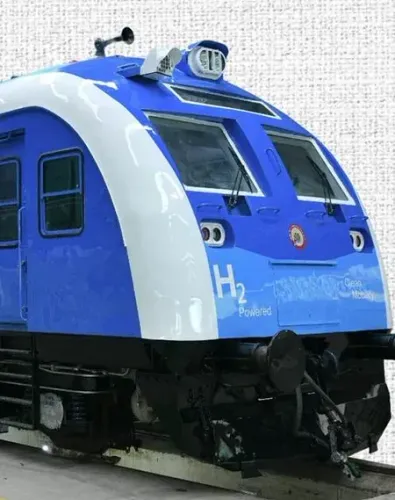
The train operates on the Jind-Sonipat corridor in Haryana , selected as the inaugural hydrogen rail route.
The launch is linked to the National Green Hydrogen Mission , approved in January 2023 , which targets green hydrogen deployment across transport and industry.
Indian Railways has set a net-zero carbon target by 2030 , with hydrogen propulsion complementing its electrification drive.
The initiative aligns with India's broader 2070 net-zero emissions pledge and the Atmanirbhar Bharat goal of domestic clean-technology manufacturing.
Future route expansions and Union Railway Budget allocations will determine the pace of scaling the hydrogen train programme.
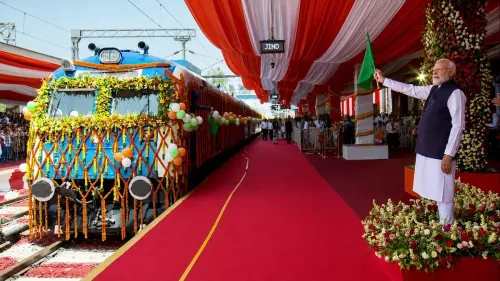
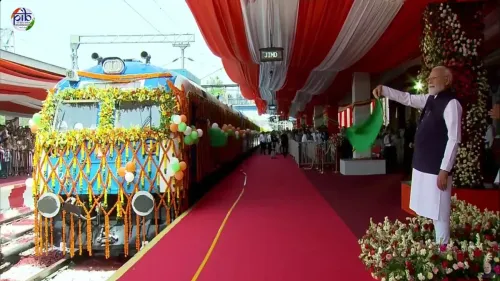
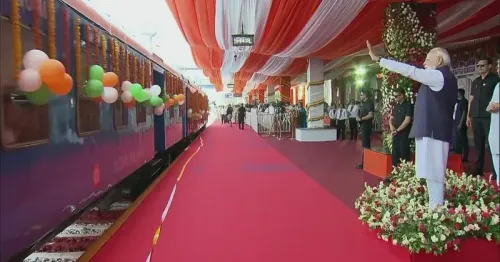
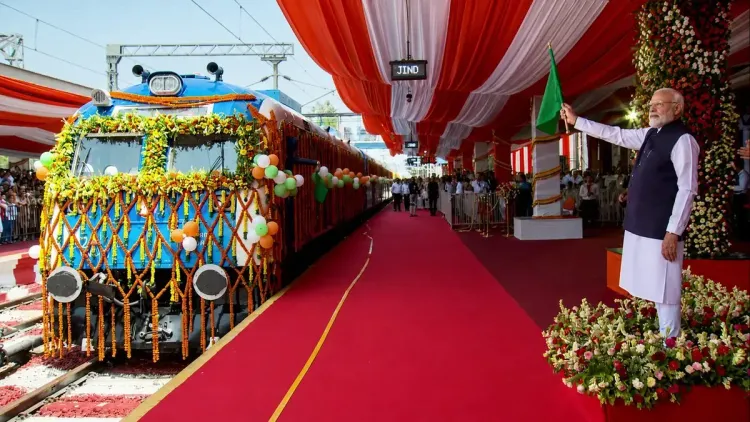
Uttar Pradesh Chief Minister Yogi Adityanath on Friday, 17 July 2026, took to X to celebrate the launch of what he described as India's first hydrogen train, operating between Jind and Sonipat in Haryana, calling it a historic milestone in the country's journey toward clean and sustainable transport.
In his post, CM Yogi wrote — 'जींद-सोनीपत के बीच चलने वाली देश की पहली हाइड्रोजन ट्रेन का शुभारंभ स्वच्छ और सतत परिवहन की दिशा में नए भारत की ऐतिहासिक उपलब्धि है' ['The launch of the country's first hydrogen train running between Jind and Sonipat is a historic achievement of New India in the direction of clean and sustainable transport']. He credited the development to Prime Minister Narendra Modi's leadership and his vision of 'Green Growth' and 'Viksit Bharat' (Developed India).
Context
Indian Railways has been pursuing a net-zero carbon target by 2030, one of the most ambitious decarbonisation timelines for any national rail network globally. Hydrogen-powered trains represent a significant step in that direction, offering zero direct emissions and the potential to serve non-electrified or partially electrified corridors. The Jind-Sonipat corridor in Haryana was selected as the inaugural route for this initiative.
CM Yogi framed the launch as proof of the Modi government's commitment to self-reliance in clean technology — 'आत्मनिर्भरता के नए युग में प्रवेश' ['entering a new era of self-reliance'] — aligning the railway milestone with the broader Atmanirbhar Bharat agenda for domestic manufacturing and innovation.
Policy Backdrop
The hydrogen train programme is closely linked to the National Green Hydrogen Mission, approved by the Union Cabinet in January 2023, which aims to scale domestic production and deployment of green hydrogen across transport, industry, and energy sectors. Railways was identified as a priority mobility sector under this mission, with allocations directed toward developing indigenous hydrogen-fuel rolling stock.
The initiative also builds on years of track electrification across the national network. By extending self-reliance objectives to fuel systems and rolling stock, Indian Railways is positioning hydrogen propulsion as a complement — rather than a replacement — to its existing electrification drive. Parallel green-hydrogen efforts are underway in road transport and the fertiliser sector under the same national framework.
Stakeholders and Impact
For rail passengers on the Jind-Sonipat route, the hydrogen train signals quieter, cleaner journeys with zero direct exhaust emissions. For the renewable energy and clean-technology industry, the launch represents a tangible domestic deployment opportunity — a proof-of-concept that could unlock further investment in hydrogen production, storage, and fuel-cell manufacturing within India.
Broader decarbonisation goals are also at stake. India has committed to a net-zero emissions target by 2070, and transport electrification and green-hydrogen adoption in railways are seen as critical near-term levers to bend the emissions curve ahead of that deadline.
What's Next
Attention will now turn to whether the Jind-Sonipat service is expanded to additional routes and whether dedicated hydrogen-train allocations feature in the next Union Railway Budget. The government's ability to scale domestic green-hydrogen production at competitive costs will be a key determinant of how quickly the programme can move beyond a single pilot corridor.
CM Yogi's public endorsement also signals that state-level political leadership sees hydrogen mobility as a flagship narrative for 'Viksit Bharat' — suggesting cross-party federal alignment on clean-transport messaging ahead of future electoral cycles.
Point of View
Reinforcing BJP's dual messaging on development and environmental leadership ahead of future electoral cycles. The choice of the Jind-Sonipat route — a Haryana corridor — also carries political geography: it keeps the spotlight on a state that has been a BJP stronghold, embedding a national technology milestone within a regional frame. More broadly, the post reflects a wider pattern among state-level BJP leaders of amplifying central government infrastructure wins as evidence of 'Viksit Bharat' in action. Whether the hydrogen train programme can scale beyond a single pilot route will ultimately determine whether this milestone becomes a durable policy achievement or remains a high-visibility launch event.
NationPress
17 Jul 2026
Frequently Asked Questions
What is India's first hydrogen train and where does it run?
India's first hydrogen train runs on the Jind-Sonipat corridor in Haryana . It is a zero-direct-emission train powered by hydrogen fuel cells, launched as part of Indian Railways' decarbonisation programme under the National Green Hydrogen Mission .
What did CM Yogi Adityanath say about the hydrogen train?
CM Yogi Adityanath called the launch a 'historic achievement of New India' in the direction of clean and sustainable transport, crediting PM Narendra Modi 's 'Green Growth' vision and linking it to the 'Viksit Bharat' (Developed India) agenda.
What is the National Green Hydrogen Mission?
The National Green Hydrogen Mission was approved by the Union Cabinet in January 2023 . It aims to scale domestic production and use of green hydrogen across transport, industry, and energy sectors, with Indian Railways identified as a priority mobility sector.
What is Indian Railways' carbon target?
Indian Railways has committed to achieving net-zero carbon emissions by 2030 , one of the most ambitious timelines for any national rail network. Hydrogen trains and track electrification are central to this goal.
How does the hydrogen train fit into India's climate goals?
The hydrogen train supports India's 2070 net-zero emissions pledge by introducing zero-direct-emission propulsion on the rail network. It complements the existing electrification drive and is part of a multi-sector decarbonisation strategy under the Atmanirbhar Bharat framework.