CM Yogi Flags 29 Sugar Mill Closures Under SP-BSP Rule
Synopsis
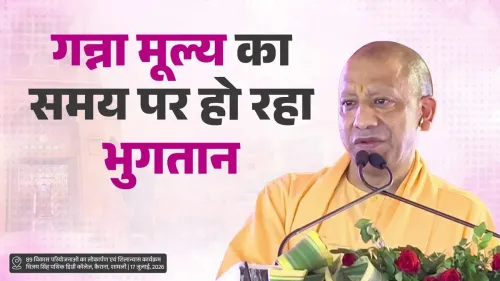
Chief Minister Yogi Adityanath on 17 July 2026 alleged that SP-BSP governments shut 29 sugar mills and sold 21 at throwaway prices between 2007 and 2017, contrasting that record with 122 mills currently operational in Uttar Pradesh under his administration.
Key Takeaways
29 sugar mills were allegedly closed in Uttar Pradesh between 2007 and 2017 under SP and BSP governments, according to CM Yogi Adityanath.
21 sugar mills were allegedly sold at undervalued prices during the same period.
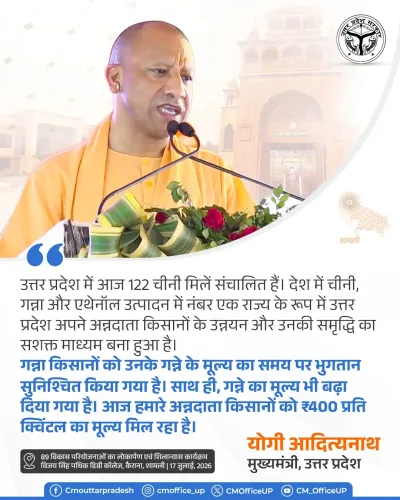
CM Adityanath claims 122 sugar mills are currently operational in Uttar Pradesh.
Uttar Pradesh contributes roughly 40 percent of India's total sugarcane output, making the sector critical to rural livelihoods.
The BJP government from 2017–18 initiated mill revival steps and arrear clearances as part of its rural economy agenda.
Cane procurement prices for the 2026–27 crushing season and ethanol blending policy updates are the next key policy markers to watch.
Uttar Pradesh Chief Minister Yogi Adityanath on Friday, 17 July 2026, took to X to contrast the state's current sugar mill count with what he described as a decade of closures and distress sales under previous Samajwadi Party and Bahujan Samaj Party governments, claiming that 122 sugar mills are now operational across the state.
In his post, Chief Minister Adityanath wrote: 'सपा-बसपा की सरकारों में वर्ष 2007 से वर्ष 2017 के बीच 29 चीनी मिलें बंद हुईं। इन्होंने 21 चीनी मिलों को औने-पौने दामों पर बेच दिया था...' — translated: 'Under SP-BSP governments between 2007 and 2017, 29 sugar mills were shut down. They sold 21 sugar mills at throwaway prices...' He then added that today 122 sugar mills are running in Uttar Pradesh.
Context
The post draws a direct political contrast between the Bahujan Samaj Party government of Mayawati (2007–2012) and the Samajwadi Party government of Akhilesh Yadav (2012–2017), holding both responsible for the decline of the state's sugar sector over that decade. The phrase 'औने-पौने दामों पर' — meaning 'at throwaway prices' — signals an allegation of undervaluation in the privatisation of cooperative mills. Chief Minister Adityanath's BJP government has since 2017 positioned the revival of sugar mills as a flagship rural economy achievement.
Policy Backdrop
Uttar Pradesh accounts for roughly 40 percent of India's total sugarcane output, making the sector's health a direct indicator of rural income and agrarian stability across the state's Tarai and western districts. The 2017–18 period saw the incoming BJP administration initiate steps to restart several closed mills and clear large farmer-dues arrears that had accumulated under prior regimes. Sugar mill viability in the state has historically been tied to cane pricing policy, pending arrear clearances, and more recently, central government targets for ethanol blending in fuel — a policy that has given mills an additional revenue stream beyond sugar production.
The emphasis on operational mill counts also connects to the National Biofuel Policy framework and India's ethanol blending programme, under which surplus sugarcane and molasses are diverted to ethanol, improving mill cash flows and reducing farmer payment delays.
Stakeholders and Impact
The primary stakeholders in this debate are sugarcane farmers — numbering in the millions across districts such as Muzaffarnagar, Meerut, Lakhimpur Kheri, and Gorakhpur — and the sugar mill workers whose livelihoods depend on crushing-season employment. Mill closures between 2007 and 2017 left farming communities without assured procurement points, forcing cane to be transported over longer distances or left unharvested. A higher count of operational mills translates directly into more procurement centres, shorter transport distances for farmers, and more seasonal employment.
The political dimension is equally significant: western Uttar Pradesh and the Tarai belt, where sugarcane cultivation is concentrated, represent a critical electoral constituency. Both the SP and BSP have historically drawn support from farming and OBC communities in these regions, making the sugar sector a contested political terrain.
What's Next
Attention will now turn to the state government's announcement of cane procurement prices — the State Advised Price (SAP) — ahead of the 2026–27 crushing season, which typically begins in October–November. Any upward revision in SAP will be seen as a further signal of the government's commitment to the sector. At the central level, updates to the ethanol blending roadmap beyond the current targets could provide additional financial stability to mills and, by extension, faster payment cycles for farmers. Opposition parties, particularly the SP, are likely to contest the figures cited in the Chief Minister's post as the political season ahead of state-level elections intensifies.
Point of View
A framing the party has deployed consistently ahead of state electoral cycles. By anchoring the contrast in mill counts rather than broader economic indicators, the messaging targets sugarcane farmers and mill workers — communities that swing large vote blocs in western UP and the Tarai belt. The allegation of distress sales at 'throwaway prices' is designed to cast the opposition's governance as not merely inefficient but actively harmful to rural interests. Whether the figures hold up to independent scrutiny will determine how effectively the opposition can neutralise the attack.
NationPress
17 Jul 2026
Frequently Asked Questions
How many sugar mills were closed in UP under SP and BSP governments?
According to CM Yogi Adityanath's post on 17 July 2026, 29 sugar mills were closed in Uttar Pradesh between 2007 and 2017 under the SP and BSP governments. These figures have been stated by the Chief Minister but have not been independently verified from public records.
How many sugar mills are currently running in Uttar Pradesh?
CM Adityanath stated in his post that 122 sugar mills are currently operational in Uttar Pradesh. This figure is cited by the Chief Minister's office and has not been independently confirmed.
Why are sugar mills important for Uttar Pradesh?
Uttar Pradesh accounts for roughly 40 percent of India's sugarcane output, and sugar mills are central to rural employment and farmer income across districts like Muzaffarnagar, Meerut, Lakhimpur Kheri, and Gorakhpur. Mill closures directly harm sugarcane farmers by removing local procurement centres.
What did the BJP government do for UP sugar mills after 2017?
From 2017–18 , the BJP government under CM Yogi Adityanath initiated steps to restart closed mills and clear large farmer-dues arrears accumulated under prior regimes. The government also linked mills to the national ethanol blending programme to improve their financial viability.
What is the SP-BSP sugar mill controversy about?
CM Adityanath has alleged that the Samajwadi Party (2012–2017) and Bahujan Samaj Party (2007–2012) governments shut 29 mills and sold 21 mills at undervalued prices, damaging the sugarcane sector. The SP and BSP are expected to contest these claims as the political debate intensifies.