Trump Pushes Voter ID and Proof of Citizenship in New Interview
Synopsis
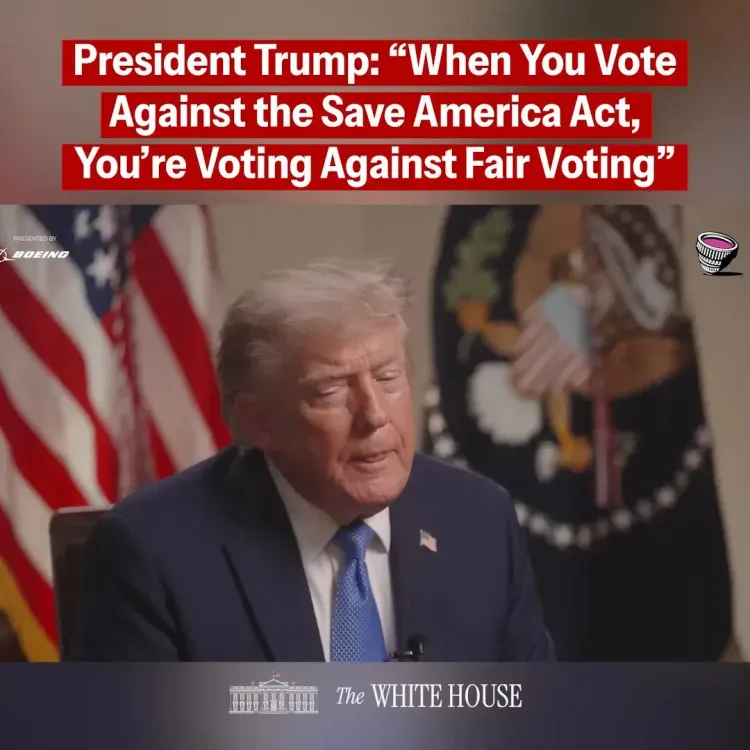
President Trump, in a White House-shared interview with Punchbowl News co-founder Jake Sherman, called voter ID and proof of citizenship 'common sense,' attacking congressional Democrats and promoting the Save America Act as a federal election integrity measure.
Key Takeaways
The White House shared a video on August 7, 2026 of President Trump advocating for voter ID and proof of citizenship requirements.
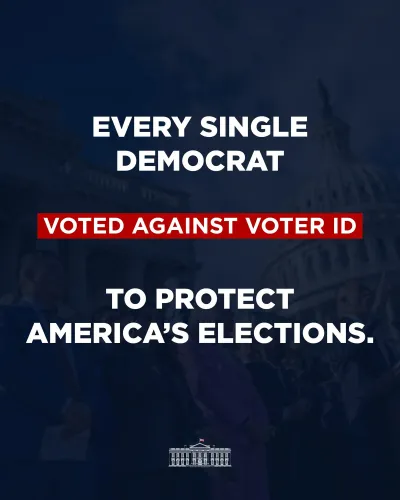
Trump described these measures as 'common sense' and criticised congressional Democrats for opposing them.
The interview was conducted by Jake Sherman of Punchbowl News, a Capitol Hill-focused outlet.
The Save America Act was referenced as the legislative vehicle for the administration's election integrity agenda.
Republican-led states have been enacting voter ID laws since the landmark 2013 Shelby County v.
A federal mandate would affect how all 50 states administer elections, with legal challenges widely anticipated.
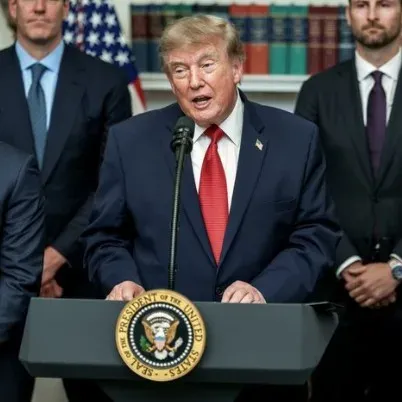
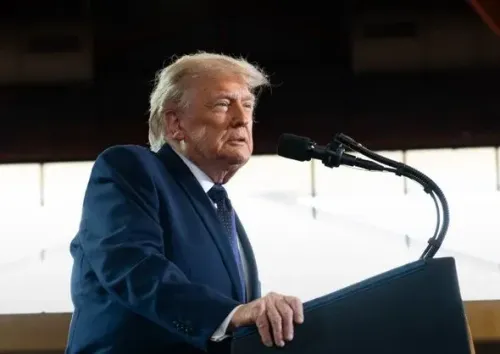
Washington DC — President Donald Trump is doubling down on one of his most consistent political battles: demanding that every American voter prove who they are and that they are a citizen before casting a ballot. The White House on Friday, August 7, 2026, shared a video of the President making his case directly, calling voter ID and proof of citizenship requirements 'common sense.'
In the interview with Jake Sherman, co-founder of the Capitol Hill-focused outlet Punchbowl News, Trump laid out his critique of congressional Democrats, framing their opposition to these measures as a deliberate effort to undermine election security. He also addressed the Save America Act, a piece of legislation tied to the Republican push for tighter federal election integrity standards.
A Decade-Long Fight Over Who Gets to Vote — and How
This is not a new front. Republican-led states began aggressively expanding voter ID requirements after the 2013 Shelby County v. Holder Supreme Court ruling loosened federal oversight of state election laws. By 2022, a wave of new statutes had reshaped voting rules across multiple states. Trump himself convened the Presidential Advisory Commission on Election Integrity in 2017 to examine vulnerabilities in voter rolls and registration systems, though it was dissolved without a final report.
The argument from Republicans has remained consistent: photo identification and citizenship verification are routine requirements in everyday civic and financial life, and elections — the foundation of democratic governance — deserve no less scrutiny. Democrats counter that such requirements disproportionately burden low-income voters, minorities, and the elderly, functioning as de facto suppression tools rather than security measures.
The Save America Act and the Congressional Standoff
The Save America Act sits at the centre of the current legislative clash. While the specific provisions of the bill and the full content of the Trump-Sherman interview cannot be independently confirmed from the established public record, the White House's framing is unambiguous: the administration views Democratic opposition as indefensible obstruction of basic electoral safeguards.
State election officials and voter advocacy groups on both sides are watching closely. Any federal mandate on ID or citizenship verification would fundamentally alter how 50 states administer their elections — a logistical and legal earthquake that courts would almost certainly be asked to referee.
The battle lines are drawn. The next move belongs to Congress — and the clock toward the next federal election cycle is already running.
Point of View
The White House is moving the debate from rhetoric to legislation, raising the stakes for Democratic senators who must now defend their opposition on the record. For Indian observers, this mirrors debates in democracies worldwide about balancing electoral security with inclusive access — a tension that has no easy resolution. The outcome of this legislative push will set a precedent for how the world's largest democracy by GDP manages its voter rolls in an era of intensifying political polarisation.
NationPress
22 Sept 2026
Frequently Asked Questions
What is the Save America Act?
The Save America Act is a Republican-backed piece of legislation focused on election integrity reforms, including voter ID and citizenship verification requirements. Its specific provisions have not been fully confirmed in the established public record.
Why does Trump want proof of citizenship to vote?
President Trump argues that citizenship verification is a basic safeguard to ensure only eligible Americans cast ballots, framing it as 'common sense' analogous to ID requirements for other civic activities.
Why do Democrats oppose voter ID laws?
Congressional Democrats argue that strict voter ID and citizenship verification requirements disproportionately burden low-income voters, elderly citizens, and minorities, potentially suppressing legitimate votes rather than preventing fraud.
What is Punchbowl News?
Punchbowl News is a media organisation co-founded by Jake Sherman that focuses on US congressional and Capitol Hill policy reporting.
What was the Presidential Advisory Commission on Election Integrity?
It was a body established by President Trump in 2017 to study vulnerabilities in US voter registration and voting processes. It was dissolved without issuing a final report.