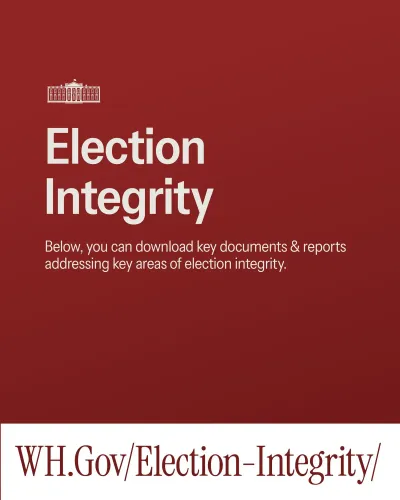
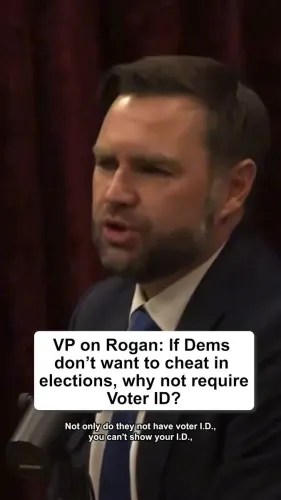
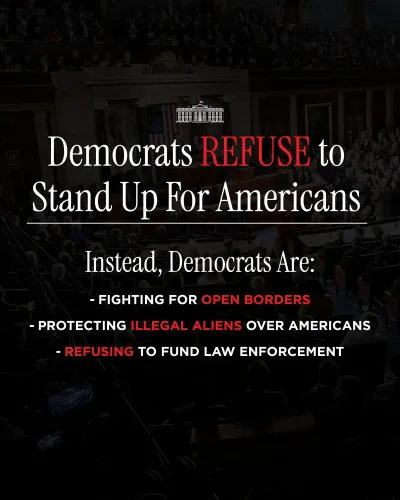
White House Hits Democrats Over Voter ID Vote
Synopsis
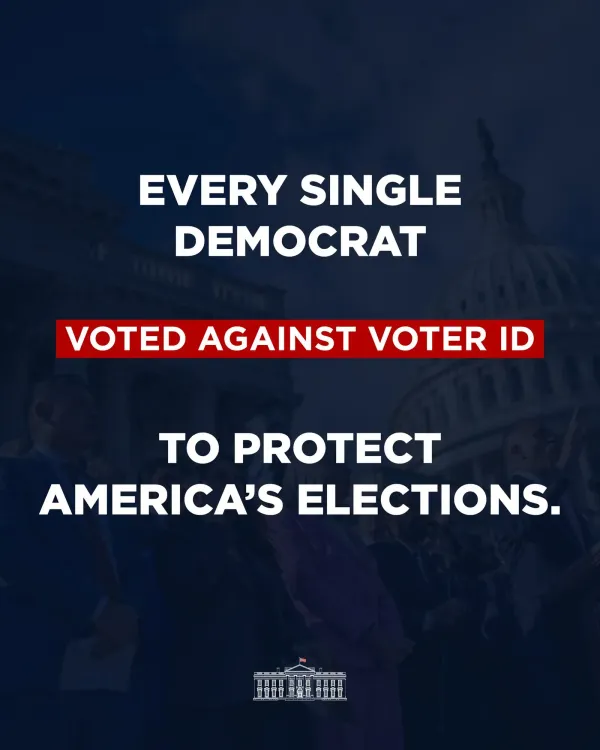
The White House accused every Democrat of voting against voter ID and secure elections legislation, framing the opposition as evidence of electoral vulnerability. The specific bill is unverified, but the post escalates a two-decade partisan fault line over voting access versus fraud prevention.
Key Takeaways
The White House posted on August 11, 2026 claiming every Democrat voted against voter ID and 'secure elections' legislation.
The specific congressional vote and bill referenced in the post have not been independently verified against official records.
Republicans frame voter ID as basic fraud prevention; Democrats argue strict ID mandates create access barriers for eligible voters.
The Help America Vote Act of 2002 set federal minimum standards after the disputed 2000 election but did not resolve the underlying partisan divide.
The White House post uses a rhetorical inversion — linking opposition to ID laws with intent to cheat — without addressing Democratic access-based counter-arguments.
Federal election reform legislation and state-level voter ID court challenges remain active areas to watch.
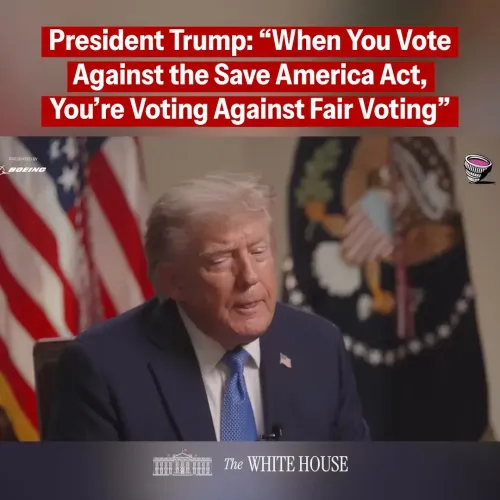
A pointed rhetorical challenge from the White House landed on Tuesday, August 11, 2026, as the official account of the Executive Office of the President accused every Democratic lawmaker of voting against both voter ID requirements and what it termed 'secure elections' — then posed a question designed to sting: if voter ID is common sense and you are not cheating, why vote against it?
The vote the White House is referencing
The post claims unanimity — 'every single Democrat' — against voter ID legislation in what appears to be a recent congressional vote. The specific bill and chamber are not named in the post, and the vote cannot be independently verified against official congressional records at this time. What is clear is that the White House chose to frame the outcome in the starkest possible partisan terms, pairing the vote on ID requirements with a separate claim about 'secure elections' legislation.
A fault line that has run through US politics for two decades
The voter ID debate is not new. Since the disputed 2000 presidential election recount, US election policy has been a persistent battleground. The Help America Vote Act of 2002 set federal minimum standards for voting systems and identification, but it did not settle the underlying argument. Republicans have consistently pushed for stricter photo ID mandates, framing them as basic fraud prevention. Democrats have consistently resisted federal ID mandates, arguing they erect barriers that disproportionately affect low-income, elderly, and minority voters who are less likely to hold government-issued photo identification.
Near-party-line votes on election legislation have become routine. The White House post follows a well-established Republican communications strategy: casting Democratic opposition to ID laws not as a civil-access argument, but as an admission of intent to exploit loose election rules.
Why the framing matters — and what it leaves out
The rhetorical question at the end of the post — 'if Voter ID is common sense and you're not cheating, why vote against it?' — is a classic inversion-of-innocence frame. It does not engage with the Democratic counter-argument, which centres on access: that millions of eligible Americans lack the required documents, and that obtaining them can be costly and logistically difficult, functioning as a de facto poll tax. Courts have repeatedly weighed these competing claims, with mixed results across different state laws.
The post also bundles voter ID with 'secure elections' as a single package, without specifying what other provisions the legislation contained — a detail that often shapes how members of both parties ultimately vote on omnibus election bills.
With congressional consideration of any new federal election reform bill still live, and state-level voter ID laws continuing to face court challenges, this exchange is almost certainly not the last word.
Point of View
The post attempts to make dissent look coordinated and damning rather than principled. The move is strategically timed — election reform debates tend to intensify ahead of major electoral cycles, and controlling the narrative around 'secure elections' has proven electorally valuable for the GOP. Democrats, for their part, have consistently failed to land their access argument with the same punchy simplicity, leaving the rhetorical field tilted.
NationPress
25 Sept 2026
Frequently Asked Questions
What did the White House say about Democrats and voter ID?
The White House posted on August 11, 2026, claiming every single Democrat voted against voter ID requirements and against what it called 'secure elections,' then posed a rhetorical question implying that opposition to voter ID suggests intent to cheat.
Why do Democrats oppose voter ID laws?
Democrats generally argue that strict photo voter ID mandates create barriers for eligible voters — particularly low-income, elderly, and minority citizens — who may lack the required documents, effectively suppressing lawful participation rather than preventing fraud.
Why do Republicans support voter ID requirements?
Republicans promote voter ID as a common-sense safeguard against electoral fraud, arguing that requiring identification to vote is a basic security measure consistent with ID requirements in many other areas of civic life.
What is the Help America Vote Act?
The Help America Vote Act of 2002 established federal minimum standards for voting systems and voter identification following the disputed 2000 presidential election recount, but it did not resolve the broader partisan debate over strict photo ID mandates.
Has the specific voter ID vote the White House mentioned been confirmed?
The specific bill and vote referenced in the White House post have not been independently verified against official congressional records, and details such as the chamber and bill number were not included in the post.