White House Calls Democratic Voters Anti-American in Sharp Election-Season Post

Synopsis
The White House posted a blunt partisan attack on October 23, 2026, accusing Democrats of welcoming people who 'openly hate our country.' No specific individual or incident was named, leaving the referent undefined and the controversy wide open ahead of the 2026 election cycle.
Key Takeaways
The official @WhiteHouse account posted a direct partisan attack on October 23, 2026 , accusing Democrats of wanting people who 'openly hate our country' in America.
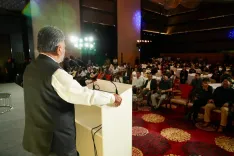
The post was accompanied by one image; no individual, policy, or specific event was named in the text.
The use of the official White House account for partisan electoral messaging blurs the line between executive communication and campaign activity.
No on-the-record response from Democratic leadership had been issued at the time of publication.
The 'love of country' framing is a recurring tactic in US partisan politics, designed to contest the opposition's legitimacy rather than engage policy.
With the partisan temperature already running high ahead of the 2026 election cycle, The White House escalated the rhetoric on Friday, October 23, 2026, posting a pointed attack on the Democratic Party that accused it of welcoming people who 'openly hate our country' — a charged line that landed without naming a specific individual or incident.
The post and what it says — and does not say
The post, shared from the official @WhiteHouse account, read in full: 'This is who Democrats want in America: people who openly hate our country.' The message was accompanied by one image, though the subject of that image was not described in available metadata. No name, no policy, no event was cited — making the referent of 'this' the central ambiguity the statement hinges on.
That ambiguity is not accidental. Broad, imagistic attacks — pinning an entire opposition party to an unnamed, extreme figure or moment — are a well-worn tool of campaign-season messaging, designed to circulate widely and let audiences fill in their own referent.
White House as campaign megaphone — a pattern with a history
The use of official executive communications infrastructure to make partisan electoral arguments has intensified across recent administrations. Posting from @WhiteHouse rather than a campaign account confers the visual authority of the presidency on what is, in substance, a party-political attack. Critics have long argued this blurs the line between governance and electioneering; supporters frame it as the president's right to communicate directly with the public on the character of the opposition.
The specific framing — questioning an opponent's love of country — is among the sharpest arrows in partisan quivers. It does not engage policy; it contests legitimacy. When it emanates from the official White House account, the institutional weight amplifies both the attack and the controversy around it.
Democrats yet to respond publicly
As of the time of publication, no on-the-record response from senior Democratic leaders had been issued in reaction to this specific post. The party's likely counterpunch — that weaponising patriotism as a political cudgel is itself a threat to democratic norms — is a well-rehearsed one, and any formal reply would add the next chapter to a confrontation that both sides have clear incentives to keep alive through election season.
Whether a follow-up post identifies the unnamed subject will determine whether this moment is a passing provocation or the opening salvo of a sustained line of attack.
Point of View
And a potent one. The choice of the @WhiteHouse handle over a campaign account is deliberate: it lends the charge institutional gravity. This fits a broader pattern in which the boundary between governing and campaigning has eroded dramatically, with official platforms doing the work once reserved for rallies and party ads. What makes this post strategically notable is precisely its vagueness — without a named target, the attack is impossible to rebut and endlessly recyclable, a feature, not a bug, of election-season provocation.
NationPress
24 Oct 2026
Frequently Asked Questions
What did the White House post about Democrats on October 23 2026?
The White House posted: 'This is who Democrats want in America: people who openly hate our country.' The post included one image but did not name any specific person or incident.
Who is the White House referring to in the 'openly hate our country' post?
The post did not identify any specific individual or event. The referent of 'this' remains undefined based on the available text and metadata.
Is it unusual for the White House account to post partisan political content?
It is part of a pattern seen across recent administrations where the official @WhiteHouse account has been used to make partisan electoral arguments, blurring the line between government communication and campaign messaging.
How did Democrats respond to the White House patriotism attack?
As of publication, no formal on-the-record response from senior Democratic leaders had been issued specifically addressing this post.
Why does the White House post on X matter for Indian audiences?
US political dynamics, including the tone and direction of American domestic politics, have direct implications for US foreign policy, trade relationships, and the geopolitical environment that affects India's strategic interests.