White House Post Targets Democrats Over Immigration Policy

Synopsis
The White House posted a blunt partisan message on June 8, 2026, accusing Democrats of siding with undocumented immigrants who have criminal records. The post continues a pattern of the official presidential account being used for direct political attacks on the opposing party amid ongoing US immigration policy deadlock.
Key Takeaways
The White House posted a partisan attack on June 8, 2026 on X, targeting the Democratic Party over immigration.
The post used the phrase 'BFFs forever' to allege Democratic sympathy toward undocumented immigrants with criminal records.
The official presidential account was used for the message, continuing a pattern of institutional accounts carrying campaign-style rhetoric.
US immigration policy has been legislatively deadlocked since the failure of a major bipartisan Senate bill in 2013 .
No specific legislation, statistics, or incidents were cited in the post; it functions as a political positioning statement.
Congressional action on border and asylum law and state-level enforcement responses remain the key developments to watch.
The White House, the official communications account of the Executive Office of the President of the United States, posted a sharp partisan message on X (formerly Twitter) on Monday, June 8, 2026, directly attacking the Democratic Party over its stance on undocumented immigrants with criminal records.
Context
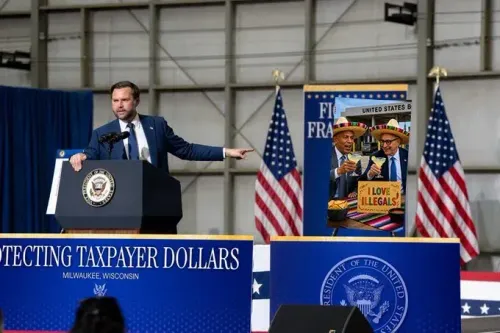
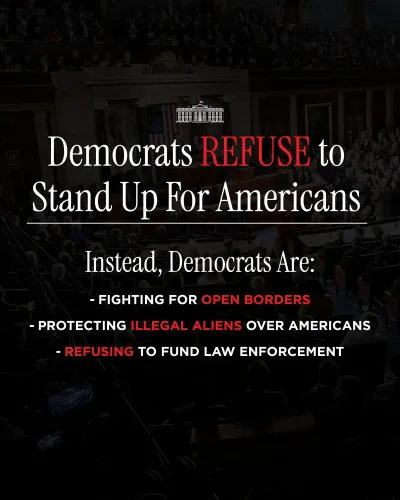
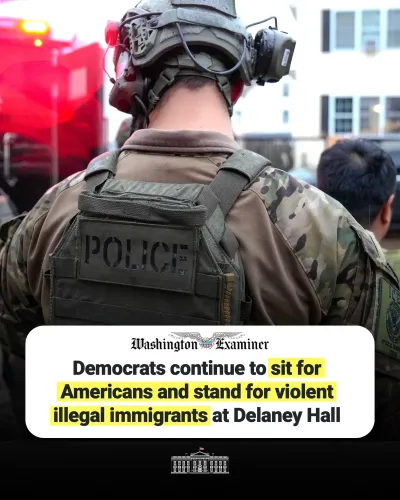
The post, reading 'Dems + Criminal Illegal Aliens = BFFs forever,' uses informal internet slang — 'BFFs' meaning 'Best Friends Forever' — to frame the Democratic Party as sympathetic to undocumented individuals who have committed crimes. The message was accompanied by one image. The use of the official White House account for such direct partisan rhetoric marks a continuation of a pattern of social media messaging that blurs the line between institutional government communication and political campaigning.
Policy Backdrop
US immigration policy has been a deeply polarised issue for over a decade. The Border Security, Economic Opportunity, and Immigration Modernization Act, a bipartisan Senate bill, failed to advance in 2013, leaving the legislative landscape fragmented. Since then, successive administrations have relied heavily on executive actions, which have faced repeated court challenges, while Congress has been unable to pass comprehensive immigration reform.
Rhetoric linking the opposing party to criminal elements in the immigration debate has appeared in messaging from both sides of the political aisle across multiple election and governance cycles. The framing of Democrats as protectors of 'criminal illegal aliens' echoes language used in prior campaign communications and is a well-established rhetorical device in this policy space.
Stakeholders and Impact
Democratic voters and party leadership are the direct targets of the post, which is likely to draw strong rebuttals. Border communities — which experience the practical consequences of both enforcement policy and legislative inaction — remain central stakeholders in any immigration debate. Civil liberties organisations and immigration advocacy groups are also likely to respond to the White House's characterisation.
The post does not cite specific legislation, statistics, or incidents, making it primarily a political positioning statement rather than a policy announcement. Its reach is amplified by the institutional weight of the official White House account, which carries the authority of the Executive Office of the President.
What's Next
Congressional action on border security and asylum legislation will be the key arena to watch. State-level governments, particularly those with large immigrant populations, are expected to continue calibrating their own enforcement and sanctuary policies in response to federal pressure. The escalating tone of White House social media communications suggests that immigration will remain a central flashpoint in the lead-up to any upcoming electoral cycle.
Point of View
The post is designed to energise a political base rather than advance a specific legislative proposal. This fits a broader arc in which US immigration policy has become less a governance problem to be solved and more a permanent culture-war battleground. For Indian observers, it signals continued unpredictability in US executive messaging on an issue that directly affects Indian visa and immigration communities.
NationPress
22 Oct 2026
Frequently Asked Questions
What did the White House post on X on June 8 2026?
The White House posted a partisan message stating 'Dems + Criminal Illegal Aliens = BFFs forever,' targeting the Democratic Party over its perceived stance on undocumented immigrants with criminal records.
Why is the White House using the official account for political attacks?
The official White House X account has increasingly been used for direct partisan messaging, continuing a pattern from prior administrations of blurring institutional communication with political campaigning.
What is the US immigration policy debate about in 2026?
The debate centres on border enforcement, treatment of undocumented immigrants, and the failure of Congress to pass comprehensive immigration reform since the collapse of a major bipartisan bill in 2013.
How does this White House post affect Indians in the US?
Escalating rhetoric around immigration enforcement can create broader uncertainty for legal immigrants and visa holders, including the large Indian-origin community in the United States.
What happens next in US immigration policy?
Observers are watching for Congressional movement on border or asylum legislation and state-level responses to federal enforcement priorities, with immigration expected to remain a central political issue.