CM Rekha Gupta Outlines Viksit Delhi Vision at Ideas for India 2.0
Synopsis
Delhi Chief Minister Rekha Gupta addressed the Times Group's Ideas for India 2.0 Summit on October 22, 2026, presenting her vision for a 'Viksit Delhi' as a foundational pillar of the national Viksit Bharat 2047 mission, linking the capital's urban trajectory to India's centenary development goals.
Key Takeaways
Delhi CM Rekha Gupta spoke at the Times Group's Ideas for India 2.0 Summit on October 22, 2026 .
She articulated a 'Viksit Delhi' vision explicitly framed around the central government's Viksit Bharat @2047 national development mission.
The Viksit Bharat framework targets a fully developed India by 2047 , covering infrastructure, governance, and economic growth.
The move reflects a broader BJP -governed state pattern of aligning local development narratives with Union government goals.
Detailed Delhi-specific action plans on infrastructure and governance reform are yet to be formally announced.
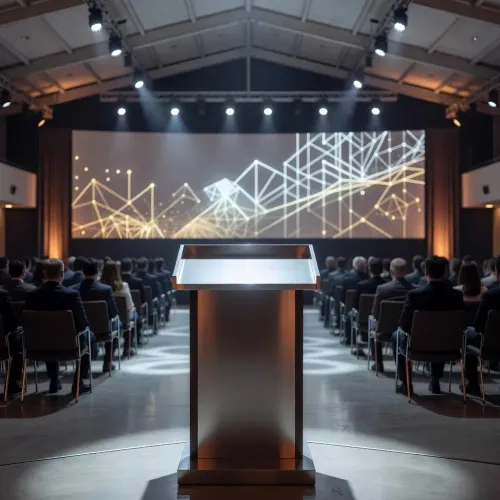
A national summit stage, a city's ambitions, and a deadline of 2047 — Delhi Chief Minister Rekha Gupta stepped up to the podium at the Times Group's Ideas for India 2.0 Summit on Thursday, October 22, 2026, to lay out her blueprint for transforming the capital into a driver of India's long-term development.
Viksit Delhi as a Pillar of Viksit Bharat
Speaking at the high-profile policy conclave, CM Gupta framed Delhi's growth not as an isolated urban ambition but as an integral piece of the central government's Viksit Bharat @2047 mission — the national vision for a fully developed India by the country's centenary of independence. Her message was direct: what happens in the capital shapes the trajectory of the country.
The Viksit Bharat framework, launched by the Government of India, sets long-term targets spanning infrastructure, governance, economic productivity, and quality of life. By anchoring Delhi's state-level agenda explicitly to that national vision, CM Gupta signalled a coordinated, top-to-bottom approach to urban reform — a model increasingly visible across BJP-governed states.
Ideas for India 2.0: Where Policy Meets Platform
The Ideas for India 2.0 Summit, organised by the Times Group, has established itself as one of the country's premier forums for policy dialogue, drawing administrators, thinkers, and business leaders to debate India's development priorities. Appearing at such a platform gives state executives a rare opportunity to pitch their governance narrative to a national audience — and to signal alignment with Union government goals.
For Delhi — a city of over 30 million people, home to the organs of national power, and one of India's largest economic centres — the stakes of getting urban governance right are outsized. Every infrastructure bottleneck, every air-quality failure, every commute lost to traffic is felt by residents and watched by policymakers nationwide.
What Comes Next for Delhi's Development Agenda
The immediate question is specificity. A summit address is a vision statement; the harder work is translating it into detailed, time-bound action plans on infrastructure, housing, and governance reform. Observers will be watching for official follow-up announcements from the Delhi government in the weeks ahead — the kind of concrete targets and departmental mandates that turn a compelling platform speech into measurable policy.
If CM Gupta delivers that follow-through, Delhi could become a showcase for how India's biggest cities operationalise the Viksit Bharat promise at the ground level. The vision has been declared — now the capital has to build it.
Point of View
CM Rekha Gupta is executing a dual move: building political alignment with the Union government while simultaneously staking a distinct governance identity for the capital. This top-down coordination between state and central BJP administrations is becoming a defining feature of the party's federal strategy heading toward 2047. For Delhi — perpetually in the spotlight due to its symbolic and economic weight — such platform appearances carry extra pressure: bold vision must eventually convert into verifiable urban outcomes. The test will be whether summit rhetoric is followed by binding policy commitments that residents can hold the administration to.
NationPress
23 Oct 2026
Frequently Asked Questions
What did Rekha Gupta say at the Ideas for India 2.0 Summit?
Delhi Chief Minister Rekha Gupta shared her vision for a 'Viksit Delhi' at the Times Group's Ideas for India 2.0 Summit on October 22, 2026, framing Delhi's development as a key contributor to India's Viksit Bharat 2047 national mission.
What is the Viksit Bharat 2047 vision?
Viksit Bharat @2047 is a national development vision launched by the Government of India that sets long-term targets for infrastructure, governance, economic productivity, and quality of life, aiming to make India a fully developed nation by its centenary of independence in 2047.
What is the Ideas for India Summit?
The Ideas for India Summit is a premier policy dialogue platform organised by the Times Group, bringing together administrators, thinkers, and business leaders to discuss India's development priorities.
How does Delhi's development connect to Viksit Bharat?
CM Rekha Gupta positioned Delhi's growth as integral to the Viksit Bharat framework, arguing that transforming the capital's infrastructure and governance directly accelerates national development goals.
What should we expect next from Delhi CM Rekha Gupta on development plans?
Policy observers are watching for detailed, Delhi-specific action plans on urban infrastructure, housing, and governance reform that would translate the summit vision into concrete, time-bound government commitments.