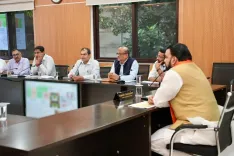
CM Bhupendra Patel Directs Collectors on SWAGAT Grievances
Synopsis
Gujarat Chief Minister Bhupendra Patel chaired the October 2026 Rajya SWAGAT grievance session, directing all district collectors to urgently resolve farmers' issues, drinking water complaints, road demands, and land encroachments, while ensuring timely issuance of farmer account-holder certificates.
Key Takeaways
CM Bhupendra Patel chaired the October 2026 Rajya SWAGAT programme on October 22, 2026 in Gandhinagar.
Petitions covered farmers' disputes, drinking water, roads, and encroachments on government land .
All district collectors across Gujarat received direct, explicit instructions to resolve these grievances swiftly.
CM Patel specifically ordered that farmer account-holder certificates be issued on time and per rules.
The SWAGAT programme , launched in 2003 , is Gujarat's flagship technology-enabled monthly grievance redressal mechanism.
The state government reaffirmed its commitment to transparent and technology-driven resolution of public complaints.
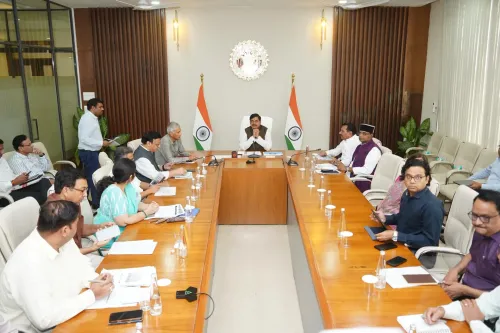
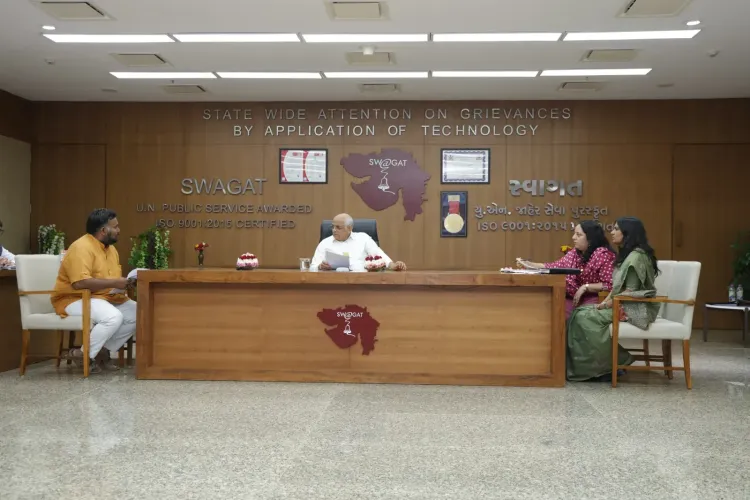
Gujarat's two-decade-old promise to its citizens — that no complaint goes unanswered — got a fresh mandate on Thursday, October 22, 2026, as Gujarat Chief Minister Bhupendra Patel chaired the October edition of the state's flagship 'Rajya SWAGAT' programme, hearing petitions directly from citizens and issuing firm directions to officials for swift, positive resolution.
What farmers and villagers brought to Gandhinagar
The petitioners who walked into this month's Rajya SWAGAT session carried the everyday weight of rural Gujarat: unresolved farmers' disputes, inadequate drinking water supply, damaged roads, and encroachments on government land. CM Patel listened to each category of grievance and directed officials to begin resolution processes without delay. He also gave specific orders that farmer account-holder certificates — critical documents for credit, subsidy, and land-rights access — be issued to eligible applicants within stipulated timelines and strictly as per rules.
All district collectors across the state received clear, unambiguous directives stemming from the session. The instruction to prevent encroachments on government land, in particular, signals a continuing administrative priority around land governance in rural constituencies.
SWAGAT at 23: technology, transparency, and accountability
SWAGAT — State Wide Attention on Grievances by Application of Technology — was launched by Gujarat in 2003 and became a nationally cited model for tech-enabled public grievance redressal. The programme operates through monthly hearings, first at the district level and then escalating to the Chief Minister's office for unresolved cases, creating a layered accountability chain that runs from the village all the way to Gandhinagar.
CM Patel's post underlined that the state government remains 'committed to transparent and technology-driven resolution of citizens' problems' — a framing that echoes Gujarat's long-standing positioning as a frontrunner in e-governance. Successive chief ministers have used SWAGAT directives to publicly signal that district-level bureaucracy cannot sit on complaints indefinitely.
The collector directive and what it means on the ground
The explicit naming of all district collectors in CM Patel's directions matters beyond formality. In Gujarat's administrative architecture, the collector is the pivotal officer — controlling land records, revenue administration, and local infrastructure coordination. A Chief Minister-level directive through a public forum like SWAGAT is both a legal instruction and a reputational signal: performance on these specific grievance categories will now be tracked.
Resolution statistics from the October SWAGAT round, and any follow-up action reports published at the collector level, will be the real measure of whether today's directions translate into closed files for farmers and rural petitioners.
For the citizens who queued up in Gandhinagar this October, the clock on their grievances has officially started.
Point of View
Especially farmers. By personally chairing the October session and publicly naming district collectors as responsible officers, CM Patel reinforces a top-down accountability culture that has been central to Gujarat's administrative identity since 2003. The specific focus on farmer certificates and land encroachments is telling: these are recurring rural flashpoints that, if unaddressed, translate directly into agrarian discontent ahead of local-body and state election cycles. Whether the directive converts into measurable closure rates will determine if this session is remembered as governance or theatre.
NationPress
23 Oct 2026
Frequently Asked Questions
What is the SWAGAT programme in Gujarat?
SWAGAT stands for State Wide Attention on Grievances by Application of Technology and was launched by Gujarat in 2003. It is a monthly, tech-enabled grievance redressal programme where citizens can present complaints that escalate from district to Chief Minister level if unresolved.
What did CM Bhupendra Patel announce at the October 2026 SWAGAT session?
CM Patel directed all district collectors to swiftly resolve grievances related to farmers, drinking water, roads, and encroachments on government land, and also ordered timely issuance of farmer account-holder certificates as per rules.
Who are district collectors and why do they matter in Gujarat's grievance system?
District collectors are the senior administrative heads of each district in Gujarat, responsible for land records, revenue administration, and local infrastructure. They are the key implementers of Chief Minister-level SWAGAT directives.
What is a farmer account-holder certificate in Gujarat?
A farmer account-holder certificate is an official document issued to registered farmers in Gujarat, required to access agricultural credit, subsidies, and land-rights benefits. CM Patel ordered that these be issued on time and strictly as per rules.
How often is the Rajya SWAGAT programme held in Gujarat?
Rajya SWAGAT hearings are held monthly. Each month, unresolved grievances from the district level are brought before the Chief Minister's office for direct intervention and direction.