CM Bhajanlal Flags Water, Power Gains in Rajasthan's 2.5 Years
Synopsis
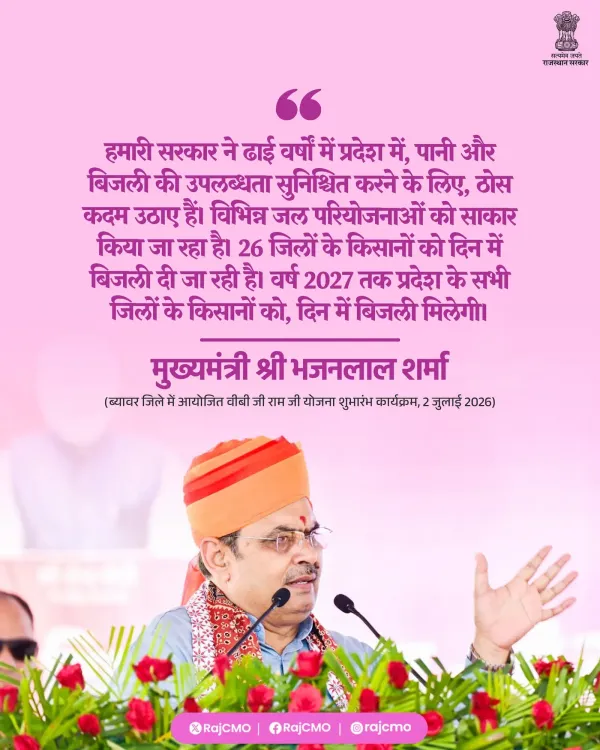
The Chief Minister's Office of Rajasthan posted on 3 July 2026 that the Bhajanlal Sharma government has taken concrete steps over two and a half years to ensure water and electricity availability, with multiple water projects currently being implemented across the state.
Key Takeaways
The Chief Minister's Office of Rajasthan posted on 3 July 2026 claiming concrete action on water and electricity over two and a half years .
Chief Minister Bhajanlal Sharma has led the BJP government in Rajasthan since December 2023 .
The post states that 'various water projects are being realised' across the state, without naming specific schemes.
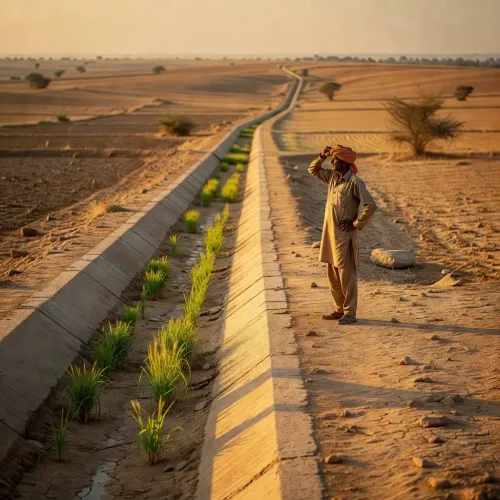
The Eastern Rajasthan Canal Project (ERCP) , targeting 13 eastern districts , is among the major ongoing water infrastructure initiatives in the state.
Farmers and rural households are the primary stakeholders for improved water and electricity access in Rajasthan .
Completion milestones for water project phases and the 2026-27 state budget will be key tests of the government's infrastructure claims.
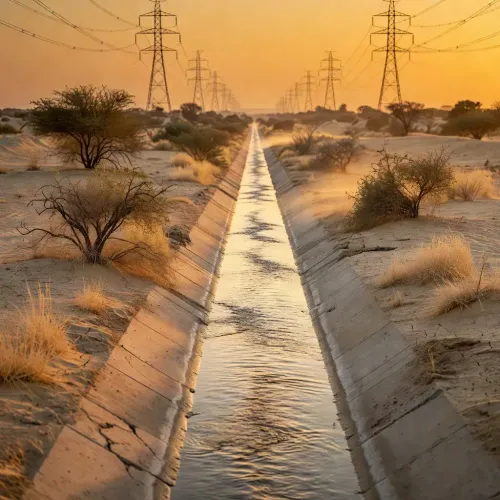
The Chief Minister's Office of Rajasthan on Friday, 3 July 2026, posted on X to highlight that the state government has taken 'concrete steps' over the past two and a half years to ensure the availability of water and electricity across Rajasthan, with multiple water projects currently being brought to fruition.
The post, attributed to the office of Chief Minister Bhajanlal Sharma, stated in Hindi: 'हमारी सरकार ने ढाई वर्षों में प्रदेश में, पानी और बिजली की उपलब्धता सुनिश्चित करने के लिए, ठोस कदम उठाए हैं। विभिन्न जल परियोजनाओं को साकार किया जा रहा है।' ('Our government has taken concrete steps in the last two and a half years to ensure the availability of water and electricity in the state. Various water projects are being realised.')
Context
Bhajanlal Sharma took charge as Chief Minister of Rajasthan in December 2023, following the BJP's return to power after the state assembly elections. The post comes at roughly the midpoint of the government's five-year term — a moment when ruling administrations typically take stock of delivery on campaign promises, particularly on basic infrastructure.
Rajasthan, India's largest state by area, has long grappled with chronic water scarcity owing to its predominantly arid and semi-arid geography. Ensuring reliable water supply for agriculture and drinking purposes, alongside stable electricity access, has been a perennial priority for successive state governments.
Policy Backdrop
Among the flagship initiatives under watch is the Eastern Rajasthan Canal Project (ERCP), a major irrigation scheme designed to supply water to 13 eastern districts of the state. The project received in-principle approval and a funding push in 2021 under the preceding Congress-led government and has continued through successive administrations.
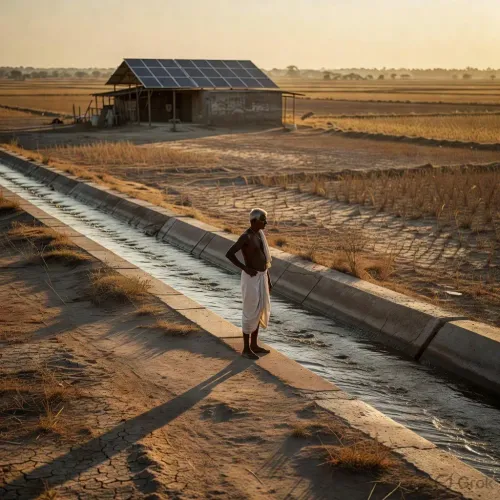
The state also has a long history of large-scale canal infrastructure, most notably the Indira Gandhi Nahar Pariyojana, which has supplied irrigation water to western districts since its completion phases in the 1980s and 1990s. On the power side, Rajasthan expanded its solar generation capacity significantly through parks established between 2015 and 2020, leveraging its high solar irradiance. The current government's references to electricity availability sit within this multi-decade investment arc.
Stakeholders and Impact
The primary beneficiaries of improved water and electricity infrastructure in Rajasthan are farmers and rural households, who face the sharpest consequences of supply disruptions in an agrarian, water-stressed state. Reliable irrigation directly affects crop yields and livelihoods across the state's predominantly rural districts.
Urban and peri-urban residents also stand to gain from grid stability and drinking water security, particularly in rapidly growing towns in the state's eastern and southern belts. The hashtag #आपणो_अग्रणी_राजस्थान ('Our Leading Rajasthan') used in the post signals the government's intent to frame these infrastructure pushes as part of a broader development identity for the state.
What's Next
Analysts and opposition parties are likely to scrutinise concrete completion milestones for individual phases of water projects such as the ERCP, as the government's mid-term narrative is built on delivery rather than announcements alone. Fresh budget allocations for water and power in the 2026-27 Rajasthan budget session will be a key indicator of the administration's stated priorities translating into spending commitments.
With roughly two and a half years remaining in the current term, the Bhajanlal Sharma government will face growing pressure to convert ongoing project timelines into tangible outcomes — particularly for farmers dependent on canal irrigation and households in districts still facing irregular electricity supply.
Point of View
The government is targeting the two most politically sensitive utilities in a desert state where supply failures have historically swung elections. The absence of specific project names or statistics in the post reflects a careful messaging choice: broad credit-claiming without creating hostages to fortune on delivery timelines. Whether this narrative holds will depend on whether ERCP phases and power supply data show measurable improvement before the next assembly cycle.
NationPress
2 Oct 2026
Frequently Asked Questions
What has the Rajasthan government done for water supply in 2.5 years?
The Chief Minister's Office of Rajasthan stated on 3 July 2026 that the Bhajanlal Sharma government has taken 'concrete steps' to ensure water availability and is implementing multiple water projects across the state, though specific project names or statistics were not cited in the post.
What is the Eastern Rajasthan Canal Project (ERCP)?
The Eastern Rajasthan Canal Project is a major irrigation initiative designed to supply water to 13 eastern districts of Rajasthan. It received in-principle approval and a funding push in 2021 and has continued under successive state governments.
Who is the Chief Minister of Rajasthan in 2026?
Bhajanlal Sharma is the Chief Minister of Rajasthan, having taken charge in December 2023 after the BJP won the state assembly elections.
What is the hashtag Aapno Agrani Rajasthan about?
The hashtag #आपणो_अग्रणी_राजस्थान , which translates to 'Our Leading Rajasthan', is used by the Rajasthan BJP government to brand its development and governance narrative for the state.
Why is water and electricity supply a big issue in Rajasthan?
Rajasthan is India's largest state by area and has a predominantly arid and semi-arid geography, making it prone to chronic water scarcity. Reliable irrigation and electricity are critical for farmers and rural households, and supply failures have historically been a major political issue in the state.