Rajasthan CM Bhajanlal Pledges Water Self-Reliance, Daytime Power for Farmers
Synopsis
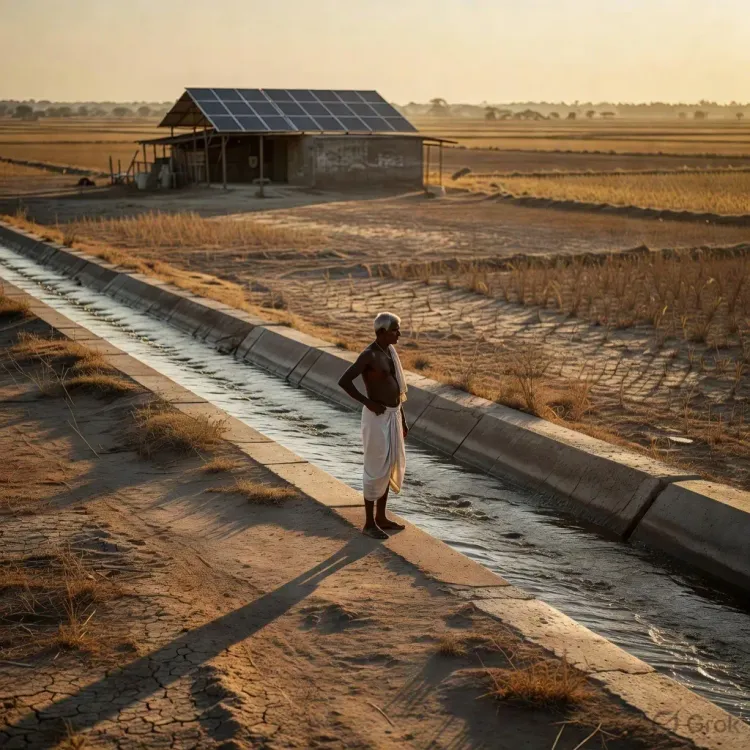
The Chief Minister's Office of Rajasthan declared on 14 August 2026 that the state will become water self-reliant and is working in mission mode to ensure daytime electricity for farmers across all districts, building on earlier water conservation programmes under CM Bhajanlal Sharma.
Key Takeaways
Rajasthan has been declared on track to achieve water self-reliance , according to the Chief Minister's Office post dated 14 August 2026 .
CM Bhajanlal Sharma's government is working in mission mode to supply daytime electricity to farmers in all districts of the state.
Rajasthan has historically suffered from severe water scarcity and unreliable agricultural power supply, making both pledges directly consequential for the farming community.
The state had previously launched the Mukhyamantri Jal Swavalamban Abhiyan for community-level water conservation through tanks and watershed works.
Agricultural feeder separation and solar pump schemes are among the infrastructure levers the state has previously deployed to improve daytime power reliability for irrigation.
District-wise timelines and budget allocations remain the key metrics to watch in upcoming state budget or policy reviews.
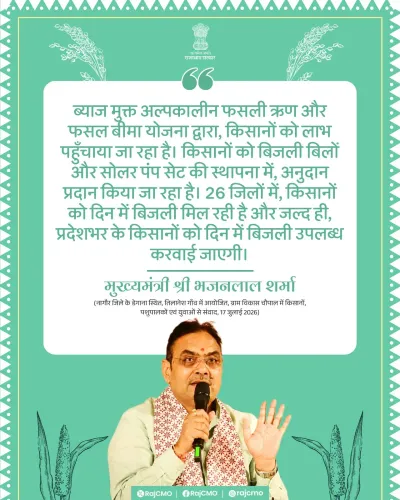
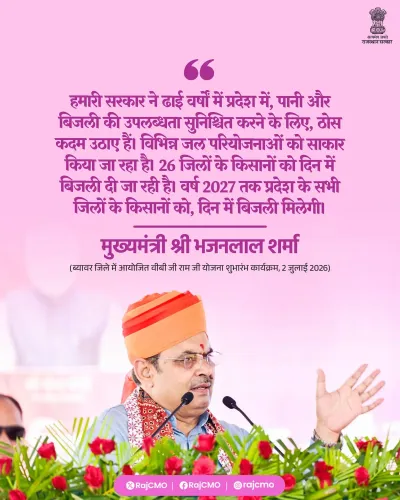
Water scarcity and erratic electricity have long been the twin burdens of Rajasthan's farmers — and the state government is now signalling a mission-mode push to address both at once. The Chief Minister's Office of Rajasthan posted on 14 August 2026, quoting Chief Minister Bhajanlal Sharma, that the state will achieve water self-reliance and is already working on ensuring daytime electricity supply to farmers across all districts.
The twin promise: water independence and daylight power
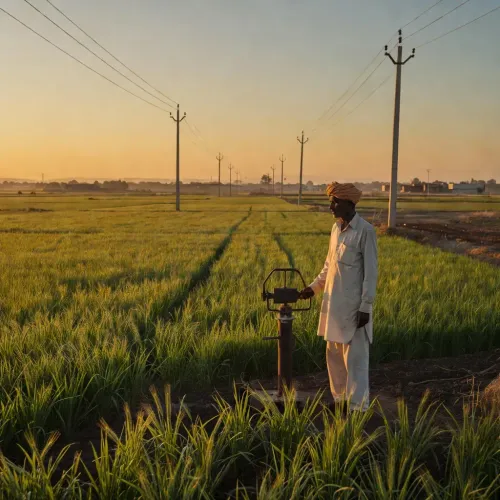
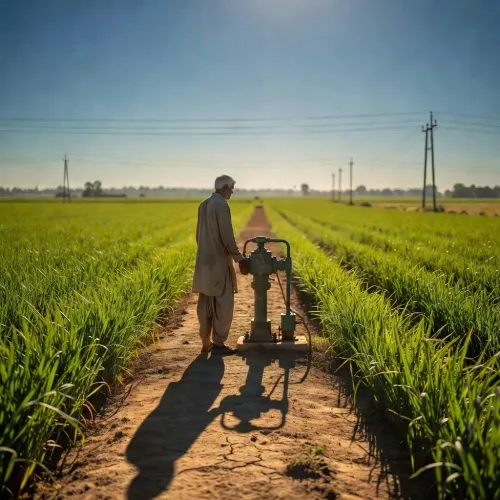
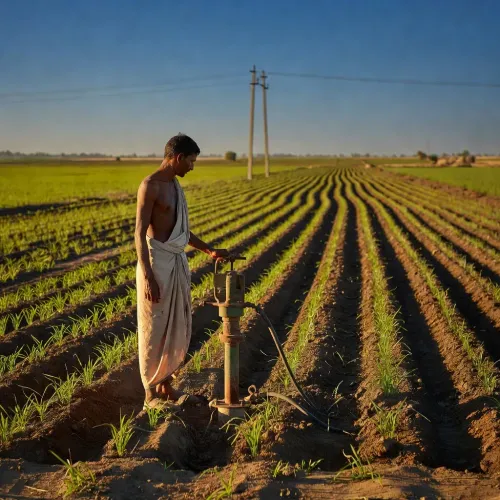
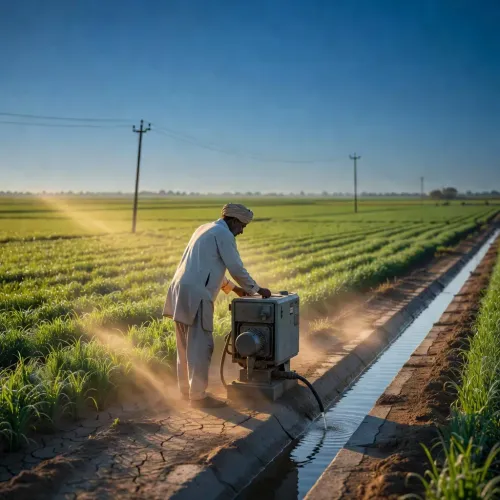
The post, shared under the hashtag #आपणो_अग्रणी_राजस्थान ('Our Leading Rajasthan'), carries a direct assertion from the Chief Minister's Office: Rajasthan will become 'water self-reliant' in the coming period. Simultaneously, the state government is working 'in mission mode' to supply electricity to farmers during daytime hours across every district. For a farming community that has long operated diesel pump-sets or irrigated at odd hours due to load-shedding, daytime power is not a convenience — it is an economic lifeline.
Rajasthan's long fight against water stress
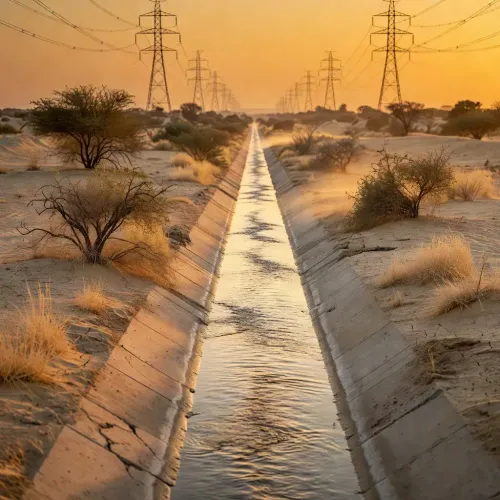
Rajasthan, India's largest state by area, sits atop one of the country's most water-stressed geographies. Groundwater depletion, erratic monsoons, and a vast agricultural sector have made water management a perennial political and administrative priority. The state had previously launched the Mukhyamantri Jal Swavalamban Abhiyan — a community-driven water conservation programme built around village tanks and watershed restoration — to reduce dependence on groundwater extraction. The current BJP government under Chief Minister Bhajanlal Sharma, in office since December 2023, is positioning itself as the administration that will take that ambition to its logical conclusion: full water self-reliance at the state level.
Feeder separation and solar pumps: the infrastructure behind the pledge
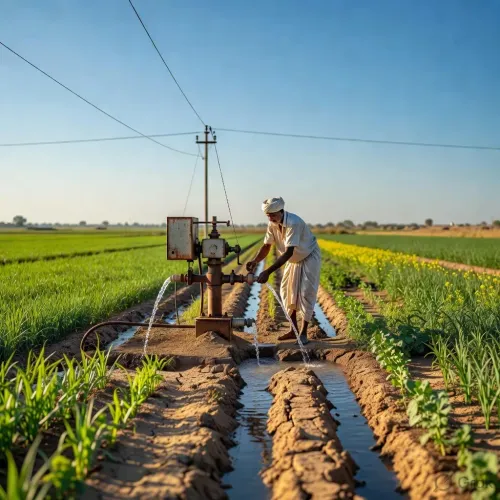
The daytime power commitment is not new in aspiration, but the 'mission mode' framing signals administrative urgency. Rajasthan has previously pursued agricultural feeder separation — splitting farm electricity supply from domestic lines — and solar pump schemes to reduce grid pressure and deliver reliable irrigation power during daylight. Scaling this across all districts simultaneously is the operational challenge the government is now publicly owning. District-wise rollout timelines and budget allocations will be the real test, likely to surface in forthcoming state budget sessions or departmental reviews.
Together, the two commitments — water self-reliance and daytime agricultural power — form a resource-security agenda aimed squarely at Rajasthan's farmer base, a constituency that cuts across caste and community lines in a state where agriculture remains the primary livelihood for a large share of the population.
The proof, as always in infrastructure pledges, will be in the district-level delivery — and that is precisely what farmers across Rajasthan will now be watching for.
Point of View
Under a single 'mission mode' umbrella. Framing both as works-in-progress — rather than announcing a new scheme with a launch date — gives the administration flexibility but also exposes it to accountability demands from an attentive farming constituency. The invocation of the hashtag 'Our Leading Rajasthan' signals that this is as much about brand-building ahead of future electoral cycles as it is about infrastructure delivery. The real policy test will come when district-level rollout data and budget line items become public.
NationPress
29 Sept 2026
Frequently Asked Questions
What did the Rajasthan CM's office announce about water self-reliance?
The Chief Minister's Office of Rajasthan stated on 14 August 2026 that Rajasthan will become water self-reliant in the coming period, building on existing conservation efforts in the state.
What is the Rajasthan government's plan for daytime electricity for farmers?
The Rajasthan government says it is working in mission mode to supply electricity to farmers during daytime hours across all districts of the state, aiming to improve irrigation reliability.
What is the Mukhyamantri Jal Swavalamban Abhiyan?
The Mukhyamantri Jal Swavalamban Abhiyan is a Rajasthan government programme launched in 2016 to promote water conservation and self-reliance through community tanks and watershed restoration works.
Who is Bhajanlal Sharma and when did he become CM of Rajasthan?
Bhajanlal Sharma is a BJP politician who has served as Chief Minister of Rajasthan since December 2023, following the party's victory in the state assembly elections.
Why is daytime power supply important for Rajasthan farmers?
Rajasthan farmers have historically received electricity at night or in irregular slots due to load-shedding, forcing reliance on costly diesel pumps. Daytime power allows timely, cost-effective irrigation during crop-critical hours.