Somalia floods may displace 874,000 people in 3 months, IOM warns
Synopsis
IOM warns that up to 874,319 people could be displaced in Somalia between October and December — 92% of it driven by flooding from El Niño-fuelled rains. With rivers already rising and just 14.4% of the needed $16.62 million secured, the agency says the window for early action is closing fast.
Key Takeaways
IOM warns that 874,319 people could be displaced in Somalia between October and December 2023 due to imminent flooding.
Flooding accounts for 92 per cent of the projected displacement, according to joint projections by IOM and the Danish Refugee Council .
The Jubba River at Dollow and the Shabelle River at Jowhar are already approaching or nearing flood levels.
IOM has secured only 14.4 per cent of the $16.62 million needed to support over 517,000 vulnerable people in flood-prone areas.
Strengthening El Niño conditions are forecast to bring above-normal rainfall during Somalia’s current rainy season.
The International Organisation for Migration (IOM) has warned that imminent flooding could displace nearly 874,000 people in Somalia over the October–December 2023 period, as the country enters a rainy season forecast to bring above-normal rainfall driven by strengthening El Niño conditions. The UN migration agency issued the alert on Thursday, 22 October, urging the international community to act before the window for early intervention closes.
Scale of the Threat
New projections by IOM and the Danish Refugee Council estimate that 874,319 people could be uprooted between October and December, with flooding driving 92 per cent of that displacement. The warning comes as Somalia already grapples with the compounding effects of prolonged drought and repeated cycles of forced movement — conditions that have left communities with little resilience to absorb another climate shock.
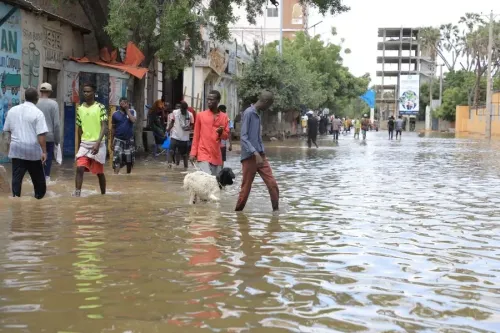
Signs of the impending crisis are already visible on the ground. The Jubba River at Dollow is approaching flood levels, while the Shabelle River at Jowhar is rising toward the top of its banks. In Baidoa, heavy rainfall has already damaged homes, forcing families to flee several neighbourhoods.
What the Crisis Means for Communities
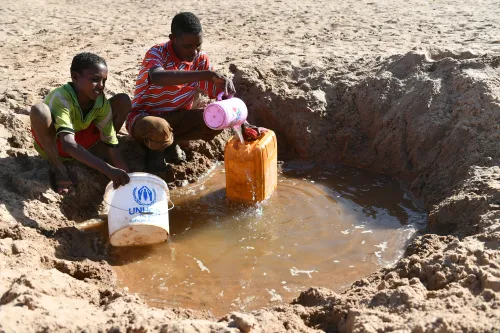
Rising floodwaters threaten to wipe out crops, devastate livelihoods, contaminate water supplies, and sever access to healthcare and essential services, according to IOM. For communities already battered by successive climate shocks, the agency warns this could deepen an already critical humanitarian situation well beyond emergency thresholds.
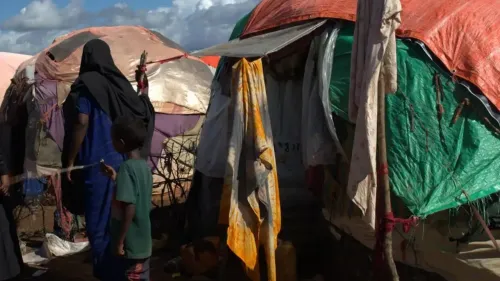
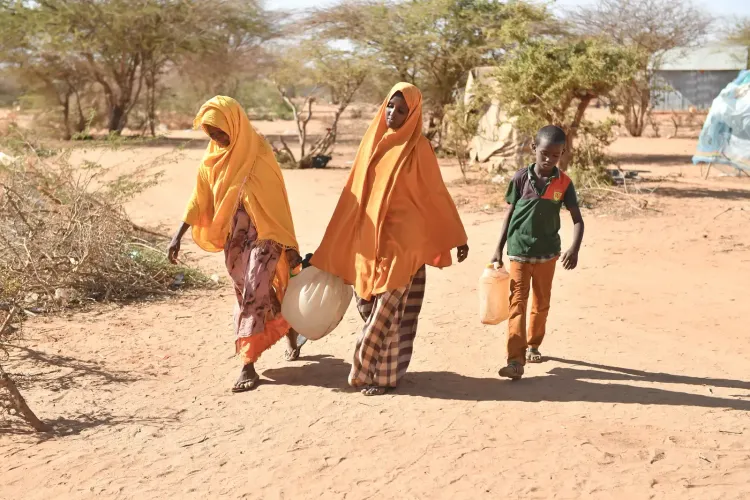
The projected displacement would affect some of the most vulnerable populations in the Horn of Africa — people who, in many cases, have been displaced multiple times over the past several years. Notably, this is not a singular weather event but part of a broader pattern of climate-driven crises that Somalia has faced with increasing frequency and severity.
A Severe Funding Shortfall
Despite the scale of the threat, IOM said it has secured only 14.4 per cent of the $16.62 million needed to respond to the impending El Niño floods. The shortfall puts at risk relief efforts designed to support over 517,000 vulnerable people across flood-prone areas of Somalia.
Manuel Marques Pereira, Chief of Mission for IOM in Somalia, said: “There is still time to reduce the impact, but that window is closing. We urgently need funding to help people protect their homes and livelihoods, reach safer ground where necessary, and avoid another cycle of displacement.”
Response Efforts and What Is Still Needed
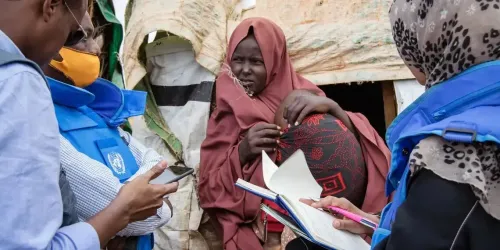
IOM said it is working alongside Somali authorities and local partners to strengthen early warning systems, map evacuation routes, and pre-position emergency aid. However, acute funding shortages are bottlenecking critical response operations.
“Without immediate resources, plans to build safe relocation sites and deliver emergency shelter, clean water, sanitation, and healthcare remain severely constrained,” IOM said in a statement.
The agency has called for urgent international support to scale up early action before rising floodwaters displace hundreds of thousands more families. With the rainy season already underway and river levels climbing, the timeline for effective pre-emptive intervention is narrowing rapidly.
Point of View
Not before it. Somalia is one of the world’s most climate-exposed nations, yet only 14.4% of a relatively modest $16.62 million ask has been funded ahead of a forecast crisis. The El Niño cycle was not a surprise — forecasters have been tracking it for months — which makes the funding gap harder to excuse. Until early-action financing becomes the norm rather than the exception, the humanitarian system will keep responding to disasters it could see coming.
NationPress
23 Oct 2026
Frequently Asked Questions
How many people could be displaced by Somalia flooding?
According to IOM and the Danish Refugee Council, up to 874,319 people could be displaced in Somalia between October and December 2023. Flooding is expected to drive 92 per cent of that displacement, with above-normal rainfall forecast due to strengthening El Niño conditions.
Why is Somalia at such high flood risk right now?
Somalia has entered its rainy season at a time when El Niño conditions are strengthening, driving forecasts of above-normal rainfall. Key rivers including the Jubba at Dollow and the Shabelle at Jowhar are already rising, and heavy rains in Baidoa have already damaged homes and forced evacuations.
How much funding has IOM secured for its Somalia flood response?
IOM has secured just 14.4 per cent of the $16.62 million it needs to respond to El Niño-driven flooding in Somalia. The shortfall threatens relief efforts aimed at supporting over 517,000 vulnerable people in flood-prone areas.
What aid is IOM providing in Somalia?
IOM is working with Somali authorities and local partners to strengthen early warning systems, map evacuation routes, and pre-position emergency aid. However, it says acute funding shortages are constraining plans to build safe relocation sites and deliver emergency shelter, clean water, sanitation, and healthcare.
Who is most affected by the Somalia flooding crisis?
Communities in flood-prone areas near the Jubba and Shabelle rivers are most at immediate risk, including populations around Dollow, Jowhar, and Baidoa. Many of those threatened have already been displaced multiple times by drought and previous flooding, leaving them with limited resources and resilience.