Somalia drought 2025: UN warns 1.5 million need food aid urgently
Synopsis
Somalia's overlapping crises — drought, flooding, conflict, and shrinking aid — have pushed two million people into emergency-level hunger, double last year's figure. With 76 per cent of those in IPC Phase 4 receiving no food support and 1.9 million children acutely malnourished, OCHA is warning that without urgent international funding, famine conditions could take hold before the lean season ends.
Key Takeaways
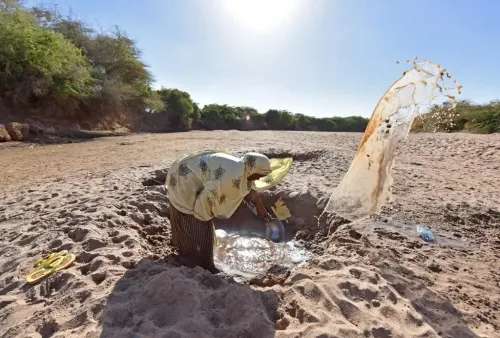
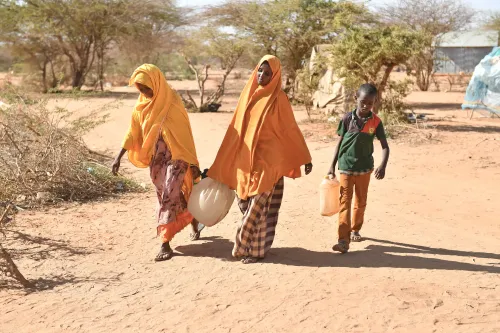
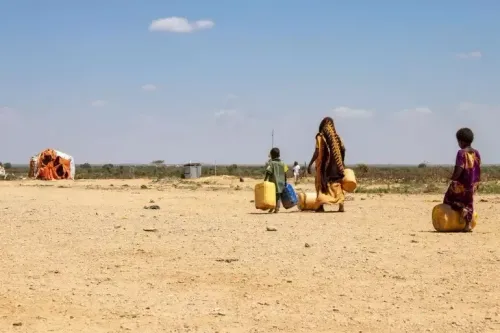
OCHA has issued an urgent appeal for Somalia, warning 1.5 million people require food assistance and 570,000+ need water support as of 13 July 2025 .
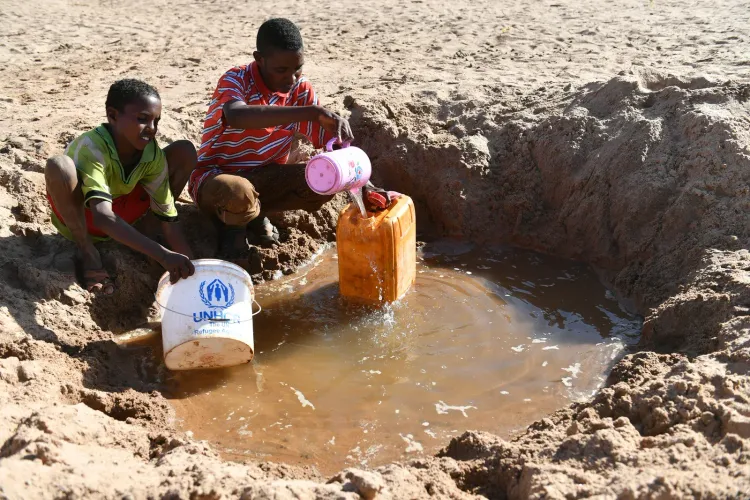
Severe drought has directly affected approximately 250,000 people , with northern, coastal, and remote communities hardest hit.
Over 400,730 children are experiencing acute malnutrition, including 97,150 severe cases, according to OCHA.
WFP reports emergency-level hunger (IPC Phase 4) now affects two million people — double last year's figure.
Current food assistance reaches only 450,000 people , leaving 76% of those in crisis without support through August .
The Somalia Humanitarian Fund has allocated $4.7 million to famine-risk Buurhakaba district , including a $2 million reserve release.
The United Nations Office for the Coordination of Humanitarian Affairs (OCHA) has issued an urgent appeal for international assistance for Somalia, warning that 1.5 million people require food aid and more than 570,000 need emergency water support amid a severe and worsening drought crisis. The appeal, contained in OCHA's latest humanitarian report released on Sunday, 13 July, describes a compounding catastrophe driven by drought, flooding, shrinking aid budgets, and protracted armed conflict.
Scale of the Crisis
According to OCHA, severe drought conditions have directly affected roughly 250,000 people, with coastal and remote communities bearing the heaviest burden. The cumulative effect of overlapping crises has, the agency said, 'systematically undermined the resilience of millions of Somali households.' Northern regions of the country are reported to be among the hardest hit.
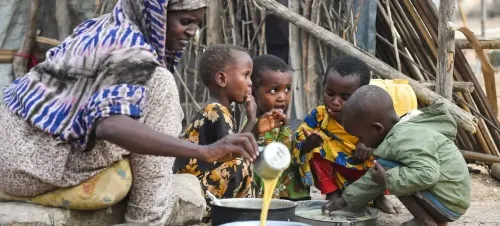
Malnutrition figures are particularly alarming. OCHA estimates that over 400,730 children are experiencing acute malnutrition — of whom 97,150 are classified as severe cases and 303,580 as moderate. The World Food Programme (WFP) separately reported that 1.9 million children across Somalia are suffering from acute malnutrition, placing the country among the world's worst malnutrition emergencies.
Emergency Hunger Levels Double
Last month, the WFP warned that emergency-level hunger — classified as IPC Phase 4 — now affects two million people, a twofold increase from the previous year's figure. This sharp deterioration signals a significant deepening of food insecurity across the country.
Critically, current humanitarian food assistance reaches only 450,000 people, leaving an estimated 76 per cent of those in IPC Phase 4 without any support through August. 'This gap will have severe consequences for the most vulnerable populations. Urgent funding is needed to scale up assistance and prevent further deterioration,' OCHA warned.
Funding Response and Gaps
The Somalia Humanitarian Fund has moved to bolster support in the famine-risk Buurhakaba district in the Bay region, channelling $4.7 million — including a recent reserve allocation of $2 million. While this represents a targeted response to one of the most at-risk areas, aid organisations have stressed that it falls far short of what is needed nationally.
Reproductive health services and emergency obstetric care remain severely limited, particularly for nomadic communities, according to OCHA. The drought has also disrupted education, with more than 820 schools reportedly closed.
Broader Context and What Comes Next
Somalia has faced recurring cycles of drought and famine for decades, with the 2011 famine claiming an estimated 260,000 lives. This latest crisis comes amid declining global humanitarian funding, as donor fatigue and competing crises divert resources. The twofold spike in IPC Phase 4 populations within a single year marks one of the most rapid deteriorations in recent memory.
Aid agencies are calling on international donors to urgently bridge the funding gap before conditions deteriorate further into the lean season. Without a significant scale-up in assistance, humanitarian organisations warn that famine conditions could emerge in the most affected districts.
Point of View
And in 2011 the world waited too long; by the time famine was declared, 260,000 people had died. The Buurhakaba allocation of $4.7 million, while targeted, is a drop against a national emergency. Donor governments citing aid budget pressures elsewhere must weigh that calculus against the cost — human and financial — of a full famine response after the fact.
NationPress
12 Oct 2026
Frequently Asked Questions
How severe is the drought crisis in Somalia in 2025?
Somalia is facing one of its most acute humanitarian emergencies in years, with OCHA reporting that severe drought has affected roughly 250,000 people directly, while 1.5 million require food assistance and over 570,000 need water support. Emergency-level hunger now affects two million people, double the figure from the previous year.
How many children in Somalia are malnourished?
According to OCHA, over 400,730 children are experiencing acute malnutrition, of whom 97,150 are severe cases and 303,580 are moderate cases. The WFP puts the broader figure at 1.9 million children suffering from acute malnutrition across Somalia.
What is IPC Phase 4 and why does it matter for Somalia?
IPC Phase 4, or 'Emergency' level, is one step below famine on the international food security scale and indicates that households face large food consumption gaps and high acute malnutrition. The WFP reports that two million Somalis are now at this level — double last year's figure — and 76 per cent of them are currently receiving no humanitarian food assistance.
What funding has been released to address the Somalia crisis?
The Somalia Humanitarian Fund has allocated $4.7 million to the famine-risk Buurhakaba district in the Bay region, including a recent $2 million reserve allocation. Aid agencies say this is insufficient relative to the national scale of need and are calling for urgent additional donor contributions.
Which parts of Somalia are worst affected by the drought?
Northern regions, as well as coastal and remote communities, are reported to be among the hardest hit by the current drought. The Buurhakaba district in the Bay region has been specifically identified as a famine-risk area by the Somalia Humanitarian Fund.