CM Rekha Gupta Launches Delhi Lakshmi Yojana, Rs 2,500/Month for Women
Synopsis
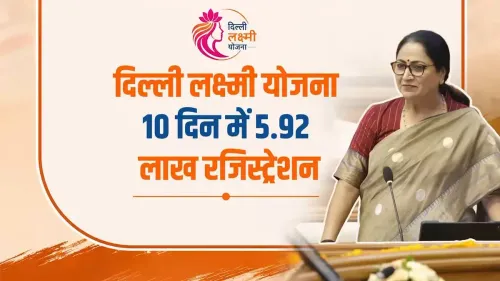
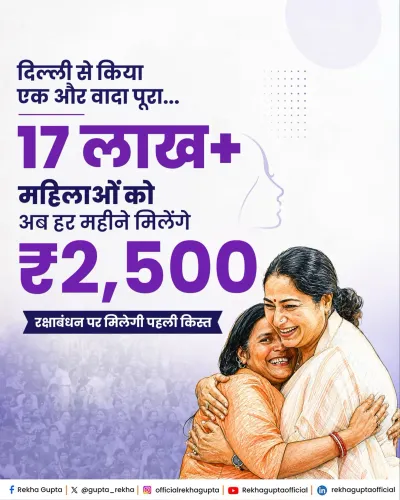
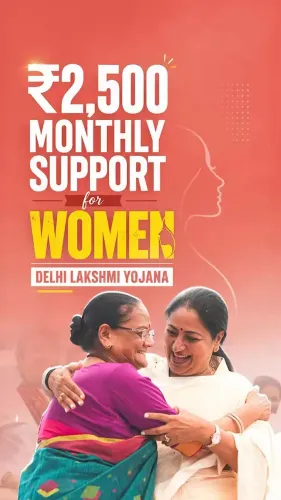
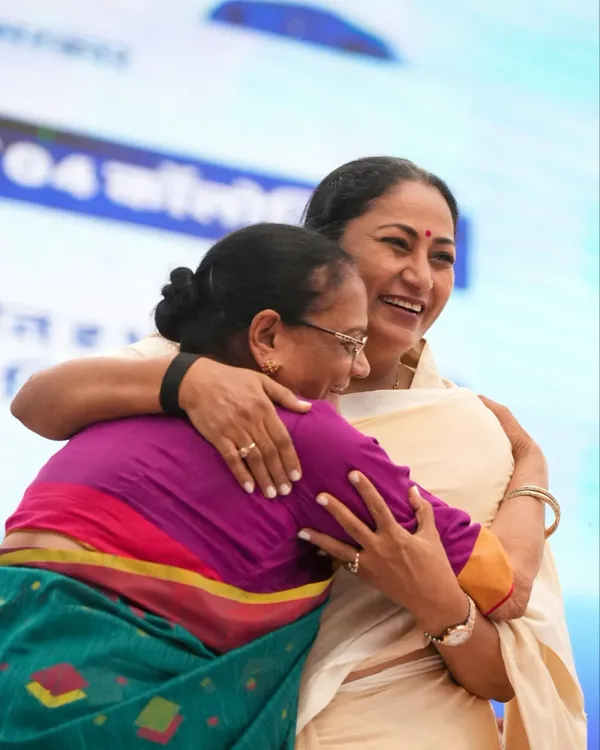
Delhi Chief Minister Rekha Gupta announced the relaunch of Mahila Samriddhi Yojana as 'Delhi Lakshmi Yojana', offering Rs 2,500 per month to women aged 21-60. The scheme, targeting economic self-reliance, is set to launch around Raksha Bandhan 2026 with transparent eligibility criteria.
Key Takeaways
Delhi CM Rekha Gupta announced the Delhi Lakshmi Yojana on 13 July 2026 , rebranding the earlier Mahila Samriddhi Yojana.
Eligible women aged 21 to 60 years will receive Rs 2,500 per month in direct financial assistance.
The scheme launch is targeted around Raksha Bandhan 2026 .
The government has committed to 'clear and transparent' eligibility standards to ensure benefits reach genuinely deserving women.
The announcement is part of the BJP-led Delhi government's broader women's empowerment push, framed under PM Narendra Modi's leadership.
The scheme continues a state-level pattern of direct monthly cash transfers to women adopted by BJP-governed states across India.
Delhi Chief Minister Rekha Gupta announced on Monday, 13 July 2026 that the Mahila Samriddhi Yojana will be relaunched under the new name 'Delhi Lakshmi Yojana', promising a monthly financial assistance of Rs 2,500 to eligible women in the capital. The scheme targets women aged 21 to 60 years and is aimed at advancing economic self-reliance among Delhi's women residents. The Chief Minister said the launch is targeted around Raksha Bandhan 2026.
Context
Posting in Hindi on X, CM Rekha Gupta said: 'दिल्ली से किया एक और वादा अब पूरा होने जा रहा है' ('Another promise made to Delhi is now about to be fulfilled'). She framed the scheme as a fresh expression of the BJP-led Delhi government's commitment to women's empowerment, crediting Prime Minister Narendra Modi's leadership for driving women-focused initiatives in mission mode over the past one-and-a-half years. The announcement carried the hashtags #SashaktNaariSamriddhDelhi and #ViksitDelhi.
The Chief Minister emphasised that eligibility standards have been kept 'clear and transparent' so that the benefit reaches only genuinely deserving women. The rebranding to Delhi Lakshmi Yojana signals a sharper political identity for the scheme, invoking the goddess Lakshmi as a symbol of prosperity.
Policy Backdrop
BJP-led state governments across India have increasingly adopted direct monthly cash transfers to women in the 21–60 age bracket as a central plank of their welfare and electoral strategy. These programmes typically stress direct benefit transfers to bank accounts to minimise leakages and ensure accountability. The Delhi Lakshmi Yojana follows this established pattern, building on the national foundation laid by schemes such as Beti Bachao Beti Padhao, launched in 2015, which sought to improve gender outcomes through targeted support.
The Delhi government's pivot to a renamed, rebranded scheme also reflects a broader trend of state administrations putting a distinct local stamp on welfare commitments inherited or evolved from pre-existing frameworks. Transparent eligibility criteria and direct transfers are being presented as the key differentiators of this rollout.
Stakeholders and Impact
The primary beneficiaries are Delhi's women residents between the ages of 21 and 60 who meet the scheme's eligibility conditions. A monthly assistance of Rs 2,500 — amounting to Rs 30,000 annually — could provide meaningful supplementary income for lower-income households in the capital. The government has indicated that clear eligibility norms will be published to prevent exclusion of genuine beneficiaries and to curb misuse.
The announcement also carries political weight for the BJP in Delhi, where women voters form a significant constituency. Timing the launch around Raksha Bandhan — a festival centred on the bond between brothers and sisters — adds a symbolic dimension to the rollout.
What's Next
The government is expected to publish detailed eligibility criteria and application procedures ahead of the Raksha Bandhan 2026 launch window. Observers will watch whether the rollout meets its stated timeline and how the administration handles the transition from the earlier Mahila Samriddhi Yojana framework. The scale and pace of enrolment after launch will be a key indicator of the scheme's on-ground reach across Delhi's diverse neighbourhoods.
Point of View
Invoking prosperity imagery ahead of a high-visibility festival launch. This follows a well-worn BJP playbook seen in Madhya Pradesh, Rajasthan, and Maharashtra, where direct transfers to women have served both as genuine welfare and as potent electoral currency. Timing the rollout around Raksha Bandhan amplifies the optics, but the scheme's credibility will hinge on how quickly and transparently Delhi publishes eligibility norms and begins enrolments. For CM Rekha Gupta, a smooth launch would consolidate her government's identity as a delivery-focused administration in a city with a competitive welfare landscape.
NationPress
12 Oct 2026
Frequently Asked Questions
What is Delhi Lakshmi Yojana?
Delhi Lakshmi Yojana is a monthly financial assistance scheme announced by Delhi Chief Minister Rekha Gupta, under which eligible women aged 21 to 60 years will receive Rs 2,500 per month from the Delhi government.
Who is eligible for Delhi Lakshmi Yojana?
Women residents of Delhi between the ages of 21 and 60 years who meet the scheme's eligibility criteria are eligible. The government has stated that clear and transparent eligibility standards will be set to ensure benefits reach genuinely deserving women.
When will Delhi Lakshmi Yojana be launched?
The Delhi government has targeted a launch around Raksha Bandhan 2026. Detailed eligibility criteria and application procedures are expected to be published before the launch.
What was Delhi Lakshmi Yojana called before?
The scheme was previously known as Mahila Samriddhi Yojana. It has been relaunched and rebranded as Delhi Lakshmi Yojana by Chief Minister Rekha Gupta.
How much money will women get under Delhi Lakshmi Yojana per year?
Under Delhi Lakshmi Yojana, eligible women will receive Rs 2,500 per month, which amounts to Rs 30,000 per year in direct financial assistance.