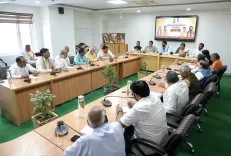
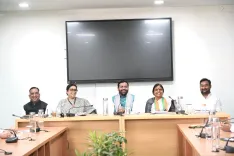
MP Semiconductor Summit 2026 draws ₹5,800 Cr investment bids
Synopsis
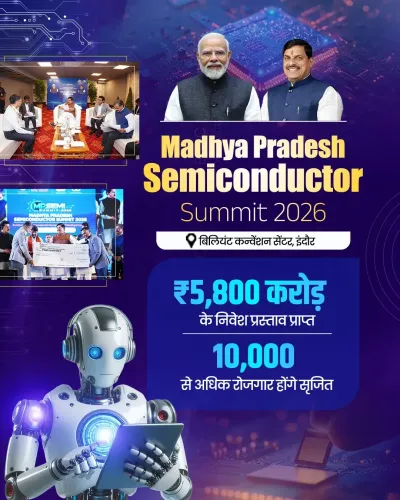
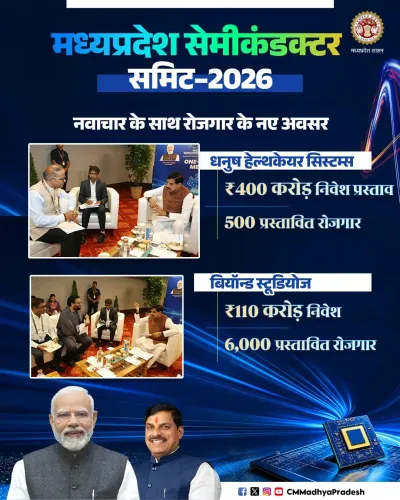
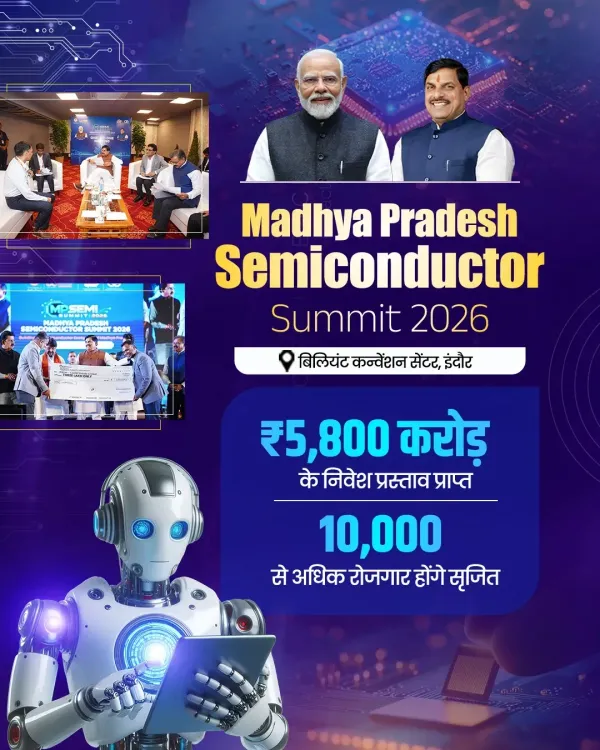
The Madhya Pradesh Semiconductor Summit 2026 attracted investment proposals worth nearly ₹5,800 crore and promises over 10,000 jobs, as CM Dr. Mohan Yadav bets on semiconductors to redefine the state's industrial identity under India's national chip mission.
Key Takeaways
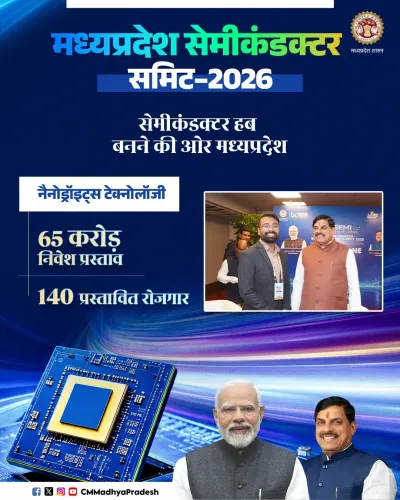
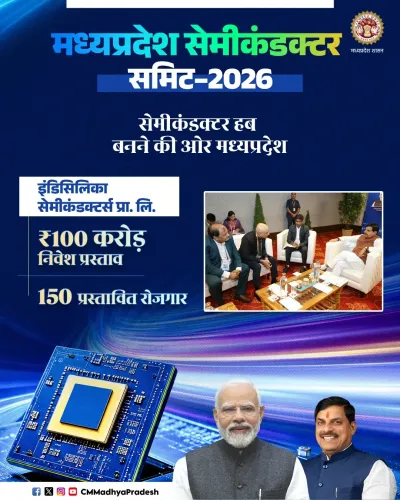
The MP Semiconductor Summit 2026 generated investment proposals of approximately ₹5,800 crore .
More than 10,000 employment opportunities are projected to be created from the announced proposals.
Mohan Yadav was named as the key driver of the initiative by the state's official CMO account.
The summit aligns with the India Semiconductor Mission launched in 2021 with a ₹76,000 crore central government outlay.
Converting investment proposals into operational units — through land allotment, state budget support, and infrastructure — remains the critical next step.
Madhya Pradesh joins multiple Indian states competing to build semiconductor assembly, testing, and packaging ecosystems since 2022.
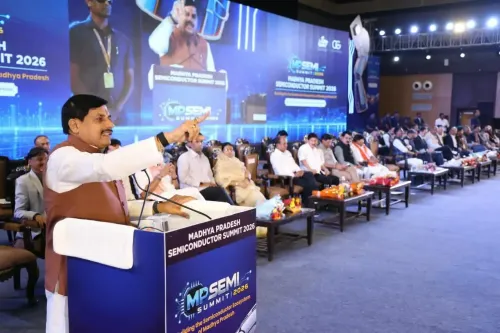
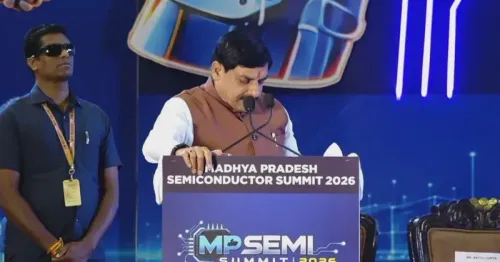
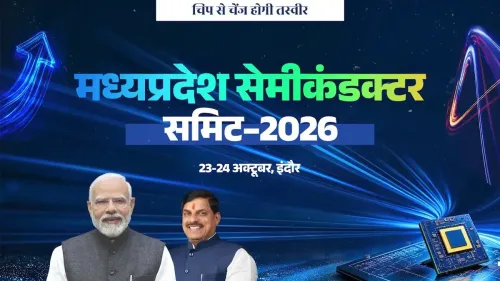
A single summit. Nearly ₹5,800 crore in investment proposals. More than 10,000 jobs on the table. The Chief Minister's Office of Madhya Pradesh announced on Friday, October 23, 2026, that the Madhya Pradesh Semiconductor Summit 2026 had generated that level of investor commitment — framing it as the opening move of a technology revolution in the state.
The CMO's post declared: 'MP mein technology kranti ki nayi shuruaat' — 'a new beginning for the technology revolution in Madhya Pradesh' — tagging Chief Minister Dr. Mohan Yadav as the driving force behind the push.What the ₹5,800 crore pitch actually means
Semiconductor investment does not arrive like a software park — it comes in the form of assembly, testing, and packaging (ATP) facilities, chip design centres, and ancillary electronics manufacturing clusters. The proposals announced at the summit are at the intent stage: formal ground-breaking, land allotment, and state budget backing will determine how many of those ₹5,800 crore flow into bricks, machines, and payroll. That conversion track record is the number every investor and policy watcher will now scrutinise.
The jobs figure — 10,000-plus direct employment opportunities — is significant for a landlocked central Indian state that has historically competed harder for agri-processing and textile units than for high-technology manufacturing. A viable semiconductor cluster would mark a structural shift in Madhya Pradesh's industrial identity.
India's semiconductor race — and where MP fits
The national backdrop gives these numbers real weight. India's Semiconductor Mission, approved in 2021 with a ₹76,000 crore central outlay, was explicitly designed to pull states into the supply chain — building domestic capacity in design, packaging, and eventually fabrication to cut India's chronic import dependence on chips. The central government encouraged states to develop their own semiconductor ecosystems through targeted incentives and competitive investment summits.
Since 2022, multiple states have raced to host such summits and announce policy packages. Madhya Pradesh, under Chief Minister Dr. Mohan Yadav — who took office in December 2023 — has positioned the state as a manufacturing-friendly destination, and the semiconductor summit is the clearest signal yet of an ambition to climb the technology value chain rather than wait at its base.
Dr. Mohan Yadav's industrial bet
For Dr. Yadav, the summit is both an economic play and a political statement. Attracting high-profile technology investment to a state not traditionally associated with semiconductors requires aggressive land, power, water, and incentive guarantees — the kind of commitments that will now face scrutiny in upcoming state budget cycles. The #MPSemiconductorSummit hashtag signals that the government intends to own this narrative publicly, making accountability on delivery harder to sidestep.
Whether Madhya Pradesh can move from summit pledges to operational semiconductor units faster than rival states — and whether those 10,000 jobs materialise on schedule — will be the real measure of October 23's ambition.
Point of View
800 crore figure, while substantial on paper, follows a now-familiar pattern of state-level investment summits where announced intent and actual ground-level deployment diverge significantly — making follow-through monitoring essential. For the central government's Semiconductor Mission, competitive state-level summits are a feature, not a bug: they create a race-to-deliver dynamic that accelerates ecosystem building. The real test for Madhya Pradesh is whether its incentive architecture, land bank, and power guarantees are differentiated enough to win projects that rival Gujarat, Telangana, and Karnataka are also chasing.
NationPress
24 Oct 2026
Frequently Asked Questions
What is the Madhya Pradesh Semiconductor Summit 2026?
It is a state-hosted investment summit organised by the Madhya Pradesh government to attract semiconductor and electronics manufacturing projects to the state, held in October 2026.
How much investment was announced at the MP Semiconductor Summit 2026?
Investment proposals worth approximately ₹5,800 crore were received at the summit, along with commitments for creating over 10,000 jobs.
Who is leading Madhya Pradesh's semiconductor push?
Chief Minister Dr. Mohan Yadav, who has held office since December 2023, is driving Madhya Pradesh's ambition to become a technology and semiconductor manufacturing hub.
How does India's national semiconductor policy support state-level summits like MP's?
India's Semiconductor Mission, approved in 2021 with a ₹76,000 crore outlay, encourages states to build local ecosystems for chip assembly, testing, and packaging, making state summits a key channel for attracting investment.
When will the semiconductor jobs promised at the MP Summit actually be created?
The 10,000-plus jobs are linked to investment proposals that still require land allotment, state budget support, and project ground-breaking before employment is generated; a firm timeline has not been publicly specified.