White House Calls for Bipartisan US Election Security
Synopsis
The White House on 17 July 2026 called on every American — across party lines — to support the most secure, honest, and fair election system in the world, framing election security as a unifying national goal rather than a partisan divide ahead of the 2026 midterms.
Key Takeaways
The White House posted a bipartisan appeal on 17 July 2026 calling for a secure, honest, and fair US election system.
The statement explicitly addressed Republicans, Democrats, and Independents , framing election security as a shared national interest.
The Help America Vote Act of 2002 established the first federal minimum standards for voting systems after the disputed 2000 presidential election .
In 2017 , the Department of Homeland Security designated election infrastructure as critical national infrastructure to counter cybersecurity threats.
Both parties have advanced separate election-reform packages since 2020 with limited bipartisan agreement.
Congressional consideration of new election-reform measures is expected ahead of the 2026 midterm elections .
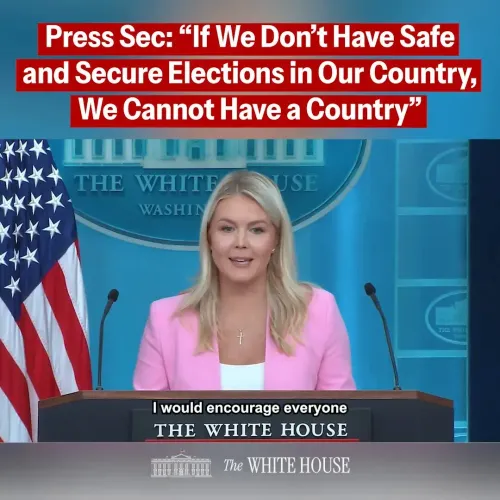
The White House, the official communications account of the Executive Office of the President of the United States, posted a call for nonpartisan consensus on election integrity on Friday, 17 July 2026, urging all Americans — regardless of party affiliation — to unite behind the goal of a secure and fair electoral system.
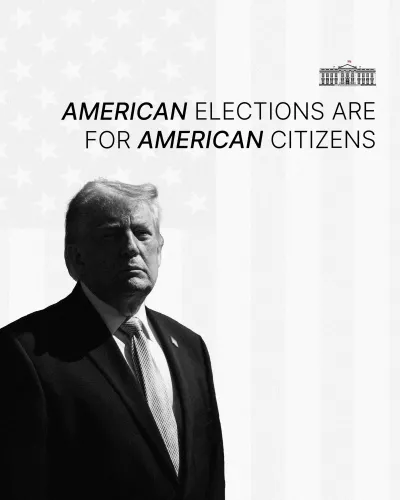
The post stated: 'Every American, whether Republican, Democrat, Independent, or otherwise, should be able to agree that we deserve the most secure, honest, and fair election system anywhere in the world. Secure elections should not be a partisan issue that divides Americans.'
Context
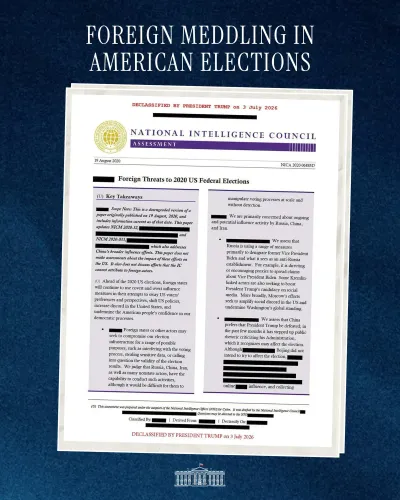
The statement arrives as United States lawmakers and state officials prepare for the 2026 midterm elections, a cycle that has already drawn scrutiny over voting technology, mail-ballot procedures, and the integrity of voter rolls. The White House framing — invoking Republicans, Democrats, and Independents by name — is a deliberate appeal across the political spectrum at a moment when election administration remains deeply contested.
Disagreements over election rules have persisted in American public life since at least the disputed 2000 presidential election, which prompted Congress to pass the Help America Vote Act of 2002. That law established minimum federal standards for voting systems and election administration for the first time.
Policy Backdrop
In 2017, the Department of Homeland Security designated election infrastructure as critical national infrastructure, formally acknowledging cybersecurity threats as a systemic risk to democratic processes. The move gave federal agencies a clearer mandate to assist states in hardening their systems against both domestic vulnerabilities and foreign interference.
Since 2020, both major parties have introduced separate legislative packages aimed at election reform, but bipartisan agreement has remained elusive. Debates have centred on paper-audit trails for electronic voting machines, voter-identification requirements, early and mail voting access, and the certification procedures used by state and county officials.
Stakeholders and Impact
The most direct stakeholders are American voters and the state election officials who administer primaries and general elections under a decentralised system in which rules vary significantly across all 50 states. Any federal push for uniform standards would require navigating that patchwork of state laws and constitutional authority over elections.
The White House's appeal to bipartisanship also carries implications for independent voters, who represent the fastest-growing segment of the American electorate. A message that explicitly names Independents alongside the two major parties signals an awareness that election-security concerns are not confined to partisan bases.
What's Next
Congressional committees are expected to take up election-related legislation in the months ahead of the 2026 midterms. State-level processes for certifying new voting equipment and updating voter rolls will also be closely watched. Whether the White House statement translates into a concrete legislative proposal or executive action remains to be seen, but the public framing sets a tone of cross-party urgency ahead of a high-stakes electoral cycle.
The broader question is whether either chamber of Congress can assemble the votes needed to pass meaningful election-security reforms — a challenge that has defeated multiple attempts over the past two decades.
Point of View
Democrats, and Independents in the same breath, the statement implicitly acknowledges that distrust of electoral institutions now cuts across party lines rather than running in a single direction. The post fits a broader pattern of executive messaging that seeks to set the terms of a debate before Congress acts — positioning the administration as a unifying actor even as legislative gridlock on election reform persists. Whether the statement precedes concrete policy or remains aspirational will determine its lasting significance.
NationPress
15 Oct 2026
Frequently Asked Questions
What did the White House say about US election security?
The White House stated on 17 July 2026 that every American — Republican, Democrat, or Independent — deserves the most secure, honest, and fair election system in the world, and that election security should not be a partisan issue.
Why is US election security a controversial issue?
Election security has been contested in the United States since at least the disputed 2000 presidential election, with ongoing disagreements over voter ID, mail ballots, voting technology, and foreign interference risks. Both parties have proposed reform legislation since 2020 but have not reached bipartisan agreement.
What is the Help America Vote Act?
The Help America Vote Act of 2002 is a federal law passed by Congress in the aftermath of the 2000 presidential election disputes. It established minimum national standards for voting systems and election administration across all US states.
When did the US designate election infrastructure as critical?
In 2017, the Department of Homeland Security designated election infrastructure as critical national infrastructure, giving federal agencies a formal mandate to help states defend their systems against cybersecurity threats and foreign interference.
What are the key election security issues ahead of the 2026 US midterms?
Key issues include the security of voting technology, the integrity of voter rolls, mail-ballot procedures, paper-audit trail requirements, and state-level certification processes for voting equipment — all of which are expected to feature in congressional debates ahead of the 2026 midterm elections.