What Pact Was Signed Between Centre, Nagaland Govt, and ENPO?
Synopsis
A historic tripartite agreement was signed in Delhi, empowering Eastern Nagaland with the establishment of the Frontier Nagaland Territorial Authority. This significant step aims to devolve powers over 46 subjects and promote development in the region, marking a hopeful chapter in its political landscape.
Key Takeaways
Tripartite agreement signed in Delhi to empower Eastern Nagaland.
Creation of the Frontier Nagaland Territorial Authority (FNTA) for six districts.
Devolution of powers over 46 subjects .
Government's commitment to resolving regional disputes.
No impact on Article 371(A) of the Constitution.
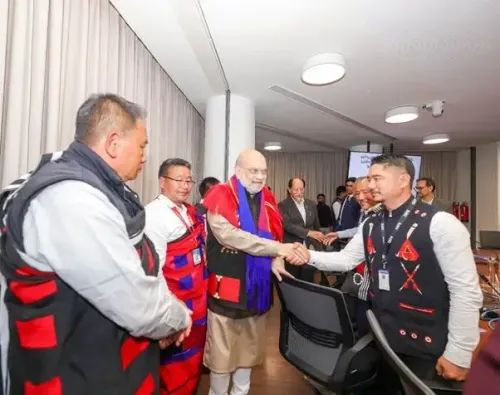
Kohima, Feb 5 (NationPress) In a significant move towards enhancing administrative autonomy in Eastern Nagaland, a tripartite agreement was formalized in Delhi on Thursday. This pact involves the Centre, the Nagaland government, and the Eastern Nagaland Peoples' Organisation (ENPO), which serves as the apex body for eight recognized Naga tribes across the six eastern districts of Nagaland, officials reported.
The agreement facilitates the transfer of authority over 46 subjects to these six districts, according to official statements.
"This understanding will lead to the establishment of the Frontier Nagaland Territorial Authority (FNTA) for the six Nagaland districts: Tuensang, Mon, Kiphire, Longleng, Noklak, and Shamator, along with the transfer of powers concerning 46 subjects to the FNTA," the statement elaborated.
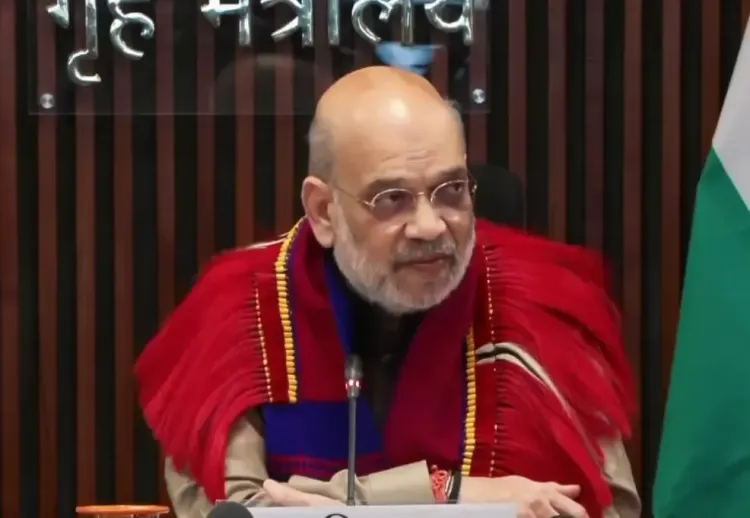
The Home Minister noted that this day marks a crucial milestone for a peaceful Northeast. He emphasized that the Prime Minister envisions a Northeast devoid of insurgency, violence, and disputes while fostering development.
"Today, we're advancing towards realizing that vision," he stated, recalling that eleven years prior, various armed groups and disputes were jeopardizing the region's unity and tranquility, alongside inter-state conflicts.
Shah expressed that the government led by Prime Minister Modi is dedicated to resolving every dispute, noting that since 2019, twelve significant accords have been signed in the Northeast.
He remarked that past administrations merely signed agreements, while the Modi government is committed to implementing them faithfully.
The Home Minister assured ENPO representatives that the Indian government would support the growth of Eastern Nagaland and fulfill its obligations.
He added that an annual fixed amount would be determined, with the Ministry of Home Affairs (MHA) also covering initial costs for establishment. In 2021-22, he reiterated to ENPO representatives the government's resolve to find solutions to every conflict.
Shah encouraged them to trust and engage in the democratic process, assuring them of fair justice and due respect. He expressed his joy as today marks the resolution of a long-standing dispute after MHA officials bridged ENPO and the Nagaland Government.
The Home Minister acknowledged the strategic significance of the ENPO region. Since Nagaland's inception, residents of Eastern Nagaland have felt they were denied justice. He mentioned discussions with Nagaland Chief Minister Rio, who expressed readiness to address all ENPO demands with an open heart.
Expressing gratitude to Chief Minister Rio, Shah commended the Nagaland government, the Chief Minister's cabinet, and both Members of Parliament for decisively concluding this negotiation.
He congratulated the people of Eastern Nagaland, the struggling organizations of ENPO, and the Chief Minister, stating that today marks another step towards resolving all disputes in Nagaland.
Shah assured that there will be no barriers to the advancement of Eastern Nagaland, emphasizing that the agreement demonstrates the government's commitment to addressing all contentious matters and meeting the people's genuine aspirations.
He affirmed that both the Government of India and the Nagaland government will collaboratively push forward the region's development.
The agreement includes provisions for a mini-Secretariat for FNTA, overseen by the Additional Chief Secretary/Principal Secretary, and outlines the sharing of developmental resources for the Eastern Nagaland area based on population and geographical size.
However, it is important to note that this agreement does not alter the stipulations of Article 371 (A) of the Constitution of India.
Point of View
Showcasing a commitment to addressing the aspirations and needs of local communities. It reflects a broader effort to bring stability and development to the region, aligning with national interests in fostering peace and progress.
NationPress
29 Sept 2026
Frequently Asked Questions
What is the purpose of the agreement signed?
The agreement aims to empower Eastern Nagaland by devolving powers over 46 subjects to local authorities, enhancing administrative autonomy and promoting development.
What is the Frontier Nagaland Territorial Authority?
The Frontier Nagaland Territorial Authority (FNTA) is a proposed body that will oversee governance and development in six districts of Eastern Nagaland.
Who are the key players involved in this agreement?
The key players in this tripartite agreement are the Centre, the Nagaland government, and the Eastern Nagaland Peoples’ Organisation (ENPO).
What are the implications of this agreement?
The agreement is expected to foster development in Eastern Nagaland, resolve long-standing disputes, and enhance local governance.
Does this agreement affect Article 371(A) of the Indian Constitution?
No, the agreement does not alter the provisions of Article 371(A) of the Constitution of India.