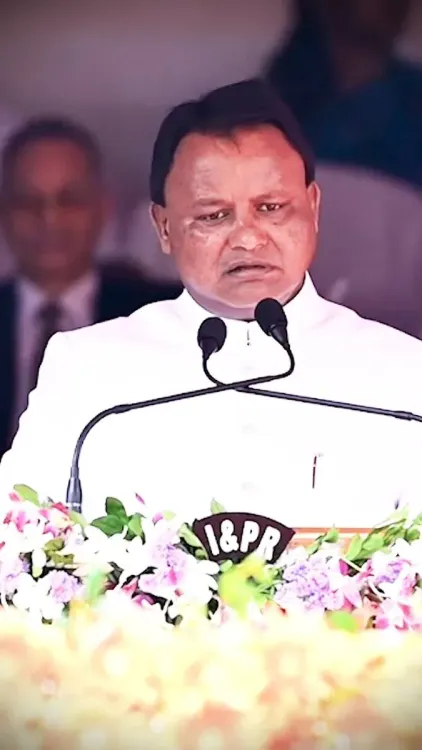
CM Majhi pledges to make next decade 'Odisha's decade' by 2036
Synopsis
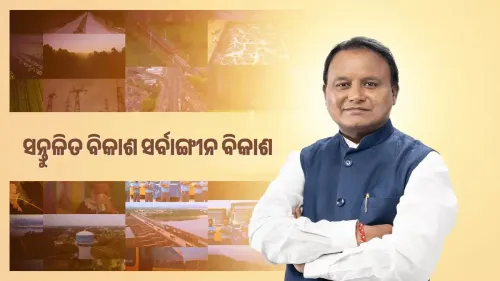
Odisha Chief Minister Mohan Charan Majhi has declared the next ten years 'Odisha's decade', pledging a prosperous, empowered, and inclusive state by 2036 and aligning with the Viksit Bharat 2047 national vision, anchored in the 150-year legacy of Vande Mataram.
Key Takeaways
Mohan Charan Majhi called on every Odia to resolve to make the next ten years 'Odisha's decade' , posted on 19 August 2026 .
The pledge is anchored to the 150th anniversary of Vande Mataram , invoking themes of sacrifice, unity, and national dedication.
Majhi set a 2036 target for Odisha to become prosperous, empowered, inclusive, and developed.
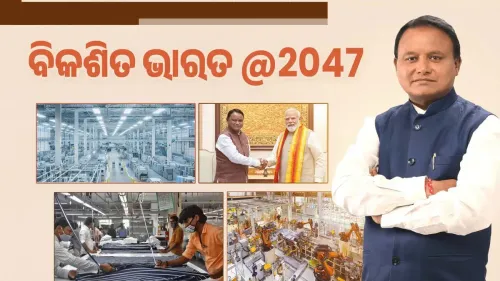
The 2047 horizon directly aligns the state's ambition with Prime Minister Modi's Viksit Bharat 2047 vision.
The BJP formed its first-ever Odisha government in June 2024 , making this a foundational long-term governance statement from the new administration.
Anchored in the 150-year legacy of Vande Mataram and the promise of Odia pride, Odisha Chief Minister Mohan Charan Majhi has set a bold dual-horizon target for the state — a prosperous, empowered Odisha by 2036, and a fully developed one aligned with a developed India by 2047. The resolve, shared on Wednesday, 19 August 2026, frames the coming ten years as nothing less than 'Odishara Dashaka' — Odisha's decade.
Vande Mataram at 150 — the patriotic anchor
The post draws its emotional core from the 150th anniversary of Vande Mataram, the national song composed by Bankim Chandra Chattopadhyay in the 1870s. Majhi invokes its journey as an inspiration for 'sacrifice, unity, and dedication to the nation' — 'tyaga, ekta o samarpana' — calling on every Odia to join a collective pledge. The milestone gives the political message a cultural weight that transcends party lines.
Majhi's 2036 vision: prosperous, empowered, inclusive
The Chief Minister's resolution spells out four qualities he wants Odisha to embody by 2036: prosperous (samruddha), empowered (sashakta), inclusive (samaveshi), and developed (vikashita). The four-word formulation is deliberate — it signals economic growth, citizen capability, social equity, and infrastructure ambition in a single breath. From there, the arc extends to 2047, tying Odisha's trajectory directly to Prime Minister Narendra Modi's Viksit Bharat 2047 vision for a fully developed India at the centenary of Independence.
BJP's first Odisha government sets the long game
The statement carries particular weight given its political context. The BJP formed its first-ever government in Odisha in June 2024, ending decades of BJD dominance in the state. Majhi's invocation of a ten-year development decade is as much a statement of intent to Odisha's electorate as it is a governance roadmap. Several BJP-ruled states have used similar patriotic-development framing since 2014, but for Odisha's new dispensation, this is an early, public staking of a long-term claim.
The next test of that claim will come in state budget presentations and policy documents that translate these four aspirational words into measurable targets — for infrastructure, mining, cultural promotion, and social welfare — that voters can hold the government to.
Point of View
He simultaneously signals ideological alignment with New Delhi and asserts a distinctly Odia identity — a balance the party has had to strike carefully in a state with a strong regional cultural consciousness. The 2036 interim target is politically shrewd: it falls within two full election cycles, giving the government a runway to show results before the longer 2047 promise is tested. Watch for whether concrete sectoral targets follow, or whether the framing remains aspirational.
NationPress
3 Oct 2026
Frequently Asked Questions
What is Odisha CM Mohan Majhi's 2036 vision?
Chief Minister Mohan Charan Majhi has pledged to build a prosperous, empowered, inclusive, and developed Odisha by 2036, describing the next ten years as 'Odisha's decade' and calling for the participation of every Odia citizen.
What is Viksit Bharat 2047 and how does Odisha fit in?
Viksit Bharat 2047 is Prime Minister Narendra Modi's vision for India to become a fully developed nation by the centenary of Independence in 2047. Majhi has explicitly tied Odisha's long-term development goals to this national framework.
Why is Vande Mataram's 150th anniversary significant in 2026?
Vande Mataram, the national song composed by Bankim Chandra Chattopadhyay in the 1870s, completes roughly 150 years of its patriotic journey around this period. CM Majhi invoked this milestone as a source of inspiration for unity and sacrifice.
When did BJP first come to power in Odisha?
The BJP formed its first-ever government in Odisha in June 2024, ending decades of Biju Janata Dal (BJD) rule in the state, with Mohan Charan Majhi sworn in as Chief Minister.
What does Majhi mean by 'Odisha's decade'?
Majhi used the phrase to signal a ten-year period of focused development, calling on Odias to collectively resolve to make the state prosperous, empowered, inclusive, and developed by 2036 as a step toward the broader 2047 national goal.