CM Majhi: Odisha's Textile Push Is Reversing the Migration Tide

Synopsis
Odisha CM Mohan Charan Majhi says large textile and apparel industries are generating employment for women and artisans, making Odisha an investor destination and triggering a reverse migration wave as workers return home.
Key Takeaways
CM Mohan Charan Majhi posted on 19 August 2026 that industrial development is creating widespread employment in Odisha .
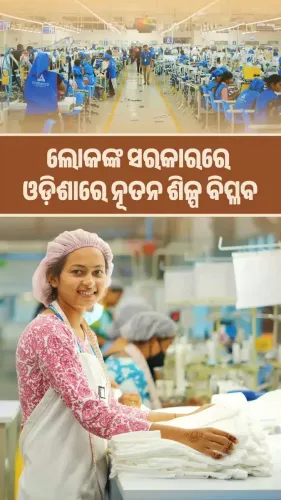
The textile and apparel sector is specifically cited as generating new livelihood opportunities for women and artisans .
The Chief Minister claims Odisha has become 'a new address of investor confidence,' with a favourable ecosystem for industry and investment.
A reverse migration trend is underway, with workers returning to the state rather than seeking jobs elsewhere in India.
The BJP government , in power since the 2024 state elections , has prioritised labour-intensive manufacturing to diversify beyond mining and metals.
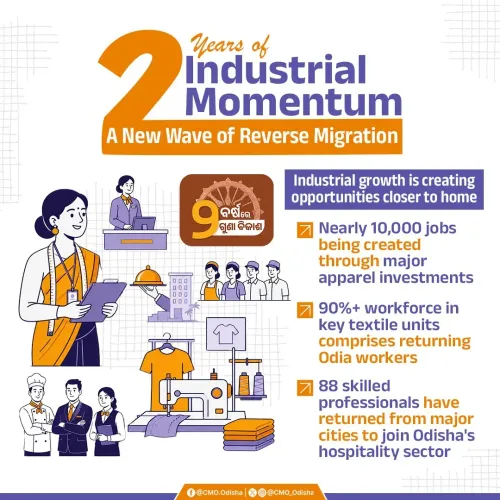
A new employment current is running through Odisha — and it is pulling workers back home. Odisha Chief Minister Mohan Charan Majhi declared on Wednesday, 19 August 2026 that large-scale textile and apparel industries are generating sweeping job opportunities in the state, with women and artisans at the centre of the story.
Posting in Odia, CM Majhi said: 'Industrial development is creating massive employment opportunities in Odisha. Large textile and apparel industries are opening new avenues of livelihood especially for women and artisans within their own state.' He went further, asserting that Odisha has become 'a new address of investor confidence' — and that the result is a fresh wave of reverse migration, with workers returning to the state rather than leaving it.
From Mineral Belt to Loom: Odisha's Industrial Pivot
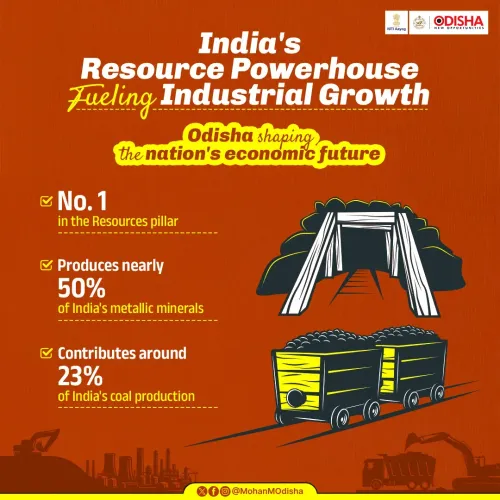
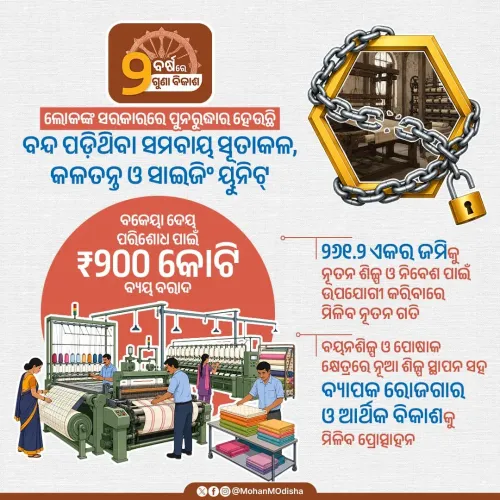
Odisha has long been defined by its mines and metals — iron ore, coal, aluminium — industries that generate revenue but relatively few jobs per rupee invested. The current BJP government, which came to power after the 2024 state elections, staked a clear pledge to diversify that base. Labour-intensive manufacturing, particularly textiles and apparel, was identified as the lever to create jobs at scale and keep Odisha's workforce at home. The logic is straightforward: a textile unit employs far more people per acre than a steel plant, and a disproportionate share of those jobs go to women. For a state that has historically exported its young to textile hubs in Surat, Tiruppur, and Bengaluru, building that capacity domestically is both an economic and a social argument.Women and Artisans as the Policy's Core Beneficiaries
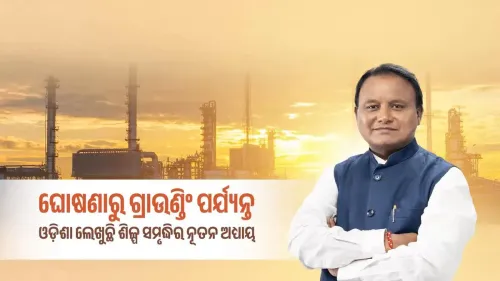
The Chief Minister's framing is deliberate. By naming women and artisans specifically, the government is signalling that this is not just an industrial story but a livelihoods story. Odisha has a rich tradition of handloom weaving — Sambalpuri, Bomkai, Ikat — and positioning the state's artisan base alongside large apparel manufacturing creates a narrative that connects heritage craft to modern supply chains. The administration's stated formula — 'ଭିତ୍ତିଭୂମିରୁ ଶିଳ୍ପ, ନିବେଶରୁ ନିଯୁକ୍ତି' ('from infrastructure to industry, from investment to employment') — captures the sequencing the government is banking on: build the ecosystem first, investment follows, jobs come last.Reverse Migration: The Real Metric to Watch
The most politically potent claim in CM Majhi's post is the one about reverse migration. For decades, Odisha ranked among the states with the highest rates of circular migration — workers leaving for construction sites and factories across India, returning only for harvest season or festivals. A genuine reversal of that pattern would represent a structural shift, not just a policy headline. The rollout of announced textile parks, actual investment inflows, and any state-level data on migration trends will be the real test of whether the momentum the Chief Minister describes is translating into numbers on the ground.Point of View
Artisans, and reverse migration, the BJP government is reframing Odisha's industrial story from a mineral-extraction model to a human-capital one. This fits a broader BJP playbook of using state-level economic wins to consolidate electoral ground before the next cycle. The reverse migration claim is the most consequential and the most verifiable — if data eventually backs it, it becomes a flagship achievement; if it does not, it becomes a liability. The real policy test lies in whether announced textile parks translate into operational units and measurable employment numbers.
NationPress
3 Oct 2026
Frequently Asked Questions
What industries is Odisha focusing on for employment generation?
The Odisha government under CM Mohan Charan Majhi is focusing on large-scale textile and apparel manufacturing as a primary driver of employment, particularly for women and artisans.
What is reverse migration in the context of Odisha?
Reverse migration refers to workers who previously left Odisha for jobs in other states now returning to find employment within Odisha itself, a trend CM Majhi says is gaining momentum due to new industrial investment.
When did the BJP come to power in Odisha?
The BJP government in Odisha came to power after the 2024 state elections , when Mohan Charan Majhi was sworn in as Chief Minister.
How does Odisha's textile push benefit women?
Textile and apparel manufacturing is a labour-intensive sector that employs a large proportion of women workers, giving women in Odisha access to formal employment opportunities within their home state.
What was Odisha's traditional economic base before the current industrial push?
Odisha's economy has historically been anchored in mining and metals — iron ore, coal, and aluminium — industries that generate state revenue but create relatively fewer direct jobs compared to manufacturing sectors like textiles.