CM Majhi's Odisha Bets on Reverse Migration to Drive Growth
Synopsis
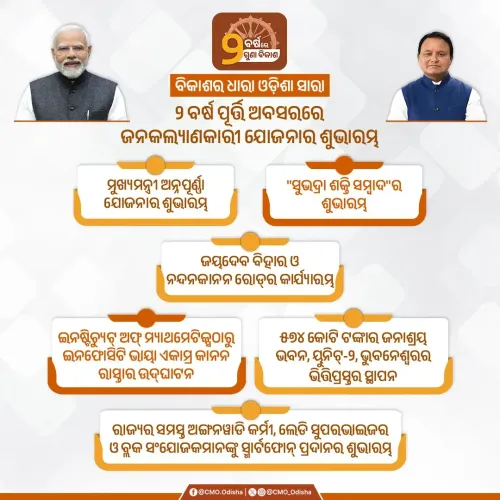
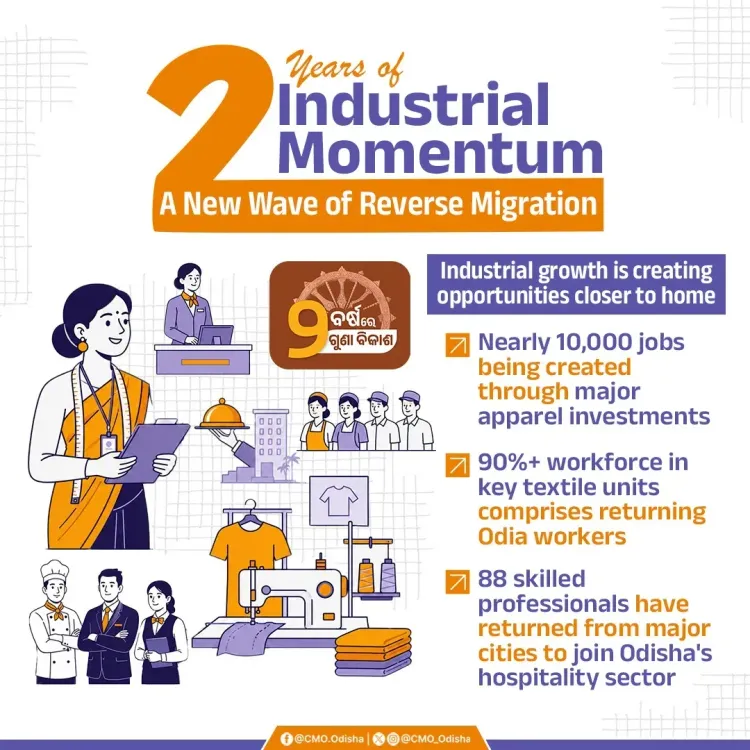
The Chief Minister's Office of Odisha announced on 19 June 2026 that skilled workers are returning to the state as industries scale up under CM Mohan Majhi, marking two years of the BJP-led government's industrial momentum and positioning Odisha as a self-sufficient growth hub.
Key Takeaways
The Chief Minister's Office of Odisha declared on 19 June 2026 that skilled professionals are ending out-of-state migration and returning to work within the state.
CM Mohan Charan Majhi , in office since June 2024 , is credited by the government for the industrial upturn, marking the two-year anniversary of his administration.
The post is tagged #2YearsOfIndustrialMomentum and #BikasharaDharaOdishaSara , indicating a coordinated government communications push around the milestone.
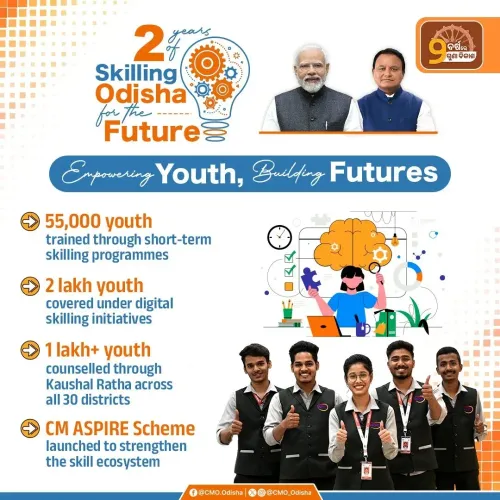
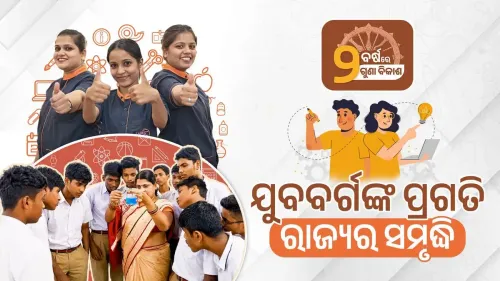
Odisha has historically been a major out-migration source state; the current government's policy focus includes employment-linked incentives and skill mapping to retain talent.
The reverse-migration narrative mirrors similar campaigns in Uttar Pradesh , Bihar and Chhattisgarh , reflecting a broader pattern among Indian states since 2021 .
Verifiable data on the actual scale of migrant returns and new industrial investments is expected to emerge from upcoming investor summits and the 2026-27 state budget .
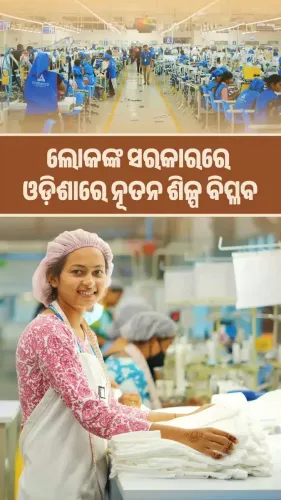
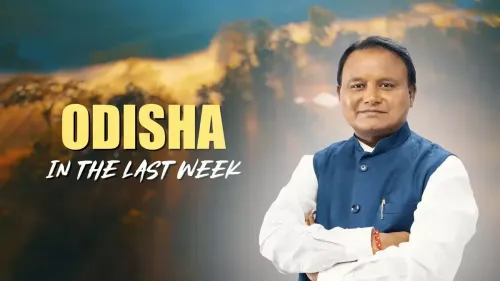
The Chief Minister's Office of Odisha declared on Friday, 19 June 2026 that skilled professionals and workers who once left the state in search of opportunity are now returning home, crediting the industrial momentum built under Chief Minister Mohan Charan Majhi for the shift. The post, shared on the government's official X account, framed the development as a defining feature of two years of the Lokan ka Sarkar administration.
The CMO stated that 'major industries scaling up and opportunities reaching an all-time high' have ended what it called the 'out-of-state grind' for Odisha's skilled workforce. The post added that Odisha is 'no longer letting its potential slip away' and is instead 'creating a blueprint for growth, opportunity, and prosperity on its own soil.'
Context
Odisha has historically been one of India's significant source states for out-migration, with workers and professionals moving to metropolitan centres in Maharashtra, Gujarat, Karnataka and the National Capital Region for employment. The state's mineral wealth — it holds substantial reserves of iron ore, bauxite and coal — long underpinned a heavy-industry base, but downstream job creation and retention of skilled labour remained persistent challenges across successive governments. The BJP-led government that came to power in June 2024 under Mohan Charan Majhi — the first BJP chief minister of the state — inherited this structural dynamic after ending Naveen Patnaik's 24-year tenure. The new administration has since positioned industrial expansion and employment generation as central to its political identity, with hashtags such as #2YearsOfIndustrialMomentum and #BikasharaDharaOdishaSara (meaning 'The stream of development flows across Odisha') anchoring its public messaging.Policy Backdrop
The state's industrial policy framework has evolved across multiple governments. The Odisha Industrial Policy Resolution 2015 introduced incentives targeting steel, aluminium, petrochemicals and downstream manufacturing clusters. The Make in Odisha Conclave 2022, held under the previous administration, sought fresh investment commitments across metals, electronics and tourism sectors. Post-2024 budget and policy updates by the Majhi government reiterated a focus on employment-linked incentives and skill mapping explicitly aimed at curbing out-migration. This approach aligns with a broader national pattern: several Indian states governed by different parties have accelerated reverse-migration messaging since 2021, pairing new industrial parks and skill programmes with targeted marketing campaigns. Uttar Pradesh, Bihar and Chhattisgarh have pursued comparable narratives, often tying them to national production-linked incentive schemes and ease-of-doing-business reforms.Stakeholders and Impact
The primary beneficiaries identified in the government's framing are skilled professionals and workers who previously sought employment outside the state. If the reverse-migration trend holds, it would have downstream effects on local housing, retail, services and the state's tax base. Industries scaling up in Odisha — particularly in metals, logistics and manufacturing — stand to gain from a larger local talent pool, potentially reducing recruitment costs and attrition associated with inter-state hiring. For the Majhi government, the political dividend is equally significant: demonstrating that the BJP's first term in the state is delivering tangible economic change to a constituency that had long voted for stability under the previous regime. The two-year milestone of the administration provides a natural inflection point for such messaging.What's Next
Policy watchers will look to the next round of state investor summits and the 2026-27 budget presentation for concrete project announcements and, critically, verifiable data on the scale of migrant returns. The government's ability to translate the 'returning home' narrative into measurable employment numbers will determine whether the momentum it claims becomes a durable economic story or remains largely aspirational. How Odisha performs on ease-of-doing-business rankings and skill-absorption metrics in the coming quarters will be the most telling indicators of whether the blueprint is taking hold.Point of View
Designed to contrast with the long Naveen Patnaik era and demonstrate that a change in ruling party has produced tangible economic change. Reverse-migration messaging has become a standard tool in the BJP's state-level governance playbook, deployed with varying success in Uttar Pradesh and Bihar, and Odisha is now adopting the same template. The credibility of the claim, however, will hinge on independently verifiable employment and investment data that the government has yet to publish. Until that data surfaces, the announcement is best read as aspirational positioning ahead of what is likely to be an active investor-outreach cycle.
NationPress
19 Sept 2026
Frequently Asked Questions
Why are skilled workers returning to Odisha?
The Odisha government says major industries are scaling up in the state, creating opportunities that are drawing back professionals who previously worked in other states. The administration under CM Mohan Majhi has emphasised employment-linked incentives and skill-mapping policies to retain and attract talent locally.
Who is CM Mohan Majhi and when did he take office?
Mohan Charan Majhi became Chief Minister of Odisha in June 2024 after the BJP won the state assembly elections, ending Naveen Patnaik 's 24-year rule. He is the first BJP chief minister in the state's history.
What is Lokan ka Sarkar in Odisha?
'Lokan ka Sarkar' translates roughly to 'People's Government' and is the branding used by the Majhi-led BJP administration in Odisha to describe its governance approach. The two-year anniversary of this government was marked in June 2026 with a series of communications highlighting industrial and development milestones.
What is Odisha's history with out-migration?
Odisha has long been one of India's significant source states for labour and skilled-worker out-migration, with people moving to cities in Maharashtra , Gujarat , Karnataka and Delhi NCR . Despite the state's mineral wealth and heavy-industry base, downstream job creation has historically been insufficient to retain its workforce.
What industrial policies has Odisha introduced to boost local employment?
Key measures include the Odisha Industrial Policy Resolution 2015 , which offered incentives for steel, aluminium and petrochemical clusters, and post- 2024 budget updates that added employment-linked incentives and skill-mapping initiatives. The previous government also held the Make in Odisha Conclave 2022 to attract fresh investment commitments.