White House: Trump Made D.C. Beautiful Again
Synopsis
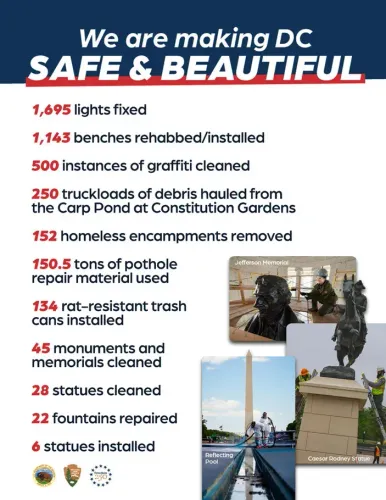
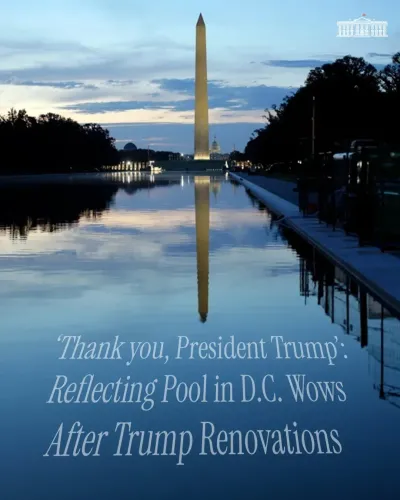
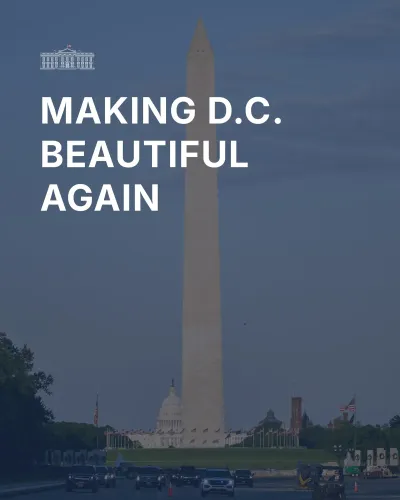
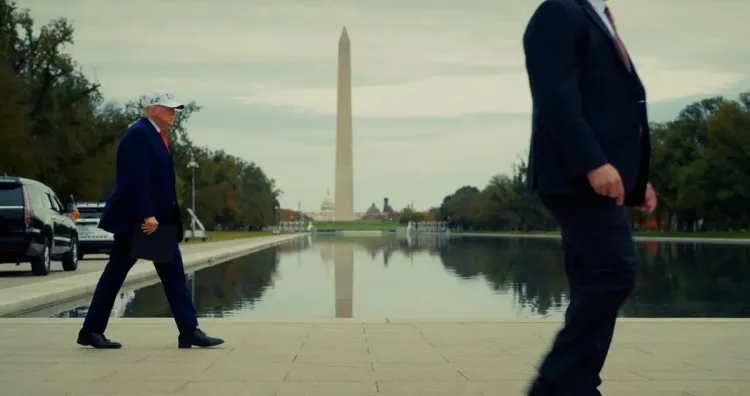
The White House posted on November 3, 2026, crediting President Trump with restoring Washington D.C.'s beauty and greatness, framing urban decline as a deliberate policy choice — an extension of the MAGA framework applied directly to the nation's capital and its federal architecture.
Key Takeaways
The White House posted on November 3, 2026 crediting President Donald J.
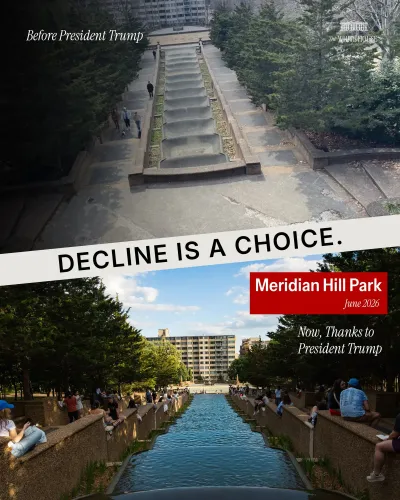
Trump with making Washington D.C. 'beautiful again.' The post's central argument — 'Decline was a choice' — frames the capital's condition as a deliberate policy outcome, not an inevitability.
Executive Order 13967 ( December 2020 ) directed federal agencies to prioritise classical architecture for new civic buildings in D.C.
The messaging applies the 'Make America Great Again' framework specifically to urban infrastructure and the appearance of federal assets.
The National Capital Planning Commission and future congressional funding decisions will determine whether the rhetoric translates into measurable physical outcomes.
Decline, the White House declared on Tuesday, November 3, 2026, was never inevitable — it was a policy choice. In a pointed message posted to X, the official communications account of the Executive Office of the President framed Washington D.C.'s transformation under President Donald J. Trump as a deliberate act of national restoration, capping it with an American flag emoji and the conviction that the capital is 'a country we are proud to call home.'
The Architecture of 'Greatness': What the Policy Record Says
The messaging tracks directly to a concrete executive action: Executive Order 13967, signed in December 2020, which directed federal agencies to prioritise classical and traditional architectural styles for new civic buildings in Washington D.C. and across the country. The order was framed explicitly as a corrective — a pushback against decades of modernist federal construction that its proponents argued had severed public buildings from their civic and aesthetic heritage.
That executive order became one of the more visible cultural-policy moves of Trump's first term, drawing fierce debate between preservationists who cheered the classical revival and architects who argued it imposed a single aesthetic ideology on government design. The debate never fully resolved — it simply shifted into budget lines, planning commissions, and the quieter machinery of federal procurement.
'Decline Was a Choice': The MAGA Frame Applied to the Capital
Tuesday's White House post is a textbook deployment of the 'Make America Great Again' framework — but trained specifically on urban infrastructure and the appearance of federal assets. The logic is deliberate: by asserting that decline was chosen, the message implicitly argues that greatness, too, is a choice — one that Trump made and others refused to.
It is a framing with real political utility. Washington D.C. has long served as a proxy battleground in American culture-war politics — a city run by Democrats, home to a largely progressive federal workforce, and perpetually cited by Trump allies as Exhibit A of liberal governance gone wrong. Casting the capital's condition as a matter of will rather than complexity is a move the White House has made before. The sharpness of the line — 'Decline was a choice' — suggests it will make the move again.
What Comes Next for D.C.'s Federal Spaces
The National Capital Planning Commission, the body that oversees federal development in the district, and any follow-on executive orders will be the real indicators of whether this post signals fresh policy momentum or serves as retrospective framing. Congressional appropriations for D.C. public spaces and the pace of new federal construction under classical-architecture guidelines will be the metrics that matter — the ones that turn a social-media declaration into a measurable outcome.
For now, the White House has planted a flag — literally and rhetorically. The nation's capital, it insists, looks the way it does because someone decided it should.
Point of View
' the administration implicitly positions every future deterioration of federal spaces as an opposition failure and every restoration as a Trump achievement. The classical-architecture executive order gives the claim a policy spine, but the broader pattern is one of using Washington D.C. as a perpetual culture-war canvas. For India-watchers tracking U.S. domestic politics, the significance is in what this framing signals about the administration's posture heading into any legislative or appropriations fight over federal spending on public infrastructure.
NationPress
3 Nov 2026
Frequently Asked Questions
What did the White House say about Washington D.C. in November 2026?
The White House posted on November 3, 2026 that 'decline was a choice' and credited President Trump with making Washington D.C. beautiful again, framing the capital's restoration as a deliberate act of national greatness.
What is Executive Order 13967 and how does it relate to Trump's D.C. agenda?
Executive Order 13967, signed in December 2020, directed federal agencies to prioritise classical and traditional architectural styles for new civic buildings in Washington D.C. and across the United States, and is a key policy basis for the White House's claims about restoring the capital's beauty.
What is the 'Make America Great Again' framework applied to Washington D.C.?
The MAGA framework, when applied to D.C., argues that the capital's physical condition — its buildings, monuments, and public spaces — reflects deliberate policy choices, and that the Trump administration reversed a trend of decline through executive action and federal investment.
Who oversees federal development in Washington D.C.?
The National Capital Planning Commission is the federal body responsible for overseeing development in Washington D.C., and its decisions on new federal construction and public spaces are key indicators of whether the White House's rhetoric translates into concrete policy.
Why does Washington D.C. feature so prominently in U.S. political messaging?
Washington D.C. is a Democrat-run city and home to a large federal workforce, making it a frequent proxy in American culture-war politics — both parties use the capital's condition as evidence of the other's governance failures or their own achievements.