CM Majhi Allocates ₹200 Cr to Revive Odisha Textile Sector
Synopsis
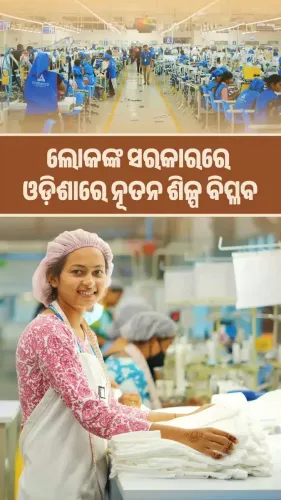
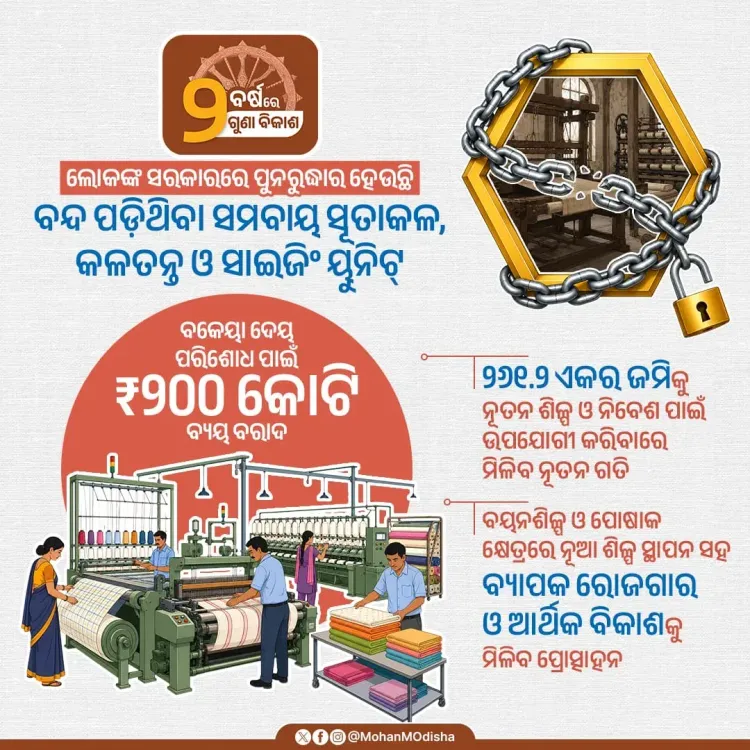
Odisha Chief Minister Mohan Charan Majhi has announced ₹200 crore to settle dues of closed cooperative spinning mills and sizing units, while repurposing 261.2 acres of land for new industrial investment — marking a key textile-sector push in the BJP government's second year.
Key Takeaways
₹200 crore has been earmarked by the Odisha government to clear outstanding dues of closed cooperative spinning mills, power looms, and sizing units.
261.2 acres of land freed from defunct textile units will be made available for fresh industrial and investment proposals.
The initiative aims to generate broad-based employment, economic development, and renewed industrialisation in Odisha .
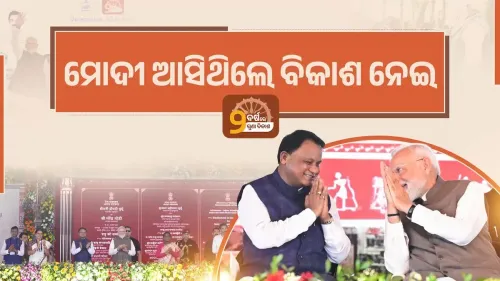
The announcement coincides with the BJP government's second anniversary in office, framed under the #2YearsofLokankaSarakar campaign.
Odisha has a long-established handloom and textile tradition, with major weaving clusters in Sambalpur, Bargarh, Cuttack, and Nuapatna .
The move follows a broader state strategy to expand manufacturing employment in eastern India after the BJP 's historic 2024 election victory.
Odisha Chief Minister Mohan Charan Majhi on Tuesday, 16 June 2026 announced that the state government has earmarked ₹200 crore to clear outstanding dues of closed cooperative spinning mills, power looms, and sizing units, while simultaneously unlocking 261.2 acres of land for fresh industrial investment and employment generation.
Context
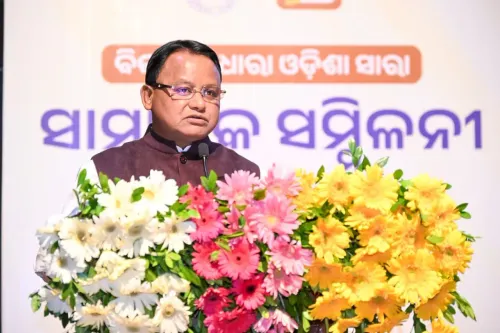
Posting in Odia on X, Chief Minister Majhi stated that the 'Lokanka Sarakar' (people's government) is 'continuously making efforts to give new momentum to Odisha's textile sector.' The announcement is tied to the ruling BJP government's second-anniversary campaign marked by the hashtags #2YearsofLokankaSarakar and #BikasharaDharaOdishaSara, signalling a deliberate effort to frame the revival as a governance milestone.
The post identifies two parallel tracks: settling the backlog of dues owed by long-dormant cooperative textile units, and converting the land those units occupied into productive industrial assets. Together, the measures aim to generate 'widespread employment, economic development, and a new impetus for industrialisation,' in the Chief Minister's words.
Policy Backdrop
Odisha has a centuries-old handloom and textile tradition, with clusters in districts such as Sambalpur, Bargarh, Cuttack, and Nuapatna employing large numbers of rural weavers and artisans. Several cooperative spinning and weaving mills across the state fell into operational decline over decades, accumulating wage and dues arrears that left workers in financial distress and the land they occupied idle.
Indian states have periodically initiated similar arrears-clearance exercises to unlock stranded industrial land. Odisha's move follows the June 2024 change of government that brought the BJP to power for the first time in the state, ending 24 years of BJD rule. The Majhi administration has since positioned eastern India's manufacturing potential as a core pitch to investors, including at national-level investment summits.
Stakeholders and Impact
The most immediate beneficiaries are workers and former employees of the closed cooperative mills who are owed pending wages and dues. The ₹200 crore allocation is intended to settle these liabilities, providing financial relief to a constituency that has long waited for resolution.
Beyond current workers, the repurposing of 261.2 acres of land is targeted at attracting new industrial and investment proposals. If realised, this could draw textile manufacturers, ancillary industries, or logistics operators, creating fresh employment in districts where the closure of mills had left economic voids. Handloom weavers and artisan cooperatives could also benefit if downstream textile investment strengthens the broader value chain.
What's Next
The practical impact of the announcement will depend on the pace of the dues-settlement process and the terms under which the 261.2 acres are offered to investors — whether through open tenders, a state industrial development corporation, or direct allotment. Stakeholders and industry observers will watch for a formal request-for-proposal or policy notification from the Odisha government in the coming weeks.
If the land parcel is successfully monetised and new units become operational, the initiative could serve as a template for other eastern Indian states grappling with similar legacies of closed public-sector textile enterprises. The broader test for the Majhi government will be translating a financial commitment into visible factory-floor employment within a credible timeframe.
Point of View
Giving the ruling party a concrete deliverable to contrast with its predecessor. Repurposing 261.2 acres for fresh industry fits within a wider eastern India manufacturing push that several BJP-governed states have pursued since 2024. The real political test, however, lies in execution: translating financial allocations into operational factories and employment numbers before the next electoral cycle.
NationPress
15 Sept 2026
Frequently Asked Questions
Why has Odisha allocated ₹200 crore for textile mills?
The Odisha government has allocated ₹200 crore specifically to clear the pending dues — including wage arrears — owed to workers and creditors of closed cooperative spinning mills, power looms, and sizing units that had been shut for years.
What will happen to the 261.2 acres of land freed from closed textile mills in Odisha?
The 261.2 acres of land previously occupied by defunct textile units will be repurposed and made available for new industrial and investment projects, with the aim of generating employment and boosting economic activity in the state.
Who benefits from Odisha's textile sector revival plan?
The primary beneficiaries are former and current workers of closed cooperative mills who are owed dues, followed by potential new investors and job-seekers who could benefit from fresh industrial units set up on the freed land.
What is the significance of CM Majhi's announcement for Odisha's handloom sector?
Odisha has a centuries-old handloom tradition with major clusters in Sambalpur, Bargarh, Cuttack, and Nuapatna . Reviving the broader textile ecosystem — including spinning and sizing infrastructure — can strengthen the supply chain that handloom weavers depend on.
Is this part of a larger BJP government initiative in Odisha?
Yes. The announcement is part of the BJP government's second-anniversary campaign, branded #2YearsofLokankaSarakar , and aligns with the Majhi administration's broader strategy to attract manufacturing investment to eastern India following the party's historic 2024 election win in the state.