CM Majhi Marks 2 Years by Pushing Odisha's Industrial Diversification
Synopsis
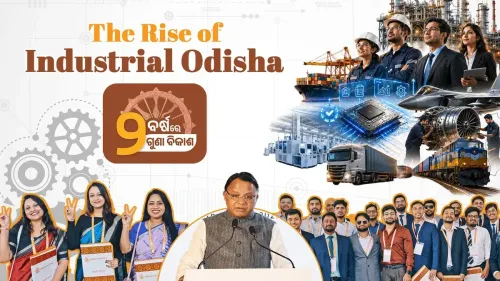
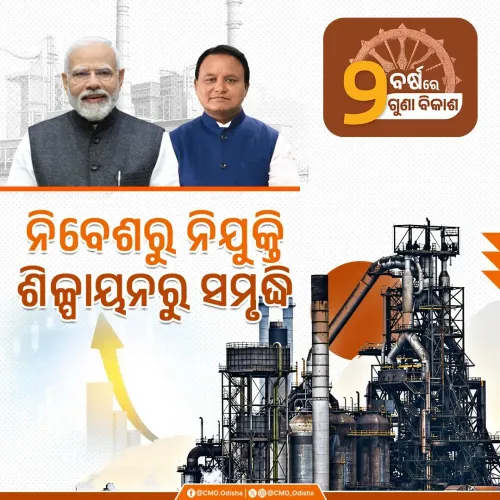
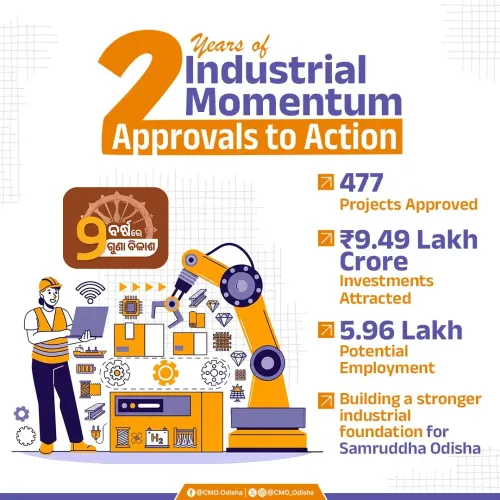
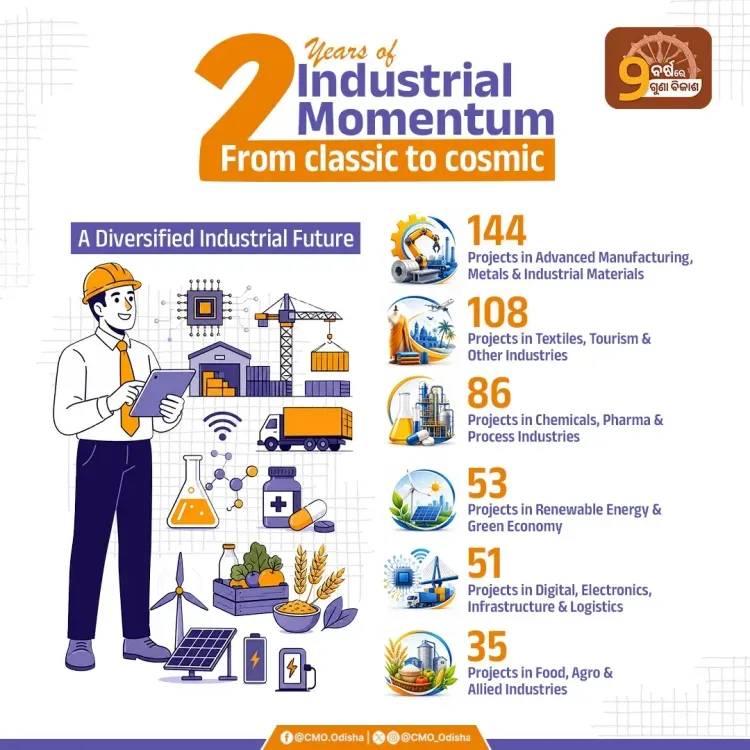
Marking two years of the BJP-led government, the Chief Minister's Office of Odisha says the state is expanding beyond its mining and metals base into renewable energy, electronics, advanced manufacturing, and logistics under CM Mohan Charan Majhi, framing the shift as a 'future-ready' growth strategy.
Key Takeaways
The Chief Minister's Office of Odisha posted on 24 June 2026 , marking two years of the BJP-led government under CM Mohan Charan Majhi .
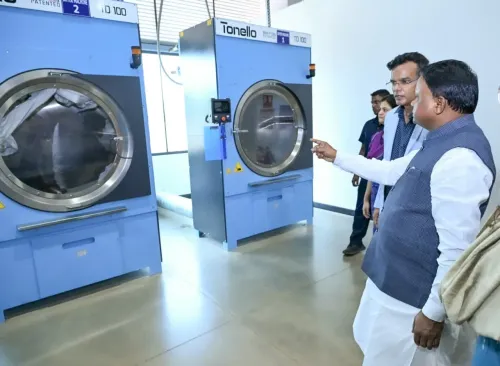
Odisha is expanding beyond its traditional mining, steel, and metals base into advanced manufacturing, renewable energy, electronics, and logistics .
The state's industrial diversification policy builds on the Odisha Industrial Policy Resolution 2015 and the Make in Odisha Conclave series launched in 2016.
National frameworks including PLI schemes , Make in India , and Atmanirbhar Bharat provide the broader policy context for the state's sectoral push.
Key stakeholders include industrial investors, renewable energy developers , and the state's manufacturing workforce .
The next Make in Odisha Conclave and upcoming state budget announcements are the key events to watch for concrete investment commitments.
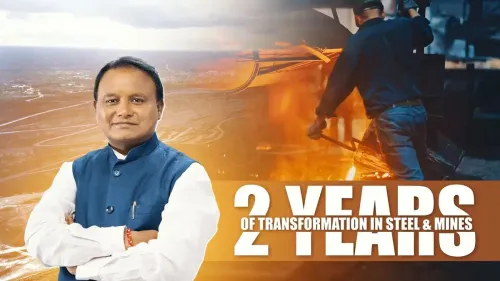
The Chief Minister's Office of Odisha, on Wednesday, 24 June 2026, highlighted the state's strategy of balancing its traditional industrial base with emerging sectors under the leadership of Chief Minister Mohan Charan Majhi, marking two years of the BJP-led Loknaka Sarkar in the state.
Context
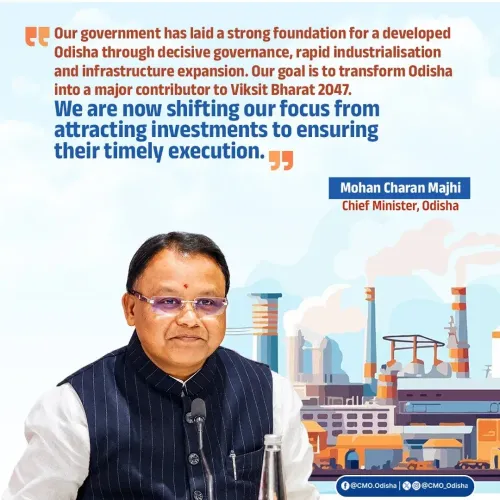
The official post from the Chief Minister's Office stated that Odisha is 'balancing its industrial strengths with the opportunities of tomorrow,' reinforcing core sectors while 'steadily expanding into advanced manufacturing, renewable energy, electronics, logistics and other emerging industries.' The message was accompanied by the hashtags #SamruddhaOdisha (Prosperous Odisha), #2YearsofLokankaSarakar, and #2YearsOfIndustrialMomentum, signalling a deliberate effort to frame the two-year anniversary as an economic milestone.
Odisha has long been one of India's most resource-rich states, with established strengths in mining, steel, aluminium, and metals. The current government's articulation of a 'diversified approach' reflects a shift in emphasis — from a single-sector dependence to a multi-sector growth model intended to create resilience and broaden employment.
Policy Backdrop
The industrial diversification push builds on a policy lineage that predates the current administration. The Odisha Industrial Policy Resolution 2015 set early targets for manufacturing growth and employment. The Make in Odisha Conclave, a biennial investment summit launched in 2016, has since served as the state's flagship platform to attract domestic and foreign capital into manufacturing and services.
At the national level, India's Production Linked Incentive (PLI) schemes, rolled out from 2020 onwards, have opened new avenues for states like Odisha to position themselves in electronics and advanced manufacturing. The broader national programmes — Make in India and Atmanirbhar Bharat — have encouraged states across the country to look beyond their mineral and heavy-industry bases toward green energy and logistics corridors.
Chief Minister Mohan Charan Majhi took office in June 2024 following the BJP's victory in the Odisha assembly elections, inheriting both the state's industrial legacy and its ongoing diversification agenda.
Stakeholders and Impact
The sectors named in the post — advanced manufacturing, renewable energy, electronics, and logistics — represent a significant potential shift in Odisha's employment and investment landscape. Industrial investors, particularly in the renewable energy and electronics segments, stand to benefit from state-level incentives aligned with central PLI frameworks.
The manufacturing workforce in Odisha could see new job categories emerge alongside the state's traditional heavy-industry employment base. Renewable energy developers, in particular, have been identified as a key stakeholder group as India accelerates its clean energy transition and states compete to attract green investment.
The government's framing of this as a 'future-ready growth' strategy also signals an intent to attract technology-oriented industries that have historically gravitated toward southern and western Indian states.
What's Next
Observers will watch for follow-up announcements in the state budget on incentives targeting the newly emphasised sectors, as well as fresh investment commitments at the next edition of the Make in Odisha Conclave. The government's ability to translate the stated diversification vision into concrete project pipelines and employment numbers will be the key measure of this two-year milestone's substance.
As Odisha positions itself alongside states competing for capital in electronics, green energy, and logistics, the depth of policy support and infrastructure readiness will determine whether the diversification narrative converts into durable economic momentum.
Point of View
And the CMO's messaging is clearly aimed at positioning the state favourably in that competition. The invocation of 'future-ready growth' alongside core sector reinforcement is a careful balancing act, acknowledging the state's mineral-economy identity while signalling openness to new industries. Whether the diversification narrative is backed by measurable investment flows will become clearer at the next Make in Odisha Conclave.
NationPress
23 Sept 2026
Frequently Asked Questions
What is Odisha's industrial diversification strategy under CM Mohan Majhi?
Under Chief Minister Mohan Charan Majhi, Odisha is pursuing a strategy that retains its core strengths in mining, steel, and metals while actively expanding into advanced manufacturing, renewable energy, electronics, and logistics to create a more resilient, multi-sector economy.
What is the Make in Odisha Conclave?
The Make in Odisha Conclave is a biennial investment summit launched in 2016 to attract domestic and foreign capital into the state's manufacturing and services sectors, serving as Odisha's flagship platform for industrial promotion.
Why is Odisha focusing on renewable energy and electronics?
Odisha is targeting renewable energy and electronics to align with national programmes such as Make in India, Atmanirbhar Bharat, and the Production Linked Incentive schemes, which have created policy and financial incentives for states to diversify beyond traditional industries.
When did Mohan Charan Majhi become Chief Minister of Odisha?
Mohan Charan Majhi became Chief Minister of Odisha in June 2024 following the BJP's victory in the state assembly elections.
What does SamruddhaOdisha mean?
'SamruddhaOdisha' is an Odia phrase meaning 'Prosperous Odisha,' used as a government hashtag to represent the BJP-led administration's vision for the state's economic development.