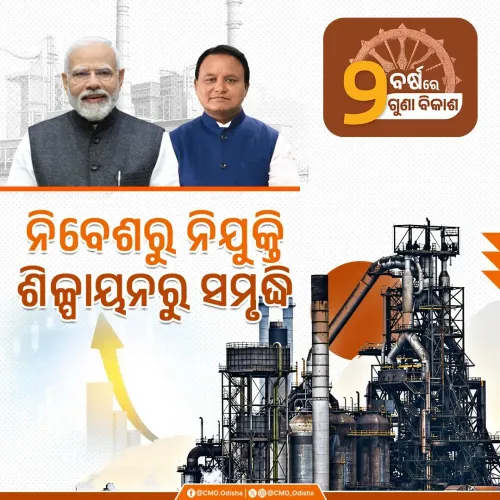
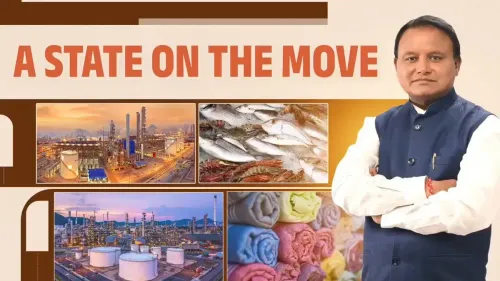
CM Majhi marks 2 years of Odisha's industrial push
Synopsis
On the second anniversary of his government, Odisha Chief Minister Mohan Charan Majhi declared that the state's industrial vision is moving from policy to ground reality, with investors actively choosing Odisha over competing destinations.
Key Takeaways
Mohan Charan Majhi has completed two years as Chief Minister of Odisha , having been sworn in on 12 June 2024 after the BJP's assembly election victory.
Majhi asserted on 19 June 2026 that investment commitments made at the start of his tenure are now translating into on-the-ground industrial activity.
The BJP government has aligned state industrial promotion with national programmes including Make in India and PM Gati Shakti .
Odisha's mineral wealth — iron ore, coal, bauxite, chromite — and port infrastructure underpin its pitch as an eastern India industrial hub.
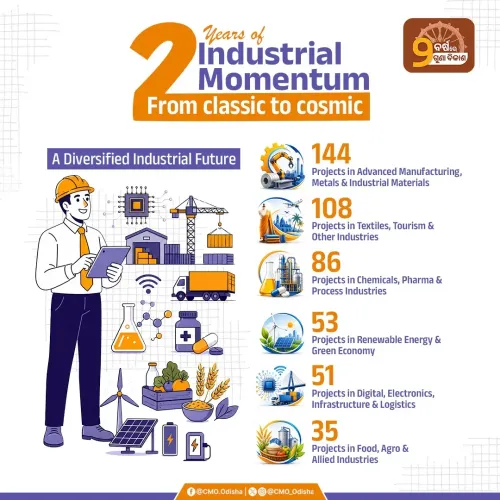
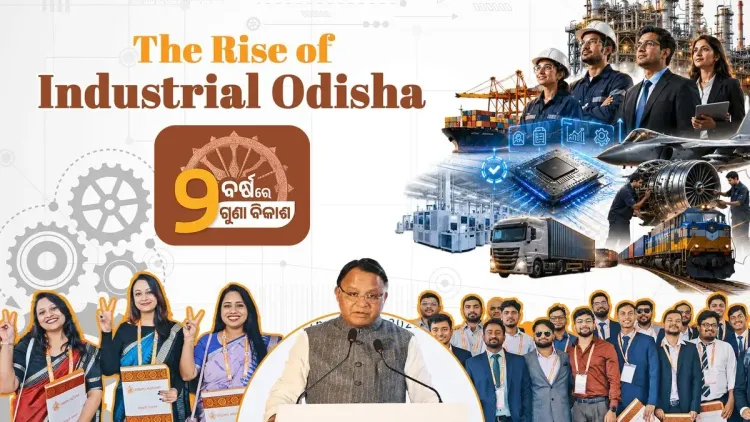
The government's hashtag campaign — #BikasharaDharaOdishaSara and #2YearsOfIndustrialMomentum — signals a deliberate effort to brand the state's growth story ahead of the term's midpoint.
The key forward-looking test is whether committed projects convert into operational units and verifiable employment numbers in 2026-27 .
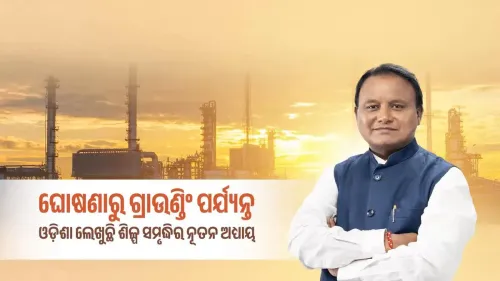
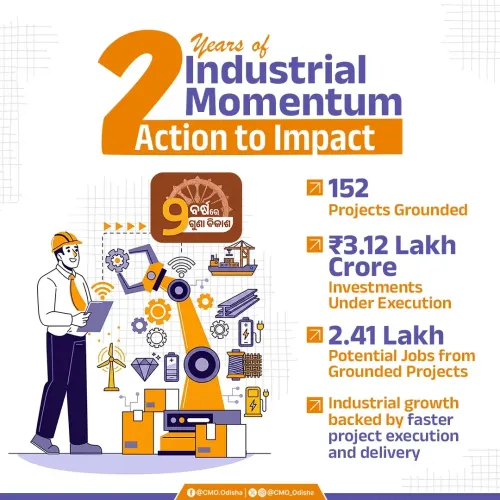
Odisha Chief Minister Mohan Charan Majhi on 19 June 2026 marked two years of his government's industrial drive, asserting that investment commitments made at the outset are now translating into on-the-ground action across the state. Posting on X under the hashtags #2YearsofLokankaSarakar and #2YearsOfIndustrialMomentum, Majhi declared that industries are no longer merely 'exploring Odisha' but are actively 'choosing Odisha.'
Context
The BJP government in Odisha was sworn in on 12 June 2024 after the party ended nearly two and a half decades of Biju Janata Dal rule in the state. Mohan Charan Majhi took charge as Chief Minister with a stated mandate to accelerate industrial development and position Odisha as a preferred investment destination in eastern India. The two-year mark on 19 June 2026 prompted Majhi to take stock of that promise publicly.
In his post, Majhi stated: 'Two years ago, we set the vision: make Odisha the destination for industry, innovation, and opportunity. Today, that vision is no longer on paper. It is showing up on the ground.' He added that 'the growth engine is running' and that 'Odisha is not waiting for the future — we are building it.'
Policy Backdrop
Odisha has long held structural advantages for industrial investment, including large reserves of iron ore, coal, bauxite, and chromite, as well as a developed port infrastructure along its eastern coastline. The state's Industrial Policy Resolution of 2015 laid an earlier framework of incentives and single-window clearances designed to attract manufacturing capital.
Since 2024, the Majhi administration has sought to align state-level industrial promotion with national programmes including Make in India and PM Gati Shakti, a pattern seen across several BJP-governed states that have used investment summits and land-bank policies to convert policy announcements into project-level activity. The hashtag #BikasharaDharaOdishaSara — broadly translating to 'a stream of development for all of Odisha' — signals the government's effort to frame this industrial push as a state-wide, inclusive growth story.
Stakeholders and Impact
The primary beneficiaries of a sustained industrial momentum in Odisha would be domestic and foreign investors, industrial entrepreneurs, and the state's large working-age population seeking manufacturing and ancillary employment. Odisha's mineral-rich districts — including Sundargarh, Keonjhar, and Jharsuguda — stand to see the most direct impact if committed projects move from blueprint to production.
For the broader investment community, the Chief Minister's assertion that 'confidence is high, opportunities are expanding' functions as a public signal of policy continuity and administrative readiness, factors that influence location decisions for capital-intensive projects with long gestation periods.
What's Next
The critical test for the Majhi government's industrial narrative will be the rate at which committed investments convert into operational projects and measurable employment. Analysts and investors will watch for a follow-up investment conclave or a revised industrial policy framework in 2026-27 that could set fresh targets and accountability benchmarks.
As Odisha approaches the midpoint of the current government's term, the administration's ability to demonstrate project completions — not just commitments — will determine whether the 'vibe shift' Majhi describes hardens into a durable economic transformation or remains a work in progress.
Point of View
Insulating the government from fact-checking while reinforcing investor confidence. The 'vibe shift' framing borrows from contemporary political messaging playbooks and mirrors the industrial-summit strategy adopted by several BJP-governed states since 2022. For Odisha, the stakes are higher than optics — the state's transition from BJD to BJP rule raised investor expectations of policy continuity plus new energy, and the government now faces the classic second-year test of converting announcements into visible outcomes. The broader arc to watch is whether Odisha can differentiate itself in an increasingly competitive inter-state race for manufacturing investment.
NationPress
19 Sept 2026
Frequently Asked Questions
How long has Mohan Charan Majhi been Chief Minister of Odisha?
Mohan Charan Majhi has been Chief Minister of Odisha for two years, having been sworn in on 12 June 2024 after the BJP won the state assembly elections.
What is Odisha's industrial policy under the BJP government?
The BJP government under CM Majhi has built on the Odisha Industrial Policy Resolution of 2015 and aligned state-level promotion with national programmes like Make in India and PM Gati Shakti, using investment summits and land-bank policies to attract manufacturers.
What industries are investing in Odisha in 2026?
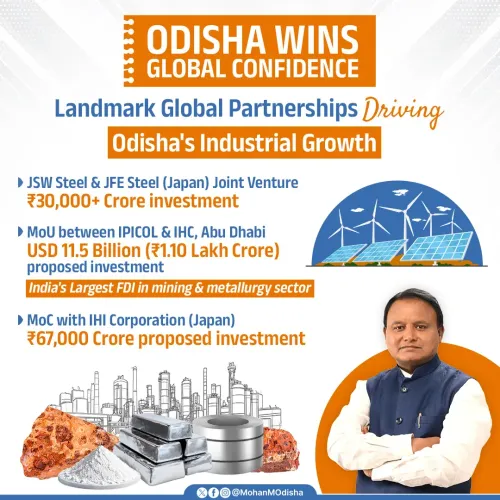
CM Majhi's post indicates that investment commitments across sectors are moving to ground-level implementation, though specific project names and investment amounts have not been officially detailed in the post.
What does #2YearsofLokankaSarakar mean?
'Lokan ka Sarkar' broadly translates to 'people's government' in Hindi, and the hashtag marks the second anniversary of the Majhi-led BJP government in Odisha that came to power in June 2024.
Why is Odisha considered an attractive industrial destination?
Odisha holds large reserves of iron ore, coal, bauxite, and chromite, and has developed port infrastructure along its eastern coastline, making it structurally attractive for mining, metals, and manufacturing industries.