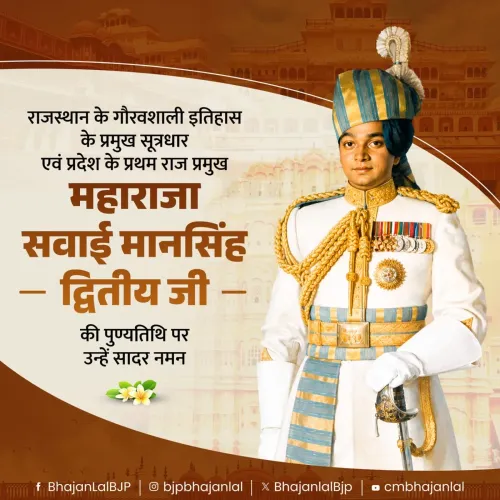
CM Bhajan Lal Sharma pays tribute to Jaipur founder Sawai Jai Singh II
Synopsis
Rajasthan CM Bhajan Lal Sharma paid tribute on November 3, 2026 to Maharaja Sawai Jai Singh II — founder of Jaipur in 1727, master urban planner and astronomer behind the iconic Jantar Mantar observatories — on his birth anniversary.
Key Takeaways
Maharaja Sawai Jai Singh II founded Jaipur in 1727 , making it one of India's earliest purpose-built, grid-planned cities.
He is known as an unparalleled urban planner and celebrated astronomer of the 18th century.
Jai Singh built Jantar Mantar observatories in five cities; the Jaipur Jantar Mantar is a UNESCO World Heritage Site .
CM Bhajan Lal Sharma offered tribute on November 3, 2026 , calling Jai Singh's legacy 'memorable for ages to come.' Jaipur is globally recognised as the Pink City and forms part of India's Golden Triangle tourist circuit.
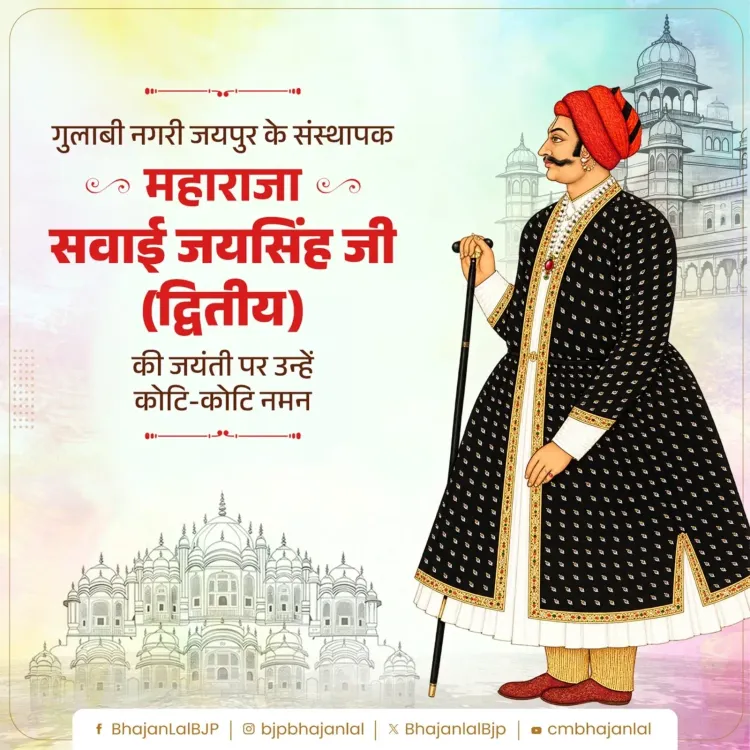
Three centuries after a visionary Rajput ruler drew the blueprint of what would become India's Pink City, Rajasthan Chief Minister Bhajan Lal Sharma on Tuesday, November 3, 2026 paid homage to Maharaja Sawai Jai Singh II on his birth anniversary — honouring the man who turned an open plain into one of the world's earliest grid-planned cities.
Posting on X in Hindi, CM Sharma wrote: 'विश्व प्रसिद्ध गुलाबी नगरी जयपुर के संस्थापक, अद्वितीय नगर नियोजक एवं प्रख्यात खगोलविद् महाराजा सवाई जयसिंह जी (द्वितीय) की जयंती पर उन्हें कोटि-कोटि नमन!' — 'A million salutations to Maharaja Sawai Jai Singh II, the founder of the world-famous Pink City of Jaipur, an unparalleled urban planner and celebrated astronomer, on his birth anniversary!' The Chief Minister added that Jai Singh's 'historic contributions to art, science and architecture, and his rich legacy, will remain memorable for ages to come.'
The man who built a city from scratch in 1727
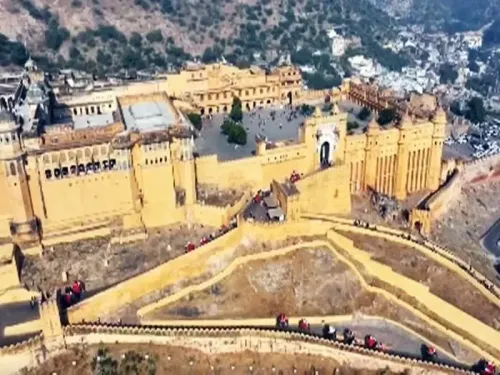
Maharaja Sawai Jai Singh II, ruler of Amber, founded Jaipur in 1727 — making it one of the subcontinent's earliest purpose-built planned capitals. The city was laid out on a precise grid modelled partly on ancient Vastu Shastra principles, with wide boulevards dividing it into neat sectors. The distinctive pink wash that gives the city its nickname was applied uniformly to its sandstone structures — a visual identity that endures today as Jaipur draws millions of visitors annually as part of India's famed Golden Triangle tourist circuit.
Jantar Mantar: when a king mapped the heavens
Jai Singh's ambitions stretched far beyond urban design. He commissioned a chain of Jantar Mantar astronomical observatories across five cities — Jaipur, Delhi, Ujjain, Mathura and Varanasi — equipping them with massive masonry instruments designed to track celestial movements with naked-eye precision. The Jaipur Jantar Mantar, the largest and best-preserved of the five, is a UNESCO World Heritage Site, its giant sundial — the Samrat Yantra — still accurate to within two seconds. For an 18th-century ruler to build scientific infrastructure at this scale was extraordinary by any measure.
A ritual of remembrance for Rajasthan's rulers
Rajasthan's chief ministers have long marked the birth anniversaries of the state's historic rulers with formal tributes — a practice that reinforces continuity between the modern administrative state and the princely legacy that shaped its cities and culture. For CM Bhajan Lal Sharma and the BJP government in Jaipur, such commemorations also carry a quiet political resonance: the Pink City is not merely a tourist brand but a living symbol of Hindu Rajput statecraft, science and art that the party's cultural nationalism narrative frequently invokes.
On the anniversary of Jai Singh's birth, Jaipur's pink walls stand as the most durable argument for his genius — a planned city that outlasted its planner by nearly three centuries, and shows no sign of being forgotten.
Point of View
One the party frequently deploys to argue that modern India's roots run deep. For a government that came to power in Rajasthan in late 2023 emphasising heritage and Hindutva, such annual commemorations are as much cultural positioning as they are historical remembrance. The Jantar Mantar connection is particularly resonant: it allows the narrative to merge statecraft, science and spirituality in a single figure.
NationPress
3 Nov 2026
Frequently Asked Questions
Who founded Jaipur and when?
Maharaja Sawai Jai Singh II founded Jaipur in 1727 . He was the ruler of Amber and designed the city on a precise grid layout, making it one of the subcontinent's earliest planned cities.
Why is Jaipur called the Pink City?
Jaipur is called the Pink City because its historic structures were painted uniformly in a distinctive pink-terracotta hue. The colour has become the city's enduring visual identity, attracting millions of tourists each year.
What is the Jantar Mantar and who built it?
Jantar Mantar is a network of astronomical observatories built by Maharaja Sawai Jai Singh II in five Indian cities — Jaipur, Delhi, Ujjain, Mathura and Varanasi. The Jaipur Jantar Mantar is a UNESCO World Heritage Site .
Why did CM Bhajan Lal Sharma post about Sawai Jai Singh II?
CM Bhajan Lal Sharma posted on November 3, 2026 to mark the birth anniversary of Maharaja Sawai Jai Singh II , paying tribute to his contributions in urban planning, astronomy and architecture.
What is Maharaja Sawai Jai Singh II known for?
Maharaja Sawai Jai Singh II is known for founding Jaipur in 1727 as a planned city, and for building the Jantar Mantar observatories — remarkable 18th-century instruments for tracking celestial movements with naked-eye precision.