CM Bhajan Lal Sharma Pays Tribute to Maharana Udai Singh II on Jayanti
Synopsis
Rajasthan Chief Minister Bhajan Lal Sharma honoured Maharana Udai Singh II, the 16th-century founder of Udaipur and father of Maharana Pratap, on his birth anniversary, calling his foresight, governance, and dedication to the motherland a lasting source of inspiration.
Key Takeaways
Maharana Udai Singh II founded Udaipur in 1559 as the new capital of the Mewar kingdom.
CM Bhajan Lal Sharma paid tribute on 4 August 2026 , his birth anniversary.
Udai Singh II was the father of the celebrated Rajput warrior Maharana Pratap .
Sharma highlighted three qualities: valour, self-respect, and visionary leadership.
The tribute reflects the Rajasthan BJP government's consistent commemoration of Rajput historical figures.
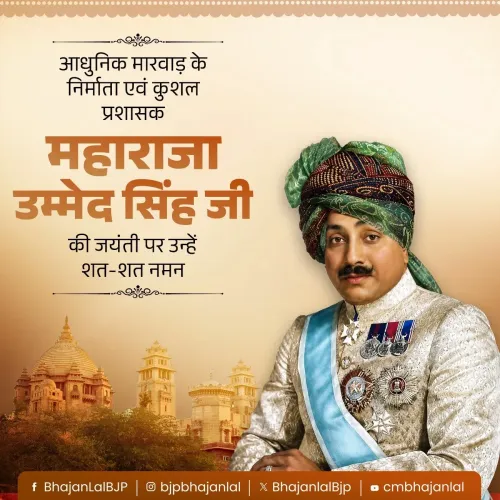
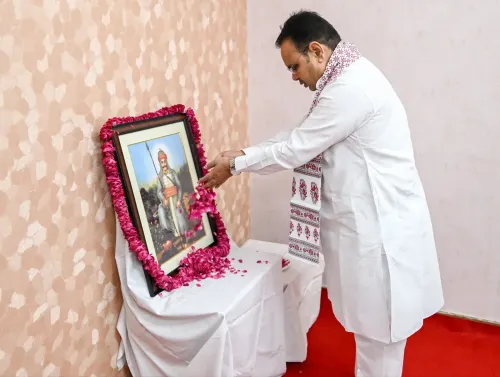
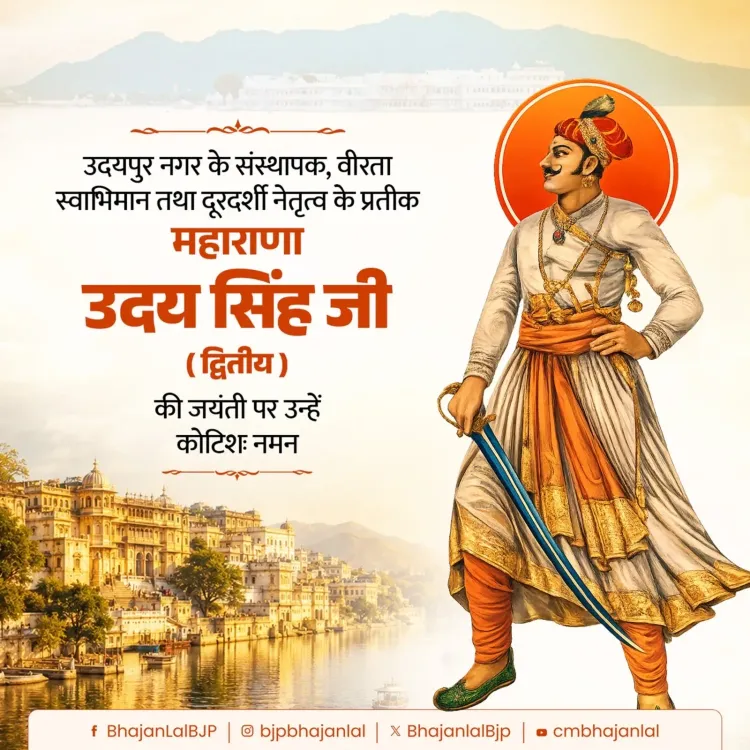
On the birth anniversary of Maharana Udai Singh II, the 16th-century ruler who founded the city of Udaipur, Rajasthan Chief Minister Bhajan Lal Sharma offered his reverence on Tuesday, 4 August 2026, honouring a legacy of valour, self-respect, and visionary statecraft that shaped the Mewar region for centuries.
In his post, CM Sharma wrote: 'उनकी अद्वितीय दूरदर्शिता, उत्कृष्ट शासन-कौशल तथा मातृभूमि की रक्षा एवं जनकल्याण के प्रति उनका समर्पण सदैव प्रेरणास्रोत रहेगा' — ('His unparalleled foresight, excellent governance skills, and dedication to the protection of the motherland and public welfare will always remain a source of inspiration.')
The Founder of Udaipur and His Place in Rajput History
Maharana Udai Singh II founded Udaipur in 1559, establishing it as the new capital of the Mewar kingdom after the fall of Chittorgarh. He was the father of the legendary warrior Maharana Pratap, whose resistance against Mughal expansion became one of the most celebrated chapters in Rajput history. Udai Singh's decision to relocate the capital to a naturally fortified valley near Lake Pichola is widely regarded as an act of strategic foresight that preserved Mewar's sovereignty and cultural continuity.
CM Sharma's tribute underscored three pillars — veerta (valour), swabhimaan (self-respect), and doordarshi netritva (visionary leadership) — framing Udai Singh's legacy as a living standard for governance and national pride. 'His ideals will continue to inspire us in the protection of the nation, culture, and self-respect,' Sharma wrote.
Rajasthan's Ruling Party and the Politics of Historical Memory
For Rajasthan's BJP government, honouring Rajput rulers on their birth anniversaries is both a cultural act and a political statement — affirming continuity with the region's martial heritage and its deep resonance among communities across the state. Udaipur, as the seat of the Mewar kingdom, holds particular emotional and historical weight in southern Rajasthan. The jayanti tribute aligns with a broader pattern of the state government publicly commemorating medieval Rajput figures as symbols of resistance, sovereignty, and dharmic governance.
The city of Udaipur itself — now a major tourism and heritage hub — owes its very existence to the ruler being honoured, making this anniversary especially significant for its residents.
Point of View
Where Mewar's martial legacy commands deep cultural reverence, such commemorations serve a dual purpose: reinforcing regional identity and signalling the ruling party's alignment with Hindu-Rajput historical memory. The framing of Udai Singh's 'swabhimaan' and 'rashtra raksha' as timeless ideals maps neatly onto the BJP's broader civilisational nationalism narrative, making this anniversary tribute as much a political statement as a historical one.
NationPress
18 Sept 2026
Frequently Asked Questions
Who was Maharana Udai Singh II?
Maharana Udai Singh II was the 16th-century ruler of the Mewar kingdom who founded the city of Udaipur in 1559. He is also known as the father of the legendary Rajput warrior Maharana Pratap.
Why did Maharana Udai Singh II found Udaipur?
He established Udaipur as the new capital of Mewar after the fall of Chittorgarh, choosing a naturally fortified valley near Lake Pichola as a strategic move to preserve the kingdom's sovereignty.
What did CM Bhajan Lal Sharma say about Maharana Udai Singh II?
CM Sharma praised Udai Singh II's unparalleled foresight, governance skills, and dedication to protecting the motherland, saying his ideals will continue to inspire efforts to protect the nation, culture, and self-respect.
When is Maharana Udai Singh II jayanti celebrated?
Maharana Udai Singh II's birth anniversary was observed on 4 August 2026, with Rajasthan Chief Minister Bhajan Lal Sharma among those paying public tribute.
What is the connection between Maharana Udai Singh II and Maharana Pratap?
Maharana Pratap, one of the most celebrated Rajput warriors known for resisting Mughal expansion, was the son of Maharana Udai Singh II, the founder of Udaipur.