HP CM Office Asserts State Rights on BBMB, Chandigarh Assets
Synopsis
The Himachal Pradesh Chief Minister's Office on 4 July 2026 publicly reaffirmed the state's push to secure its share in Chandigarh assets, equitable BBMB participation, and pending financial claims, citing earlier wins in the Wild Flower Hall and Karcham-Wangtoo cases.
Key Takeaways
The Chief Minister's Office of Himachal Pradesh on 4 July 2026 publicly committed to securing all pending state rights, including Chandigarh asset shares, BBMB representation, and financial dues.
The CMO cited prior successes in the Wild Flower Hall heritage property dispute and the Karcham-Wangtoo 1,000 MW hydroelectric project case as evidence of the state's legal momentum.
BBMB representation and power-allocation demands by Himachal Pradesh originate in the Punjab Reorganisation Act, 1966 and have been raised in successive state budgets for decades.
Himachal's claims on Chandigarh properties reflect an incomplete inter-state financial settlement dating from the 1960s reorganisation of the former undivided Punjab.
Resolution of these disputes depends on Supreme Court proceedings and Central government mediation, involving competing interests from Punjab and Haryana .
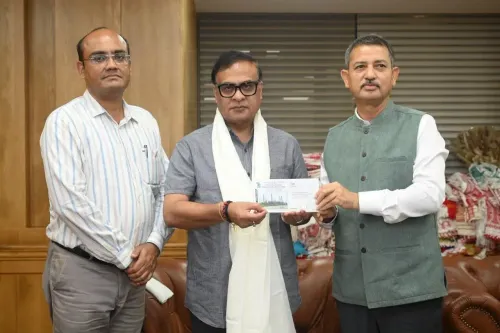
The Chief Minister's Office of Himachal Pradesh reaffirmed on Saturday, 4 July 2026 the state government's resolve to secure every pending financial and legal entitlement owed to Himachal Pradesh, citing earlier successes in the Wild Flower Hall and Karcham-Wangtoo hydroelectric project cases as precedents for continued assertion of state rights.
Context
The post, written in Hindi, states: 'Chandigarh ki parisampattiyon mein hissedari, BBMB mein nyayapurn bhagidari aur lambit vittiya daawon sahit Himachal ke har adhikar ko sunishchit karne ke liye' — ('To ensure every right of Himachal, including a share in Chandigarh assets, equitable participation in the BBMB, and pending financial claims'). The statement frames these demands as part of a continuing campaign to protect the state's constitutional and financial interests.
The CMO also highlighted that prior efforts had already yielded results in the Wild Flower Hall dispute — a heritage property in Shimla district whose ownership has been contested — and in the Karcham-Wangtoo hydroelectric project case, a 1,000 MW run-of-river project in Kinnaur district where the state has asserted claims over free power, equity stakes, and water-use charges.
Policy Backdrop
Many of these disputes trace their origins to the Punjab Reorganisation Act, 1966, which created Himachal Pradesh as a full state and prescribed the framework for dividing assets, liabilities, and river-valley infrastructure among Punjab, Haryana, and Himachal Pradesh. The Bhakra Beas Management Board (BBMB), constituted under the same legislation, manages the Bhakra, Nangal, Beas, and Dehar projects — and Himachal has for decades sought enhanced board representation and a larger share of generated power.
Successive state governments have raised the BBMB representation issue in budget documents and formal memoranda to the Centre. Similarly, Chandigarh property claims reflect an incomplete financial settlement between the successor states of the former undivided Punjab, with Himachal maintaining residual claims to specific buildings and land parcels in the union territory.
Stakeholders and Impact
The most direct beneficiaries of a successful resolution would be Himachal Pradesh's state exchequer and its residents, who stand to gain through increased power revenues, equitable board representation, and recovery of long-pending financial dues. Hydro-power developers operating in the state, including those associated with the Karcham-Wangtoo project, would be among the parties affected by any renegotiated terms on free power quotas or equity contributions.
Broader northern Indian inter-state dynamics are also at stake. Punjab and Haryana — the other principal stakeholders in BBMB allocations — have their own competing interests, meaning any rebalancing in Himachal's favour is likely to face resistance and require either judicial direction or Central mediation.
What's Next
Attention will now turn to forthcoming meetings of the BBMB and any orders from the Supreme Court on petitions relating to the Chandigarh asset division. State budget documents for the next fiscal cycle are also expected to reflect revised receipt projections from Karcham-Wangtoo and similar hydroelectric projects if negotiations advance. The CMO's public assertion signals that the Himachal Pradesh government intends to keep these issues in active political and legal focus rather than allow them to languish in administrative limbo.
Point of View
Which serves both domestic electoral messaging and pressure on the Centre. This mirrors a broader trend across Himalayan and reorganised states, where decades-old settlement frameworks are being revisited as state governments grow more assertive about extracting revenue from hydro resources and legacy infrastructure. The outcome will hinge on judicial timelines and the Centre's willingness to mediate — neither of which the state government fully controls.
NationPress
3 Oct 2026
Frequently Asked Questions
What is Himachal Pradesh's claim in the BBMB?
Himachal Pradesh seeks enhanced representation on the Bhakra Beas Management Board and a larger share of the power generated from projects the BBMB manages, a demand that dates to the state's formation under the Punjab Reorganisation Act of 1966.
What is the Wild Flower Hall dispute about?
Wild Flower Hall is a heritage property in Shimla district whose ownership and transfer rights have been contested between the Himachal Pradesh government and other claimants; the CMO cited the case as one where state interests were successfully protected.
What is the Karcham-Wangtoo hydroelectric project?
The Karcham-Wangtoo project is a 1,000 MW run-of-river hydroelectric facility in Kinnaur district; Himachal Pradesh has asserted claims over free power allocation, equity stakes, and water-use charges from the private developers who operate it.
Why does Himachal Pradesh have claims on Chandigarh assets?
When Himachal Pradesh was carved out as a full state under the Punjab Reorganisation Act 1966, the financial and property settlement among the successor states — Punjab, Haryana, and Himachal — was never fully completed, leaving Himachal with residual claims to certain buildings and land parcels in Chandigarh.
What happens next in Himachal's inter-state asset disputes?
Key developments to watch include upcoming BBMB board meetings, any Supreme Court orders on Chandigarh asset petitions, and the state's next budget documents, which may reflect revised revenue projections if negotiations with the Centre or developers progress.