CM Rekha Gupta marks 18 months with 18 decisions for Delhi
Synopsis
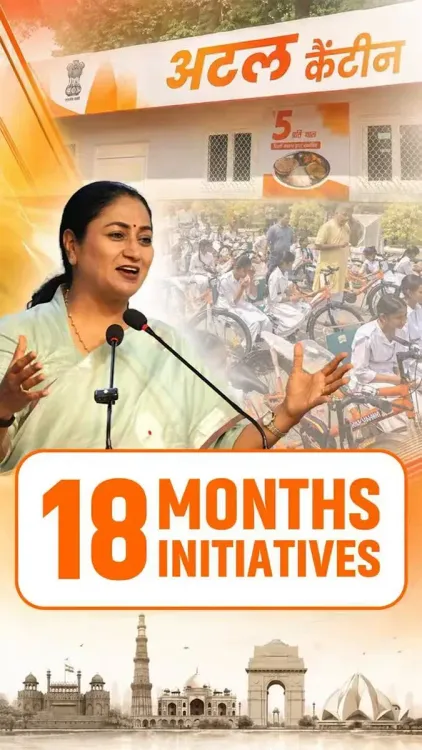
Delhi Chief Minister Rekha Gupta marked 18 months in office on 18 August 2026 by citing 18 key decisions touching homes, workers, women, and youth across the capital, framing them as the foundation of a larger transformation under #ViksitDelhi.
Key Takeaways
Rekha Gupta completed 18 months as Delhi Chief Minister as of August 2026 .
She cited 18 key decisions spanning homes, streets, institutions, workers, women, youth, and vulnerable citizens.
The post frames each decision around human impact — dignity, easier lives, and new opportunities — rather than administrative metrics.
The hashtag #ViksitDelhi consciously mirrors the BJP's national #ViksitBharat development brand.
Gupta explicitly named 'renewed trust in governance' as an outcome, signalling a restoration narrative after years of political turbulence in Delhi.
The closing declaration — 'this is only the beginning' — sets a public benchmark the administration will be held to.
Eighteen months into office, Delhi Chief Minister Rekha Gupta is drawing a line in the sand — and daring the capital to hold her to it. On Tuesday, 18 August 2026, the BJP leader posted a sweeping reflection on her government's first year-and-a-half, framing 18 key decisions as proof that governance in Delhi has a new address.
18 decisions, one city's many faces
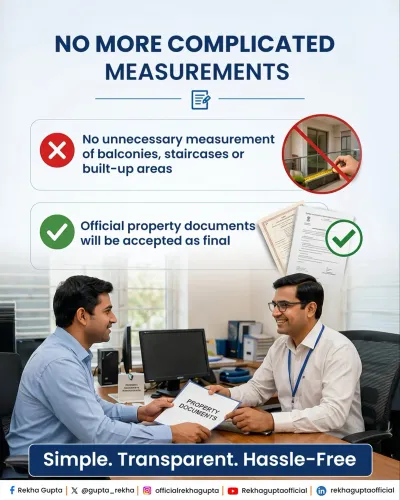
The Chief Minister's post did not catalogue each decision individually, but its sweep was deliberate: homes, streets, institutions, workers, women, young people, and 'the most vulnerable citizens.' That framing — cutting across every demographic slice of a city of over 20 million people — signals a government trying to claim credit across the full spectrum of Delhi's electorate, not just one constituency.
'Behind each decision is a human story, of greater dignity, easier lives, new opportunities and renewed trust in governance,' Gupta wrote, anchoring policy in personal impact rather than bureaucratic output. The language is calibrated: it is harder to argue against dignity than against a budget line.
The #ViksitDelhi promise and what it signals
The hashtag #ViksitDelhi — 'Developed Delhi' — is a conscious echo of the national #ViksitBharat (Developed India) campaign that has become the BJP's overarching governance brand ahead of 2047, the centenary of Indian independence. By attaching her 18-month milestone to that vocabulary, Gupta is threading Delhi's story into a larger BJP national narrative: that development, not political disruption, is the party's legacy in the capital.
The post's closing line carries the sharpest political weight: 'this is only the beginning of a larger transformation.' For a government that wrested Delhi from the Aam Aadmi Party after years in opposition, that line is both a promise to voters and a warning to rivals that the administration intends to run long.
Governance as a trust deficit — and its repair
The explicit mention of 'renewed trust in governance' is telling. Delhi's political memory is long: the capital has cycled through charges of corruption, administrative paralysis, and centre-state standoffs in recent years. By naming trust as an outcome — not just roads or subsidies — Gupta is positioning her government's 18-month record as a restoration project as much as a development one.
Whether the 18 decisions deliver on that framing will be tested in the streets and mohallas of Delhi long before the next election. For now, the Chief Minister has set the benchmark herself — and in politics, that is either a masterstroke or a hostage to fortune.
Point of View
She sidesteps the scrutiny that numbers invite while keeping the emotional narrative firmly in BJP hands. The #ViksitDelhi framing is strategically significant — it binds Delhi's governance story to the party's national 2047 arc, making any attack on her record feel like an attack on a larger aspiration. The real test is whether voters in Delhi's working-class and middle-income neighbourhoods, who care less about hashtags and more about daily friction, feel the 18 decisions in their lives.
NationPress
3 Oct 2026
Frequently Asked Questions
What are the 18 decisions taken by Delhi CM Rekha Gupta in 18 months?
Delhi Chief Minister Rekha Gupta announced on 18 August 2026 that her government had taken 18 important decisions over its first 18 months, covering areas such as homes, streets, institutions, workers, women, youth, and vulnerable citizens. The specific list of decisions was shared alongside a video posted on her official X account.
Who is Delhi Chief Minister Rekha Gupta?
Rekha Gupta is the Chief Minister of Delhi and a senior BJP leader who led the party to power in the capital, ending the Aam Aadmi Party's tenure. She has been in office since early 2025.
What does #ViksitDelhi mean?
#ViksitDelhi means 'Developed Delhi' in Hindi. It is the BJP Delhi government's governance campaign hashtag, echoing the national #ViksitBharat (Developed India) vision tied to India's centenary of independence in 2047.
How long has Rekha Gupta been Delhi Chief Minister?
As of August 2026, Rekha Gupta has completed 18 months as Delhi Chief Minister, a milestone she marked publicly with a post on X outlining her government's key decisions.
What is the BJP's governance record in Delhi under Rekha Gupta?
The BJP government under Rekha Gupta has cited 18 major decisions in its first 18 months, focusing on areas including housing, urban infrastructure, labour welfare, women's empowerment, youth opportunities, and support for vulnerable citizens, framing the record as a foundation for larger transformation.