HP CMO: Wild Flower Hall, Karchham-Wangtoo to yield Rs 651 cr
Synopsis
The Himachal Pradesh CMO announced projected annual revenues of Rs 401 crore from Wild Flower Hall and Rs 250 crore from the Karchham-Wangtoo Hydroelectric Project, totalling approximately Rs 651 crore — a significant boost to the state's non-tax revenue base.
Key Takeaways
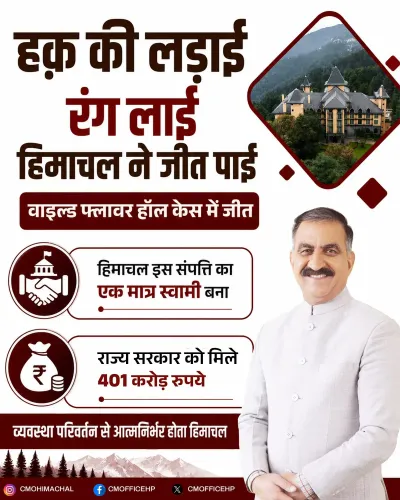
Wild Flower Hall near Shimla is projected to yield approximately Rs 401 crore in revenue for Himachal Pradesh .
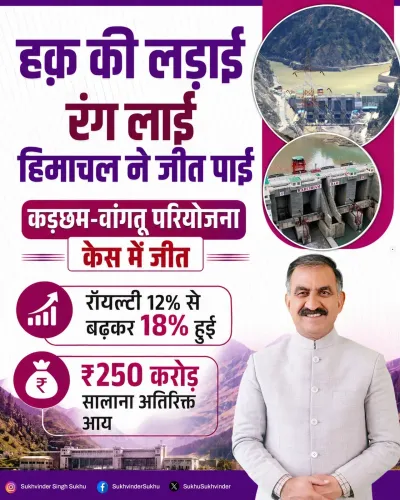
The Karchham-Wangtoo Hydroelectric Project in Kinnaur district is expected to contribute an additional Rs 250 crore annually to the state exchequer.
The combined projected annual revenue from both assets stands at approximately Rs 651 crore .
The announcement was made by the Chief Minister's Office of Himachal Pradesh on June 18, 2026 .
Himachal Pradesh's hydropower revenue model dates to early- 2000s policy frameworks that mandated royalty and free-power provisions from private developers.
Formal budget documents and revenue-sharing agreements will be closely watched to confirm the cited projections.
The Chief Minister's Office of Himachal Pradesh announced on Thursday, June 18, 2026 that the state stands to earn approximately Rs 651 crore in combined annual revenue from two key assets — the heritage tourism property Wild Flower Hall near Shimla and the Karchham-Wangtoo Hydroelectric Project in Kinnaur district.
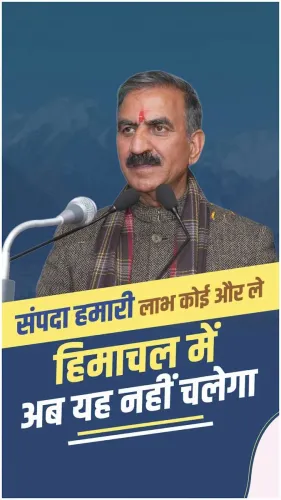
The official post states that Wild Flower Hall se pradesh ko lagbhag 401 crore rupaye ki aay hogi ('Wild Flower Hall will yield approximately Rs 401 crore in revenue for the state'), while the Karchham-Wangtoo Hydroelectric Project will ensure an additional annual income of approximately Rs 250 crore.
Context
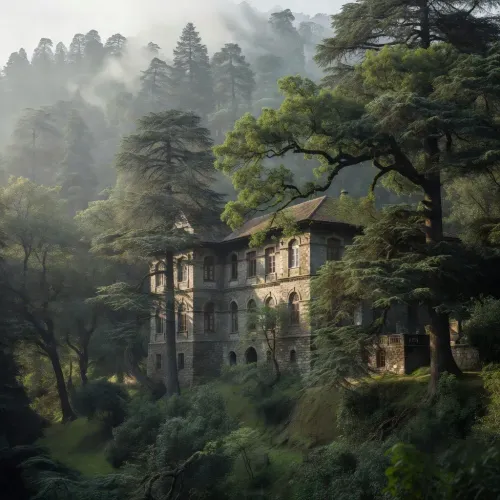
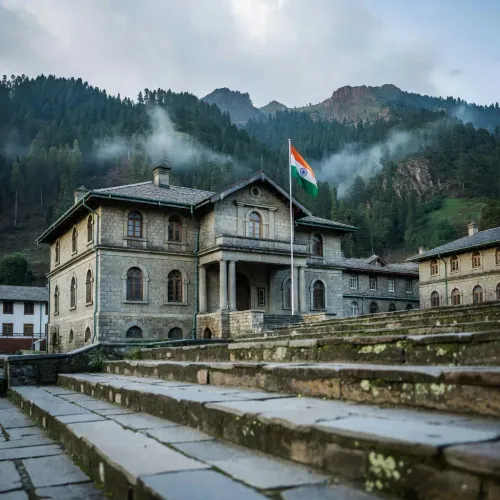
Wild Flower Hall is a heritage property located near Shimla that has long been associated with Himachal Pradesh's tourism asset portfolio. The state government has periodically explored leasing and operational arrangements for such properties through the HP Tourism Development Corporation to generate non-tax revenue.
The Karchham-Wangtoo Hydroelectric Project is a 1,000 MW run-of-river hydropower plant situated on the Sutlej river in Kinnaur district. Developed with private sector participation, the project is subject to state revenue-sharing arrangements including royalty payments and free-power provisions.
Policy Backdrop
Himachal Pradesh's hydropower policy framework, established in the early 2000s, enabled private sector projects such as Karchham-Wangtoo with built-in provisions for state royalty and free power allocations. These contractual mechanisms have been a cornerstone of the state's non-tax revenue strategy ever since.
Successive state administrations have pursued asset monetisation of tourism properties and hydropower royalties to offset the state's heavy dependence on central transfers. Rising debt levels and development expenditure have made such income streams increasingly critical to Himachal Pradesh's fiscal planning.
Stakeholders and Impact
The primary beneficiary is the state exchequer, which stands to receive a combined inflow of approximately Rs 651 crore annually from these two sources. For a Himalayan state with a limited industrial base, such projections represent a significant augmentation of internally generated resources.
Hydropower developers and tourism operators are the key private-sector stakeholders whose revenue-sharing obligations underpin these projections. The announcement signals the state government's intent to actively communicate its asset-revenue pipeline to the public and investors.
What's Next
Analysts and fiscal observers will look for corroborating details in formal budget documents or revenue-sharing agreements that confirm the cited figures of Rs 401 crore from Wild Flower Hall and Rs 250 crore from Karchham-Wangtoo. The next state budget presentation will be a key moment to assess whether these projections are formally incorporated into revenue estimates.
If realised, the combined inflow could meaningfully ease Himachal Pradesh's fiscal pressures, potentially reducing dependence on borrowings and creating headroom for capital expenditure — a pattern that other resource-rich Himalayan states have sought to replicate.
Point of View
The CMO is signalling confidence in its asset pipeline ahead of what is likely a budget or investor-engagement cycle. The pairing of a tourism asset with a hydropower royalty stream is emblematic of the broader Himalayan-state revenue model, where geography is the primary fiscal lever. Whether these projections translate into audited receipts will determine the credibility of this approach in subsequent electoral and fiscal assessments.
NationPress
18 Sept 2026
Frequently Asked Questions
How much revenue will Wild Flower Hall generate for Himachal Pradesh?
According to the Chief Minister's Office of Himachal Pradesh, Wild Flower Hall is projected to generate approximately Rs 401 crore in revenue for the state.
What is the Karchham-Wangtoo Hydroelectric Project?
The Karchham-Wangtoo Hydroelectric Project is a 1,000 MW run-of-river hydropower plant located in Kinnaur district on the Sutlej river, developed with private sector participation under Himachal Pradesh's hydropower policy framework.
How much annual income will Himachal Pradesh earn from Karchham-Wangtoo?
The Himachal Pradesh CMO stated that the Karchham-Wangtoo project will ensure additional annual income of approximately Rs 250 crore for the state.
Where is Wild Flower Hall located?
Wild Flower Hall is a heritage property located near Shimla, Himachal Pradesh, and is part of the state's tourism asset portfolio.
Why is Himachal Pradesh focusing on hydropower and tourism revenue?
Himachal Pradesh has a limited industrial base and relies heavily on central government transfers. Successive administrations have turned to hydropower royalties and tourism asset monetisation to augment internally generated revenues and manage rising debt and development expenditure.