HP CM Office Slams Govt Lawyer No-Show in Wild Flower Hall Case
Synopsis
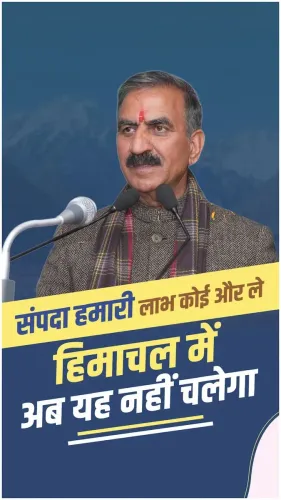
The Chief Minister's Office of Himachal Pradesh has publicly blamed a government lawyer's failure to appear in the Himachal Pradesh High Court for an adverse ruling in the Wild Flower Hall property case, calling the lapse an injustice to the state's 75 lakh people.
Key Takeaways
The HP High Court ruled against the state in the Wild Flower Hall case on or before 18 July 2026 .
The Chief Minister's Office says the adverse ruling occurred because the government's counsel did not appear before the court.
The CMO described the lapse as 'an injustice to the interests of 75 lakh brothers and sisters of Himachal Pradesh', not merely a legal oversight.
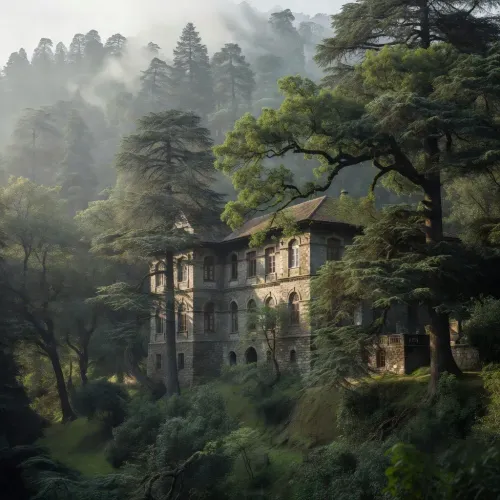
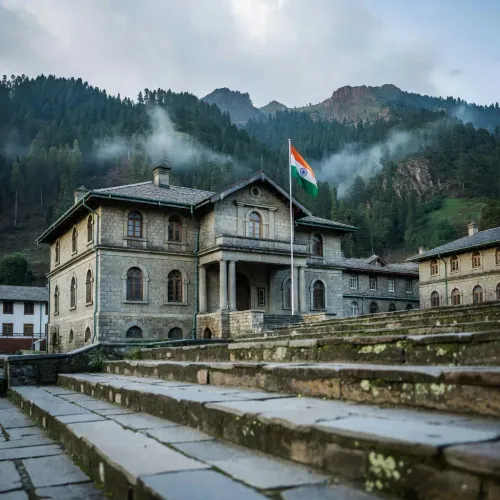
Wild Flower Hall is a heritage property in Mashobra, Shimla with a history of state-related litigation.
The government is expected to explore an appeal or review petition; scrutiny of the Advocate General's office is likely to intensify.
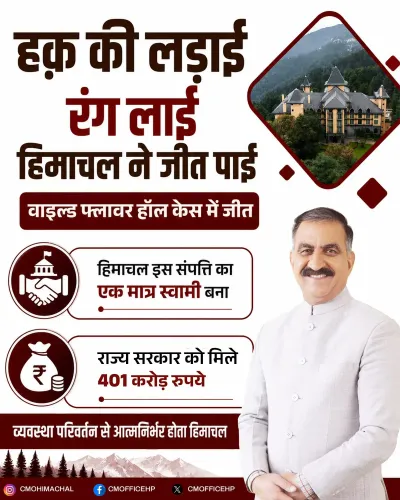
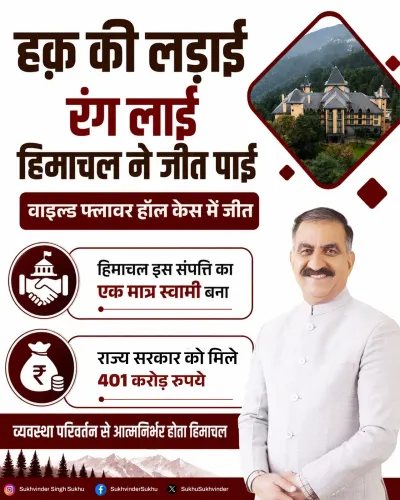
The Chief Minister's Office of Himachal Pradesh on Saturday, 18 July 2026 publicly condemned a ruling by the Himachal Pradesh High Court that went against the state in the Wild Flower Hall property matter, attributing the adverse outcome to the failure of a government lawyer to appear before the court.
Context
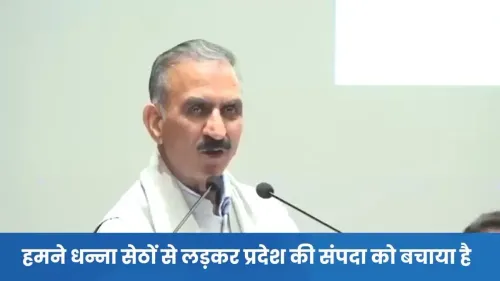
The CMO's post stated that the High Court's decision came against the state because the government's counsel did not appear in court — describing it not merely as a legal lapse but as an injustice to the 75 lakh people of Himachal Pradesh. In the original Hindi, the post read: 'यह केवल कानूनी चूक नहीं थी, हिमाचल प्रदेश के 75 लाख भाइयों-बहनों के हितों के साथ अन्याय था' ('This was not merely a legal oversight; it was an injustice to the interests of the 75 lakh brothers and sisters of Himachal Pradesh').
Wild Flower Hall, a heritage property situated in Mashobra near Shimla, has been the subject of state-related property and litigation disputes over the years. The High Court's ruling, whose precise details the government has not fully disclosed, is now at the centre of a political accountability debate in the state.
Policy Backdrop
Non-appearance by government counsel — leading to ex-parte or adverse orders — is a recognised systemic problem in Indian state litigation management. Courts across the country have periodically flagged the issue of government lawyers failing to represent the state, resulting in orders that go unchallenged by default.
In Himachal Pradesh, disputes over heritage properties and state assets have a documented history of procedural complications. The CMO's framing of the counsel's absence as an act of injustice to the state's residents signals that the current government intends to hold specific individuals or the previous administration accountable for the litigation failure.
Stakeholders and Impact
The CMO's statement explicitly invokes the 75 lakh residents of Himachal Pradesh as the aggrieved party, elevating what could be treated as a procedural matter into a question of public interest. If the adverse ruling stands, the state government's position over the Wild Flower Hall property could be weakened, with potential implications for revenue, heritage conservation, or related contractual arrangements.
The public statement also puts pressure on the Advocate General's office and the broader government legal machinery to explain the counsel's absence and to pursue an appeal or review petition at the earliest opportunity.
What's Next
The immediate question is whether the state will file an appeal or a review petition — potentially before the Supreme Court of India — to challenge the High Court's ruling. The CMO's strong public language suggests the government is preparing to contest the order rather than accept it.
Any statement from the Advocate General's office clarifying the circumstances of the counsel's non-appearance will be closely watched, as will any action the state takes against the official responsible. The episode is likely to intensify political scrutiny of the government's management of high-stakes state litigation.
Point of View
Likely aimed at the previous administration or at specific officials in the legal department. Such statements serve a dual purpose: they signal to the public that the current government is watchful, while pre-emptively deflecting blame for an adverse court outcome. The Wild Flower Hall case, involving a heritage asset near Shimla, carries symbolic as well as financial weight, making it a potent vehicle for this kind of political messaging. The episode underscores a persistent structural weakness in how Indian state governments manage their litigation portfolios — a problem that courts have flagged repeatedly but which rarely prompts systemic reform.
NationPress
16 Oct 2026
Frequently Asked Questions
What is the Wild Flower Hall case in Himachal Pradesh?
Wild Flower Hall is a heritage property in Mashobra near Shimla, Himachal Pradesh, which has been the subject of state-related property litigation. The Himachal Pradesh High Court recently issued a ruling against the state in this case, which the CMO has attributed to a government lawyer's failure to appear in court.
Why did the HP High Court rule against Himachal Pradesh in the Wild Flower Hall matter?
According to the Chief Minister's Office of Himachal Pradesh, the court ruled against the state because the government's counsel did not appear before the High Court, allowing the case to proceed without the state's representation.
What did the HP CMO say about the Wild Flower Hall High Court ruling?
The CMO stated that the adverse ruling was 'not merely a legal oversight' but 'an injustice to the interests of the 75 lakh brothers and sisters of Himachal Pradesh', signalling serious concern over the litigation failure.
Will Himachal Pradesh appeal the Wild Flower Hall High Court order?
The CMO's strong public statement suggests the state intends to contest the order. Observers expect the government to file an appeal or review petition, potentially before the Supreme Court of India, though no formal announcement has been made yet.
Where is Wild Flower Hall located?
Wild Flower Hall is a heritage property located in Mashobra, near Shimla, the capital of Himachal Pradesh.