Akhilesh Yadav condemns Sonam Wangchuk's forcible removal
Synopsis
Samajwadi Party president Akhilesh Yadav on 18 July 2026 condemned the reported forcible removal of activist Sonam Wangchuk from his hunger-strike site, demanded public identification of plainclothes personnel involved, and called for Wangchuk's medical care under judicial supervision.
Key Takeaways
Akhilesh Yadav condemned the reported forcible removal of Sonam Wangchuk from his hunger-strike site on the morning of 18 July 2026 .
Yadav demanded that plainclothes personnel who allegedly entered the protest site deceptively be publicly identified.
He called for Wangchuk's medical treatment to be conducted under judicial supervision .
Yadav accused the BJP government of damaging India's democratic and humanitarian image internationally.
He invoked Mahatma Gandhi, asserting the BJP has never embraced Gandhian methods of peaceful dissent.
Yadav argued that India's youth can drive ideological change through 'digital unity,' warning the BJP not to underestimate the new generation.
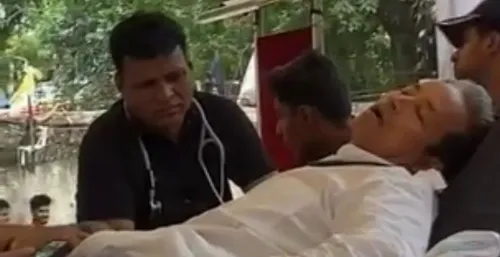
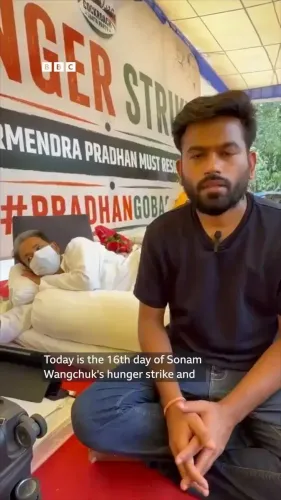
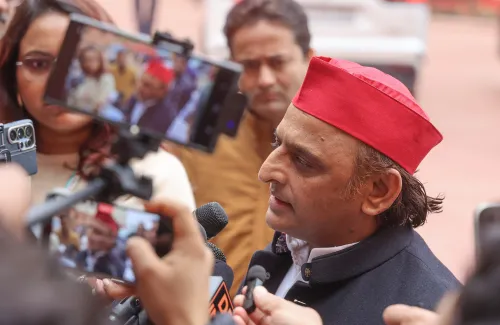
Samajwadi Party president Akhilesh Yadav on Saturday, 18 July 2026, strongly condemned the reported forcible removal of Ladakhi activist and innovator Sonam Wangchuk from his hunger-strike site, demanding that plainclothes personnel involved be publicly identified and that Wangchuk receive medical care under judicial supervision.
Context
Yadav described the early-morning incident as 'bal-prayog' (use of force), saying it had spread across the country and the world within hours. He wrote that people who entered the protest site 'dhokhe se achanak ghuse the' — 'entered suddenly and deceptively' — in plainclothes to carry out the action, and demanded their identities be made public. The post directly tags @Wangchuk66, Wangchuk's official X handle.
Yadav stated that deep concern for Wangchuk's safety and anger against the BJP government was being expressed both in India and internationally. He called for Wangchuk's medical treatment to be conducted under 'judicial supervision,' arguing that Wangchuk's life is invaluable to humanity, environmental conservation, democratic values, youth inspiration, science, and innovation.
Policy Backdrop
Sonam Wangchuk is a Ladakhi engineer and environmental activist internationally recognised for initiatives such as the ice stupa artificial glacier project. Since 2019, when Ladakh was reorganised as a Union Territory following the bifurcation of Jammu and Kashmir, Wangchuk has led campaigns demanding inclusion of Ladakh under the Sixth Schedule of the Constitution, which would provide tribal communities stronger legislative and land-use protections. He has conducted multiple hunger strikes and public marches to press these demands.
The Sixth Schedule issue remains unresolved. Ladakh's unique high-altitude ecology and its border location in the Himalayas have made the region a focal point for both environmental and autonomy debates. Opposition parties have repeatedly raised the matter in Parliament.
Stakeholders and Impact
Yadav's post frames the incident as damaging to India's democratic and humanitarian image at the international level. He wrote that the BJP government's action had 'hamari desh ki maanviya aur democratic image ko behad dhoomil aur khandit karne ka kaam kiya hai' — 'severely tarnished and fragmented our country's humane and democratic image at the international level.'
He also invoked Mahatma Gandhi, asserting that the BJP has never believed in Gandhi or Gandhian methods of peaceful dissent, characterising the party's ideology as one of confrontation rather than dialogue. Yadav argued that wherever unity and solidarity emerge, the BJP reacts by dispersing movements out of fear — but cautioned that today's youth are capable of bringing about ideological change through 'digital unity.'
Key stakeholders watching the situation include Ladakhi residents, environmental and constitutional rights activists, opposition parties across the political spectrum, and international environmental organisations that have previously supported Wangchuk's campaigns.
What's Next
Yadav's demand for judicial oversight of Wangchuk's medical care is likely to be echoed by other opposition leaders and could form the basis of parliamentary questions when the House is in session. Any official government response to the alleged forcible removal — or a court taking cognisance — would mark the next significant development in this episode.
The incident is also likely to intensify scrutiny of the Centre's handling of the long-pending Sixth Schedule demand for Ladakh, a question that carries both constitutional and geopolitical dimensions given the territory's sensitive border location.
Point of View
The SP chief frames the incident as a constitutional and moral failure rather than a mere law-and-order matter. The post's emphasis on 'digital unity' signals an attempt to mobilise younger, online audiences — a demographic the opposition has been courting since the 2024 general election cycle. If other national parties echo the demand for judicial supervision, the episode could evolve from a regional grievance into a broader test of the Centre's tolerance for dissent in sensitive border territories.
NationPress
17 Oct 2026
Frequently Asked Questions
Who is Sonam Wangchuk and why was he on a hunger strike?
Sonam Wangchuk is a Ladakhi engineer and environmental activist known for the ice stupa project. He has conducted hunger strikes since 2019 demanding Sixth Schedule constitutional protections and stronger environmental safeguards for Ladakh after it became a Union Territory.
What did Akhilesh Yadav say about Sonam Wangchuk's removal?
Akhilesh Yadav called the reported forcible removal of Wangchuk from his hunger-strike site deeply condemnable, demanded that plainclothes personnel involved be publicly identified, and called for Wangchuk's medical care to be placed under judicial supervision.
What is the Sixth Schedule demand for Ladakh?
The Sixth Schedule of the Indian Constitution grants tribal-dominated regions stronger legislative powers and protections over land and resources. Ladakhi activists including Wangchuk have demanded its extension to Ladakh since the region became a Union Territory in 2019.
Why does Akhilesh Yadav say India's image has been damaged internationally?
Yadav argued that forcibly removing a peaceful hunger-striker — particularly one of Wangchuk's global stature in environmental and innovation circles — tarnishes India's reputation as a democracy that tolerates non-violent dissent, drawing negative attention worldwide.
What is 'digital unity' as mentioned by Akhilesh Yadav?
Yadav used the phrase to describe the ability of India's younger generation to organise and amplify protest movements through social media platforms, suggesting that state attempts to suppress physical demonstrations can be countered by coordinated online mobilisation.