Kejriwal slams Modi govt over Sonam Wangchuk's detention
Synopsis
AAP convenor Arvind Kejriwal attacked the Modi government on 18 July 2026 for allegedly detaining Ladakhi activist Sonam Wangchuk, calling it an act of arrogance and urging the Centre to fix India's education and examination system instead of suppressing dissent.
Key Takeaways
AAP convenor Arvind Kejriwal posted on 18 July 2026 condemning the reported forcible removal of Sonam Wangchuk by the Modi government.
Kejriwal called the use of force against Wangchuk 'a defeat for the Modi government' and demanded direct dialogue instead.
He urged the Centre to reform India's education and examination system rather than suppress the protest movement.
Sonam Wangchuk is a Ladakhi engineer-activist who has long campaigned for experiential learning and Sixth Schedule protections for Ladakh .
Ladakh became a Union Territory in 2019 , shifting educational oversight to the Centre and intensifying demands for local curriculum control.
The National Education Policy 2020 promised a shift from rote learning but implementation gaps remain a source of friction in Ladakh.
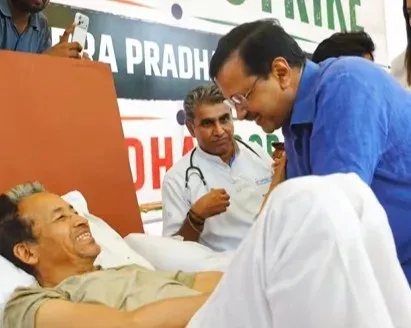
AAP convenor Arvind Kejriwal on Saturday, 18 July 2026 sharply criticised the Modi government over the reported forcible removal of Ladakhi activist Sonam Wangchuk, calling the action an act of arrogance and demanding dialogue over confrontation on India's education and examination system.
Context
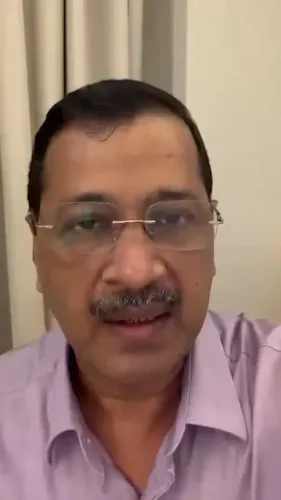
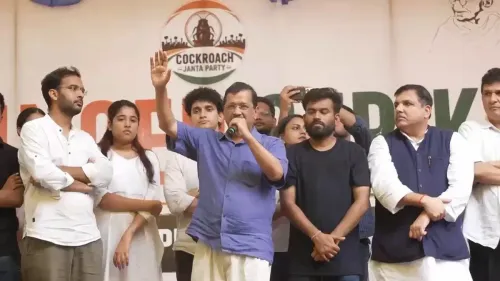
Kejriwal's post, written in Hindi, stated: 'इतना अहंकार ठीक नहीं है' ('This much arrogance is not acceptable'). He argued that instead of forcibly detaining Wangchuk, the government should have engaged him in conversation. He added that suppressing what he called the 'cockroach movement' was futile, and that the real task was to reform India's education and examination system. 'Wangchuk ke saath zabardasti Modi sarkar ki haar hai,' he wrote — 'The use of force against Wangchuk is a defeat for the Modi government.'
The post did not specify the precise date or location of the alleged detention, but it was addressed directly at the central government's handling of Wangchuk's activism.
Policy Backdrop
Sonam Wangchuk is a Ladakhi engineer and education reformer best known for founding SECMOL, a school that promotes experiential and environment-based learning as an alternative to rote-based board examinations. He has been a vocal critic of India's conventional examination system for decades.
Since Ladakh was granted Union Territory status in 2019 following the abrogation of Article 370, Wangchuk has also led campaigns seeking Sixth Schedule constitutional protections for the region, which would give Ladakhi communities greater local control over land, culture, and education. The National Education Policy 2020, which promised a shift from rote learning toward skill-based and multidisciplinary education, was seen by many Ladakhi activists as a step in the right direction — but implementation gaps have remained a point of friction.
Stakeholders and Impact
The dispute has direct implications for Ladakhi students and youth, who have long argued that a curriculum designed for mainland India fails to account for the region's unique geography, culture, and economic realities. Wangchuk's movement draws support from this demographic as well as from education reformers across the country.
Kejriwal's intervention frames the issue as a national one — connecting Wangchuk's detention to the broader failure of the central government to address structural problems in India's examination system. By invoking the phrase 'cockroach movement' — a term that appears to have been used dismissively by government or ruling-party voices to describe the protest — Kejriwal sought to highlight what he characterised as official contempt for legitimate dissent.
What's Next
Pressure is likely to grow on the government to clarify the circumstances of Wangchuk's reported detention and to respond to demands for a formal dialogue on Ladakh-specific education provisions. Any parliamentary debate on the matter or movement on NEP 2020 implementation timelines for Union Territories will be closely watched by activists and opposition parties alike.
Kejriwal's post signals that AAP intends to keep education reform and regional autonomy at the centre of its political messaging — issues that resonate beyond Ladakh in states where the party has an electoral presence.
Point of View
Who commands cross-partisan respect. The framing of the government's action as 'arrogance' and 'defeat' is designed to resonate with voters frustrated by both the state of board examinations and the Centre's handling of Ladakh's post-2019 grievances. For AAP, which has staked its identity on education governance in Delhi, championing Wangchuk's cause reinforces that brand at the national level. The intervention also tests whether the opposition can sustain pressure on the government over Ladakh — a region that has largely receded from prime-time political debate since 2020.
NationPress
16 Oct 2026
Frequently Asked Questions
Why did Kejriwal criticise the Modi government over Sonam Wangchuk?
Kejriwal criticised the Modi government on 18 July 2026 for allegedly detaining Sonam Wangchuk by force, arguing the Centre should have engaged him in dialogue on education reform instead of suppressing his protest movement.
Who is Sonam Wangchuk and what is he protesting about?
Sonam Wangchuk is a Ladakhi engineer and education activist who founded SECMOL to promote experiential learning. He has campaigned against rote-based exams and for Sixth Schedule constitutional protections that would give Ladakh greater local control over land, culture, and education.
What is the 'cockroach movement' Kejriwal referred to?
Kejriwal used the phrase 'cockroach movement' — apparently a dismissive term used by government or ruling-party voices to describe Wangchuk's protest — to highlight what he called official contempt for legitimate dissent on education reform.
What is the National Education Policy 2020 and how does it relate to Ladakh?
The National Education Policy 2020 replaced the 1986 policy and promised a shift from rote learning to skill-based, multidisciplinary education. Since Ladakh became a Union Territory in 2019, activists there have pressed for local curriculum control under its framework, but implementation gaps remain.
What are Ladakh's Sixth Schedule demands?
Ladakhi activists, including Sonam Wangchuk, have demanded inclusion under the Sixth Schedule of the Indian Constitution, which would grant tribal communities greater autonomy over local governance, land, and education — protections they say were effectively lost when Ladakh became a Union Territory in 2019.