Kejriwal Backs 'Cockroach Movement', Demands Sacking of Education Minister

Synopsis
AAP convenor Arvind Kejriwal on June 6, 2026 backed the 'cockroach movement', describing it as the youth's anger and frustration, rejected the government's anti-national framing, and demanded Prime Minister Modi immediately sack the Union education minister.
Key Takeaways
AAP convenor Arvind Kejriwal posted on June 6, 2026 backing the 'cockroach movement' among India's youth.
Kejriwal called the movement 'an expression of huge anger and frustration' among young people.
He rejected the Modi government's reported labelling of protesters as anti-national.
AAP has formally declared support for the protesters' demands.
Kejriwal demanded Prime Minister Modi immediately dismiss the Union education minister .
The post escalates AAP's education criticism from policy debate to a direct demand for ministerial accountability.
AAP convenor Arvind Kejriwal on Saturday, June 6, 2026, publicly backed the so-called 'cockroach movement' sweeping the country's youth, calling it an expression of 'huge anger and frustration' and demanding that Prime Minister Narendra Modi immediately dismiss the Union education minister.
Context
In his post on X, Kejriwal wrote: 'The cockroach movement is an expression of huge anger and frustration experienced by the youth of this country. Rather than terming them anti-national, Modi govt shud address their issues. AAP supports their demands. The Prime Minister must sack the education minister immediately.'
The statement marks a pointed intervention by the Aam Aadmi Party in what has emerged as a significant episode of youth unrest. Kejriwal's framing directly contests the government's reported characterisation of the protesters, accusing it of deflecting legitimate grievances with nationalist labels.
Policy Backdrop
Student and youth protests in India have recurred across decades, typically crystallising around examination irregularities, graduate unemployment, and what critics describe as the politicisation of educational institutions. The National Education Policy 2020, which introduced sweeping structural changes to school and higher education governance, remains a live fault line between the ruling Bharatiya Janata Party-led government and opposition parties.
AAP, founded in 2012, has consistently positioned education reform as a core plank, pointing to its record in Delhi's government schools as a model. Kejriwal's call to remove the education minister escalates the party's criticism from policy disagreement to a direct demand for ministerial accountability.
Stakeholders and Impact
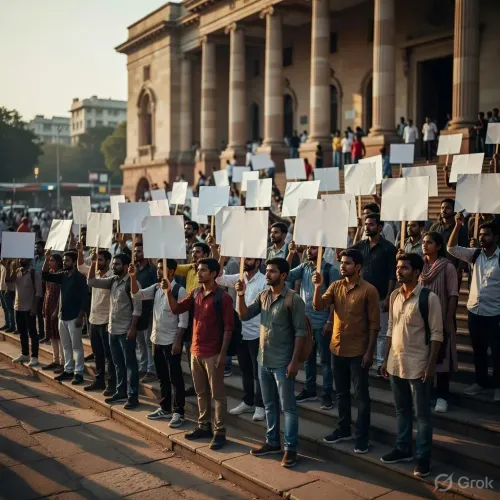
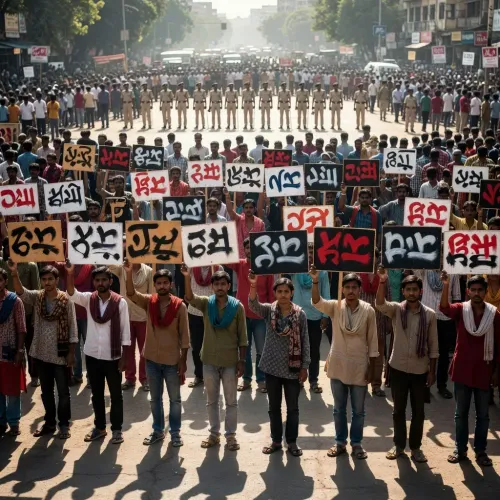
At the centre of the dispute are students and young people whose specific demands, under the banner of the cockroach movement, have drawn both street-level solidarity and official pushback. The movement's name and the precise nature of its demands are still being articulated in the public domain.
By lending AAP's formal support, Kejriwal widens the political stakes: the youth bloc is a numerically decisive constituency ahead of any future electoral cycle, and opposition solidarity with their cause places pressure on the central government to respond substantively rather than through security measures or dismissals of the protesters' legitimacy.
What's Next
Attention will now shift to whether other opposition parties align with AAP's position, and whether the Union education ministry issues a formal response to the demands. Parliamentary scrutiny — through questions, adjournment motions, or statements — is a likely next arena, particularly if the protests sustain momentum.
The government's handling of the movement will be closely watched: a conciliatory gesture could defuse the crisis, while continued labelling of protesters as anti-national risks deepening the political fault line that Kejriwal has now stepped firmly into.
Point of View
Reframe the government's security-first response as authoritarian overreach, and demand a specific scalp — here, the education minister — to give the protest a concrete political ask. The 'anti-national' framing by the government, if sustained, historically tends to polarise opinion rather than dissolve a movement, potentially handing the opposition a durable campaign issue. With education and youth employment remaining structurally unresolved, AAP's formal endorsement signals that the cockroach movement may graduate from street agitation to a full legislative battleground in the coming weeks.
NationPress
21 Oct 2026
Frequently Asked Questions
What is the cockroach movement in India?
The cockroach movement is a youth-led protest that AAP convenor Arvind Kejriwal on June 6, 2026 described as an expression of 'huge anger and frustration' among India's young people, apparently centred on education and employment grievances.
Why did Kejriwal demand the sacking of the education minister?
Arvind Kejriwal demanded the immediate dismissal of the Union education minister, holding the ministry accountable for the conditions that he says have driven youth to protest under the cockroach movement banner.
What is AAP's stand on the cockroach movement?
The Aam Aadmi Party has formally declared support for the protesters' demands, with Kejriwal rejecting the government's reported characterisation of the demonstrators as anti-national.
How has the Modi government responded to the cockroach movement?
According to Kejriwal's post , the government has reportedly termed participants anti-national; an official substantive response to the protesters' demands had not been publicly issued as of June 6, 2026 .
What is AAP's track record on education?
Aam Aadmi Party , founded in 2012 , has long positioned education reform as a signature issue, citing improvements to government schools in Delhi as evidence of its governance model.