Kejriwal Slams BJP Over Alleged Firing on Bihar Students

Synopsis
AAP convenor Arvind Kejriwal on 28 July 2026 slammed the BJP over an alleged AK-47 firing on students in Bihar, invoking Loknayak Jayaprakash Narayan's historic 1974 agitation to warn Prime Minister Modi against suppressing student voices.
Key Takeaways
AAP convenor Arvind Kejriwal on 28 July 2026 alleged that students in Bihar were fired upon with AK-47 rifles by forces linked to the BJP-led administration.
Kejriwal directly addressed Prime Minister Narendra Modi , warning him not to 'pick a fight with students.' He invoked the 1974 Bihar student movement led by Loknayak Jayaprakash Narayan and the slogan 'Singhasan khali karo ki janta aati hai' to draw a historical parallel.
The specific incident of AK-47 firing on students in Bihar in July 2026 had not been independently confirmed or officially responded to at the time of the post.
The post signals AAP's intent to position itself as a national voice on student rights, extending beyond its base in Delhi and Punjab .
Reactions from Bihar Police , the state government, and opposition parties are expected to shape the political fallout in the coming days.
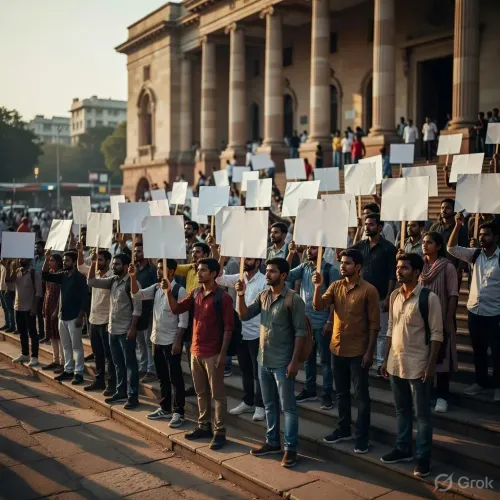
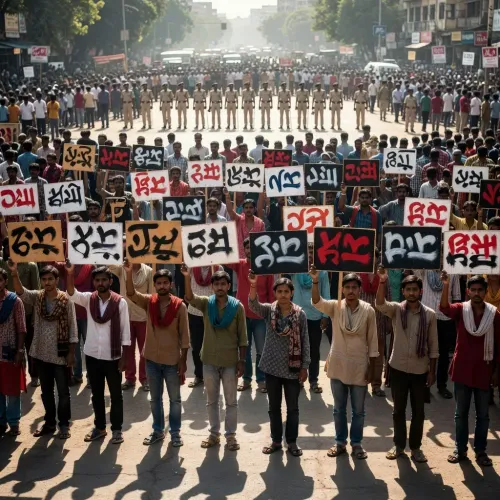
AAP convenor Arvind Kejriwal on Tuesday, 28 July 2026, sharply condemned the Bharatiya Janata Party over an alleged incident in which students in Bihar were reportedly fired upon with AK-47 rifles, demanding that the ruling party stop targeting young protesters and invoking the legacy of socialist icon Jayaprakash Narayan to warn the government of popular backlash.
Context
Kejriwal's post, written in Hindi, opened with a pointed question: 'Aakhir BJP ko kya ho gaya hai?' ('What has happened to the BJP?'). He alleged that students in Bihar were fired upon with AK-47s and asked rhetorically, 'Are these students terrorists?' The post was addressed directly at what he called 'Modi-Samrat' — a pointed reference to Prime Minister Narendra Modi — urging him not to 'pick a fight with students.'
The specific incident Kejriwal referenced — an alleged AK-47 firing on students in Bihar in July 2026 — has not been independently confirmed. Bihar Police and the state government had not issued a public response at the time of the post.
Policy Backdrop
Kejriwal anchored his criticism in a historically resonant slogan from the 1974 Bihar student movement led by Loknayak Jayaprakash Narayan: 'Singhasan khali karo ki janta aati hai' — 'Vacate the throne, for the people are coming.' That movement, which began as a campus-led agitation against corruption in Bihar, eventually snowballed into a nationwide campaign that preceded the imposition of the Emergency in 1975.
By invoking JP's legacy, Kejriwal drew a direct parallel between the Congress government's response to student unrest in the 1970s and what he characterised as the current BJP administration's use of force. Bihar has been governed by a BJP-JD(U) alliance at the state level in recent years, while the BJP leads the central government under Prime Minister Modi.
Stakeholders and Impact
The post is likely to resonate with Bihar's large student population and opposition parties, particularly ahead of any electoral cycle in the state. Opposition figures — including leaders from the RJD and the broader INDIA alliance — have routinely used the JP movement as a rhetorical touchstone whenever student protests intersect with state police action.
Kejriwal's intervention signals that AAP intends to position itself as a national voice on student rights, extending its political footprint beyond its base in Delhi and Punjab. The post is likely to prompt follow-up statements from other opposition leaders and could surface as a subject of parliamentary questions in the coming sessions.
What's Next
All eyes are now on the Bihar state government and Bihar Police for an official account of the alleged firing incident. A formal response — or the absence of one — will shape how the episode is framed in national political discourse.
If corroborated, the incident could trigger demands for a judicial inquiry and intensify opposition pressure on the ruling alliance in both Patna and New Delhi. Kejriwal's invocation of the JP movement is a deliberate signal: in Bihar's political memory, student agitations have historically carried the power to reshape governments.
Point of View
He is not merely reacting to an alleged incident but inserting AAP into a deeply emotive chapter of Indian democratic history that resonates across party lines in Bihar. The rhetorical move follows a well-worn opposition playbook: frame state force against students as authoritarianism echoing the Emergency era, thereby raising the moral stakes beyond a single law-and-order episode. With Bihar's electoral arithmetic always in flux, AAP's willingness to amplify student grievances signals an ambition to build a presence in a state where it currently has limited organisational depth. The durability of this moment will depend entirely on whether the underlying incident is verified and how the Bihar government responds.
NationPress
26 Oct 2026
Frequently Asked Questions
What did Kejriwal say about the Bihar student firing incident?
Kejriwal alleged on 28 July 2026 that students in Bihar were fired upon with AK-47 rifles and asked whether the BJP considered students to be terrorists, urging Prime Minister Modi not to target young protesters.
What is the JP movement Kejriwal referenced?
The JP movement refers to the 1974 Bihar student agitation led by socialist leader Jayaprakash Narayan against corruption, which grew into a national campaign and preceded the Emergency of 1975.
What does 'Singhasan khali karo ki janta aati hai' mean?
It is a Hindi slogan from the 1974 Bihar movement meaning 'Vacate the throne, for the people are coming,' used to warn governments that popular anger can unseat those in power.
Has the Bihar government responded to Kejriwal's allegations?
As of the time of Kejriwal's post on 28 July 2026, neither the Bihar state government nor Bihar Police had issued a public response to the allegations.
Why is Kejriwal commenting on Bihar when AAP governs Punjab?
As national convenor of AAP, Kejriwal regularly comments on national issues; his intervention in Bihar signals the party's intent to expand its political voice on student rights beyond its strongholds in Delhi and Punjab.