Odisha CMO Highlights Two Years of Aviation Growth, Puri Airport Push
Synopsis
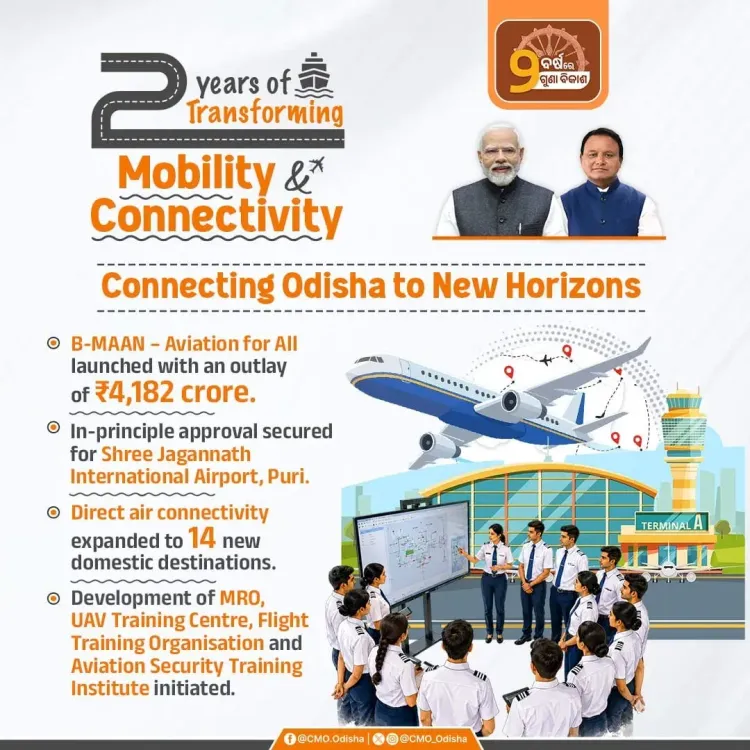
The Chief Minister's Office of Odisha on 18 July 2026 outlined two years of aviation progress, spotlighting the proposed Puri International Airport, expanded regional connectivity under UDAN, and new MRO and training infrastructure aimed at boosting tourism, trade, and employment across the state.
Key Takeaways
The Chief Minister's Office of Odisha on 18 July 2026 publicly catalogued two years of aviation sector progress in a post addressed to the Prime Minister's Office .
A proposed greenfield international airport at Puri is a centrepiece of the state's connectivity agenda, aimed at opening direct global links for tourists and trade.
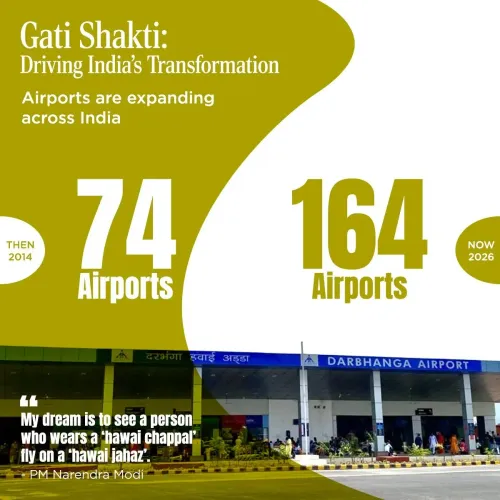
Odisha has been expanding regional air access under the Central government's UDAN scheme , which subsidises flights to underserved airports.
The state is developing aviation training and MRO infrastructure , targeting new employment and investment opportunities for the local workforce and private sector.
Odisha's Civil Aviation Policy (2018) provides the state-level framework underpinning these investments in airports, MRO, and training facilities.
Key pending milestones include AAI or Cabinet approval for the Puri airport DPR and the launch of new UDAN routes from Odisha airports.
The Chief Minister's Office of Odisha on Saturday, 18 July 2026, outlined the state's aviation progress over the past two years, citing expanded regional air access, the proposed Puri International Airport, and new aviation training and maintenance infrastructure as pillars of a broader connectivity drive.
Context
The post, addressed to the Prime Minister's Office, stated that Odisha has taken 'significant strides in strengthening its aviation ecosystem and expanding air connectivity' over the past two years. The state government highlighted that these efforts span regional accessibility, international airport development, and world-class aviation training and maintenance infrastructure — framing the combined push as a catalyst for tourism, trade, investment, and employment.
The coastal city of Puri, home to the iconic Jagannath Temple and one of India's foremost pilgrimage-tourism destinations, is at the centre of the international airport proposal. A greenfield airport in Puri is intended to open direct global air links for the state, reducing dependence on Bhubaneswar's Biju Patnaik International Airport as the sole major gateway.
Policy Backdrop
Odisha's aviation ambitions sit within two overlapping policy frameworks. The Central government's UDAN (Ude Desh ka Aam Naagrik) regional connectivity scheme, launched in 2016, subsidises flights to underserved airports across India and has been the primary vehicle for expanding regional air access in eastern states. Odisha notified its own Civil Aviation Policy in 2018, designed to attract private investment in airports, Maintenance, Repair and Overhaul (MRO) facilities, and aviation training institutes.
Across India, states have accelerated airport development and MRO cluster creation under the National Civil Aviation Policy 2016, with eastern and northeastern states particularly focused on leveraging connectivity to drive tourism and investment inflows. Odisha's latest communication to the PMO positions the state as an active participant in that national pattern rather than a laggard.
Stakeholders and Impact
The beneficiaries of an expanded aviation ecosystem in Odisha are multiple. Tourists — both domestic pilgrims visiting Puri and Konark, and international visitors — stand to gain from shorter travel times and more direct routes. Aviation investors eyeing MRO and training facilities would find a state actively building supporting infrastructure. The local workforce, particularly youth in and around aviation hubs, could access new employment pathways through the training institutions the state is developing.
The explicit mention of trade and investment alongside tourism signals that the Odisha government is presenting aviation connectivity not merely as a social good but as an economic multiplier — a framing consistent with how Indian states pitch infrastructure to central ministries and private capital.
What's Next
The immediate milestones to watch are Cabinet or Airports Authority of India (AAI) approvals for the Puri airport Detailed Project Report (DPR), as well as the rollout of new UDAN routes serving smaller Odisha airports. Progress on MRO training centre operationalisation will also be a marker of whether the state's aviation policy translates from announcement to ground-level delivery.
With the post directed at the PMO, the communication appears designed to signal momentum and invite Central support — suggesting that key approvals or funding decisions from New Delhi may be the next critical step in Odisha's aviation expansion story.
Point of View
But the bundling of MRO infrastructure and training institutes suggests a more sophisticated pitch: Odisha wants to be seen as building an aviation ecosystem, not just a runway. Eastern India has historically lagged western and southern states in aviation infrastructure, and this communication is part of a broader competitive repositioning. Whether Central approvals follow will determine if this narrative translates into tangible connectivity gains for Odisha's residents and economy.
NationPress
18 Jul 2026
Frequently Asked Questions
What is the proposed Puri International Airport?
The Puri International Airport is a planned greenfield airport in Puri , Odisha, intended to provide direct international air connectivity to one of India's most visited pilgrimage and tourism destinations, reducing sole dependence on Bhubaneswar for international flights.
What is the UDAN scheme and how does it benefit Odisha?
UDAN (Ude Desh ka Aam Naagrik) is a Central government regional connectivity scheme launched in 2016 that subsidises airfares on routes to smaller, underserved airports. Odisha has used the scheme to expand regional air access to cities and towns beyond Bhubaneswar.
What MRO and aviation training infrastructure is Odisha developing?
The Odisha government has indicated it is developing world-class Maintenance, Repair and Overhaul (MRO) facilities and aviation training institutes as part of its Civil Aviation Policy, aimed at creating skilled employment and attracting aviation-sector investment to the state.
Why did the Odisha CMO address this post to the PMO?
Addressing the post to the Prime Minister's Office signals that the state is seeking Central government attention, approvals — particularly for the Puri airport DPR — and potential funding support for its aviation expansion plans.
What is Odisha's Civil Aviation Policy?
Odisha notified its Civil Aviation Policy in 2018 to provide a state-level framework for attracting private investment in airports, MRO facilities, and aviation training infrastructure, complementing the Central government's National Civil Aviation Policy 2016.