Congress factionalism in Kerala: Satheesan-KSU row echoes decades of party strife
Synopsis
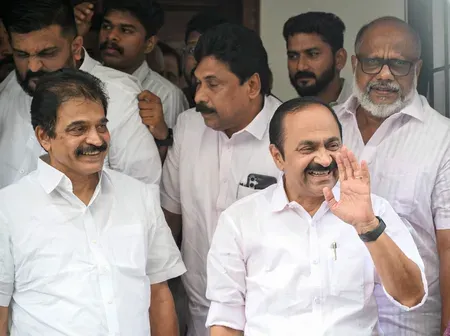
What looks like a dispute over Government Pleader appointments in Kerala is being read inside the Congress as the latest flare-up of the Satheesan-Venugopal fault line — a rivalry that has quietly shaped every major party decision since the UDF's Assembly victory. With no full KPCC leadership in place and Oommen Chandy's death anniversary arriving as the row peaks, the party's old factionalism problem is back in the open.
Key Takeaways
KSU state president Aloysius Xavier publicly clashed with Kerala CM V.D.
Satheesan over Government Pleader appointments, alleging he was ignored at a function in Thevara .
The Chief Minister's Office denied any deliberate snub, citing conflicting engagements.
The dispute is widely seen within the party as a proxy for the rivalry between Satheesan and AICC general secretary K.C.
KSU Ernakulam district president K.M.
Krishnalal sided with the Chief Minister, deepening the visible split within the student wing.
The absence of a full-fledged KPCC leadership has allowed routine disputes to escalate into public controversies, benefiting the Opposition.
The row peaks around the third death anniversary of former CM Oommen Chandy on 19 July , the leader credited with managing Kerala Congress factions.
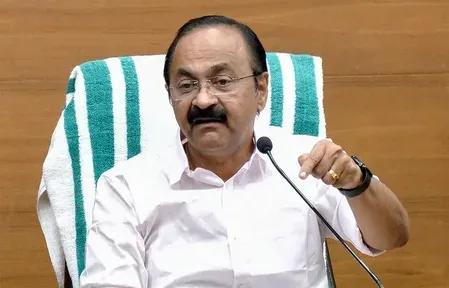
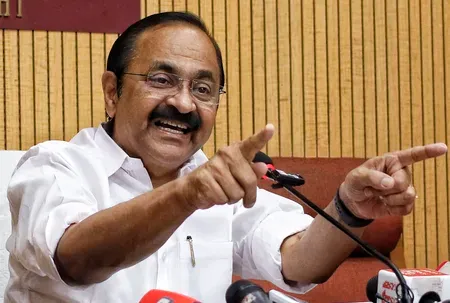
A fresh confrontation between Kerala Chief Minister V.D. Satheesan and Kerala Students Union (KSU) state president Aloysius Xavier has reignited debate over chronic factional politics within the Kerala Pradesh Congress Committee (KPCC), with the immediate flashpoint being the government's appointments of Government Pleaders. While the dispute centres on legal appointments, few within the party believe that is the whole story.
The Immediate Trigger
KSU publicly criticised the state government's Government Pleader appointments, with Aloysius Xavier alleging that Chief Minister Satheesan ignored him during a function at Thevara and that the student wing's concerns were being systematically sidelined by the government. Xavier subsequently raised the matter with the KPCC leadership.
The Chief Minister's Office denied any deliberate snub, stating that a meeting could not be arranged due to conflicting engagements. Supporters of Satheesan have accused sections within the party of manufacturing a controversy, while KSU-aligned leaders maintain they acted only after repeated concerns went unaddressed.
The Satheesan-Venugopal Fault Line
Political observers in Kerala increasingly view the episode through the prism of the rivalry between Chief Minister Satheesan and All India Congress Committee (AICC) general secretary K.C. Venugopal, whose loyalists retain considerable organisational influence. Satheesan's rise to the top post came after he edged out Venugopal in the leadership race following the United Democratic Front (UDF)'s emphatic Assembly victory. Since then, observers note, virtually every significant internal disagreement has been read against the backdrop of that larger contest.
Notably, KSU Ernakulam district president K.M. Krishnalal broke ranks with the student wing's position, openly siding with the Chief Minister and dismissing the controversy as a calculated move. He questioned why objections were being raised over appointments involving lawyers who had long been aligned with the Congress.
A Pattern Rooted in Decades of Rivalry
The current standoff is the latest chapter in a long history of factional competition that has defined Kerala Congress politics. The bitter rivalry between K. Karunakaran and A.K. Antony set the template; later, the power struggle between Oommen Chandy and Ramesh Chennithala continued the tradition. Each era produced its own set of proxy battles and organisational tensions.
This is not merely a personality clash — it reflects a structural problem. The absence of a full-fledged KPCC leadership and an effective coordination mechanism between the party organisation and the state government has allowed even routine issues to spill into the public domain, handing the Opposition ready political ammunition.
The Chandy Shadow and What Comes Next
The timing of the escalation carries particular weight. Saturday, 19 July, marks the third death anniversary of former Chief Minister Oommen Chandy, widely credited with holding competing factions together through sheer political dexterity despite intense internal rivalries. As Congress leaders converge to pay tribute to Chandy, the Satheesan-KSU standoff is expected to dominate private conversations on the sidelines.
The episode underscores that managing the Kerala Congress's internal equations remains as demanding as governing the state — and that without a credible coordination structure, every organisational grievance risks becoming a public spectacle.
Point of View
Not the disease. Kerala Congress has cycled through the Karunakaran-Antony and Chandy-Chennithala rivalries without ever building the institutional coordination mechanisms that might contain them. The absence of a functioning KPCC president and a clear party-government interface means every grievance, however minor, finds its way into the press — and the Opposition does not need to do much. The deeper question is whether Satheesan, having won the leadership race, can consolidate organisational authority before the next electoral cycle, or whether the Venugopal network will continue to operate as a parallel power centre. Chandy managed this through personal relationships; that model does not scale and it did not survive him.
NationPress
18 Jul 2026
Frequently Asked Questions
What triggered the latest Congress factional dispute in Kerala?
The immediate trigger was the KSU 's public criticism of the state government's Government Pleader appointments. KSU state president Aloysius Xavier alleged he was ignored by Chief Minister Satheesan at a function in Thevara and that the student wing's concerns were being sidelined. The Chief Minister's Office denied any deliberate snub.
Who are the main figures in the Satheesan-Venugopal rivalry?
V.D. Satheesan is the Kerala Chief Minister and state Congress chief, while K.C. Venugopal is the AICC general secretary with a strong base of loyalists within the KPCC . Satheesan emerged as the leader after edging out Venugopal following the UDF 's Assembly victory, and the two camps have been in quiet competition since.
How does this compare to past Congress factionalism in Kerala?
Kerala Congress has a long history of factional rivalry, most notably between K. Karunakaran and A.K. Antony , and later between Oommen Chandy and Ramesh Chennithala . The current Satheesan-Venugopal dynamic is seen as the latest iteration of this pattern.
Why is the timing of the row significant?
The dispute has escalated around 19 July , the third death anniversary of former Chief Minister Oommen Chandy , who was widely credited with keeping rival factions together. As Congress leaders gather to pay tribute, the ongoing standoff is expected to dominate discussions.
What structural problem does the row expose within Kerala Congress?
The absence of a full-fledged KPCC leadership and a functioning coordination mechanism between the party and the state government means routine organisational disputes are spilling into the public domain. This lack of institutional structure has repeatedly given the Opposition political ammunition.