Rajasthan CM Office: Senior Pension via DBT to Bank Accounts
Synopsis
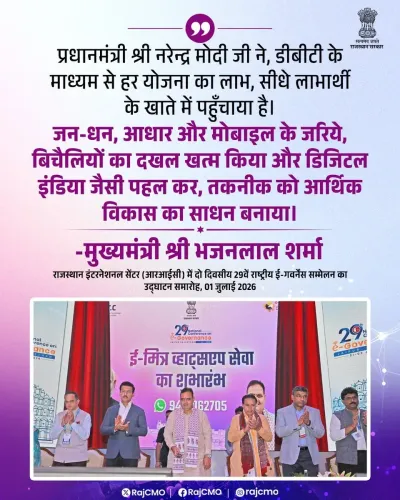
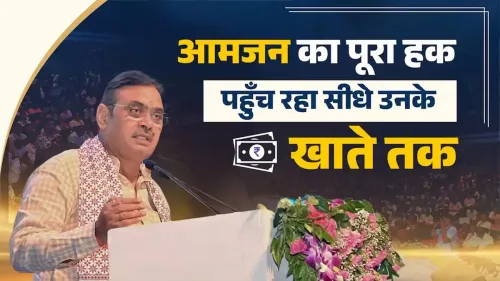
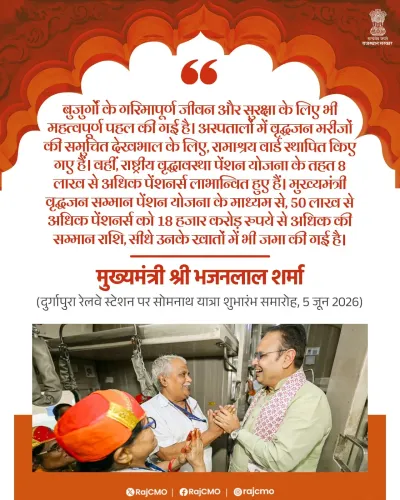
The Chief Minister's Office of Rajasthan has reaffirmed that the state government is delivering social security and pension scheme benefits directly into the bank accounts of senior citizens, continuing its DBT-driven welfare approach under CM Bhajanlal Sharma.
Key Takeaways
The Chief Minister's Office of Rajasthan confirmed on 18 July 2026 that pension benefits are being transferred directly to senior citizens' bank accounts.
Chief Minister Bhajanlal Sharma was tagged in the post, signalling the BJP government's ownership of the initiative.
The delivery mechanism relies on the Direct Benefit Transfer (DBT) framework, introduced nationally in 2013 and expanded under the JAM trinity.
Rajasthan has integrated state social security provisions with centrally sponsored schemes such as the National Social Assistance Programme (NSAP) .
Senior citizens aged 60 and above are the primary target group for these pension transfers.
The post used the campaign hashtag #आपणो_अग्रणी_राजस्थान , reflecting the state government's branding around its welfare outreach.
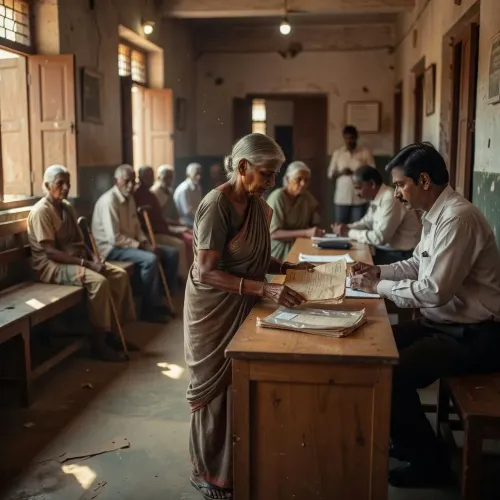
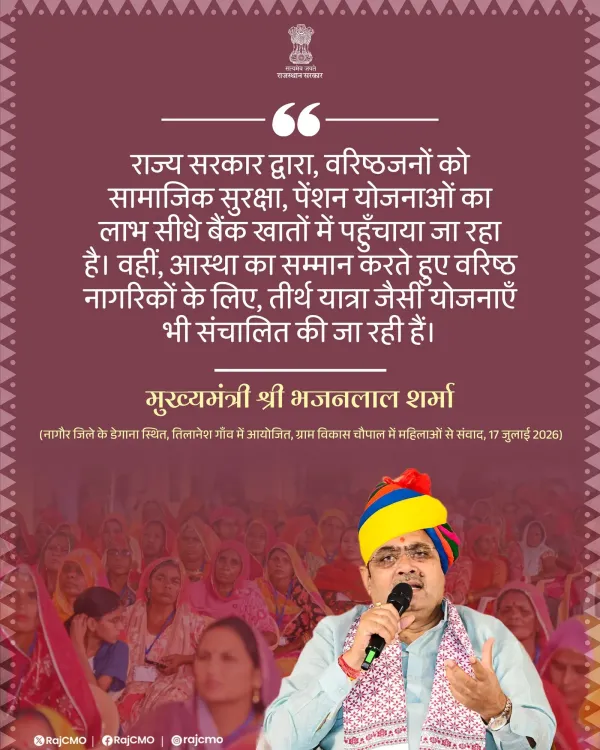
The Chief Minister's Office of Rajasthan announced on Saturday, 18 July 2026, that the state government is delivering social security pension benefits directly into the bank accounts of senior citizens under its ongoing welfare outreach.
The post, shared by @RajCMO and tagging Chief Minister Bhajanlal Sharma, stated: 'राज्य सरकार द्वारा, वरिष्ठजनों को सामाजिक सुरक्षा, पेंशन योजनाओं का लाभ सीधे बैंक खातों में पहुँचाया जा रहा है' — meaning, 'The state government is delivering the benefits of social security and pension schemes directly into the bank accounts of senior citizens.' The post carried the hashtag #आपणो_अग्रणी_राजस्थान ('Our Leading Rajasthan'), a recurring campaign tag used by the BJP government in the state.
Context
The announcement underscores Rajasthan's continued use of Direct Benefit Transfer (DBT) for routing pension payments to elderly residents. Senior citizens aged 60 and above are the primary beneficiaries of these state social security provisions, which run alongside centrally sponsored programs. The government's communication positions DBT as a guarantor of timely, leak-proof delivery.Policy Backdrop
The Direct Benefit Transfer framework was introduced at the national level in 2013, using Aadhaar-linked bank accounts to route welfare payments and eliminate intermediaries. Since 2014, Indian states have progressively integrated DBT into pension and subsidy delivery under the broader JAM (Jan Dhan–Aadhaar–Mobile) framework. Rajasthan has aligned its state-level social security provisions with centrally sponsored schemes such as the National Social Assistance Programme (NSAP), ensuring elderly beneficiaries receive consolidated support through a single digital channel.Stakeholders and Impact
Senior citizens across Rajasthan stand as the direct beneficiaries of this delivery mechanism. By crediting pension amounts straight to bank accounts, the state aims to reduce dependence on physical disbursement infrastructure and minimise delays or diversions that historically affected welfare transfers. The approach also reduces the administrative burden on local government bodies that previously managed cash-based distribution. For vulnerable elderly populations — particularly in rural and semi-urban areas — reliable digital transfers represent a material improvement in income security.What's Next
Chief Minister Bhajanlal Sharma's government is expected to detail pension coverage and DBT performance metrics in forthcoming state budget communications and periodic welfare reports. Any revision in pension amounts or expansion of beneficiary coverage would be announced through official budget presentations. Observers will also watch whether the state releases disaggregated data on the number of senior citizens receiving direct transfers, which would allow an independent assessment of the scheme's reach and efficiency. The sustained emphasis on DBT-based pension delivery signals that Rajasthan intends to deepen digital welfare infrastructure as a long-term governance priority, with senior citizen welfare serving as a visible marker of that commitment.Point of View
Citizen-facing welfare delivery ahead of any electoral or budgetary cycle. Framing DBT as the vehicle for social security aligns with the national BJP narrative of 'leakage-free governance' and the JAM framework that the party has championed since 2014. The use of the hashtag 'Our Leading Rajasthan' suggests a sustained effort to build a brand identity around welfare efficiency rather than just policy announcement. Sustained emphasis on senior citizen welfare also reflects a demographic calculation, as elderly voters constitute a significant and reliably participatory bloc in Rajasthan's electoral landscape.
NationPress
16 Oct 2026
Frequently Asked Questions
What is the Rajasthan government doing for senior citizens' pensions?
The Rajasthan government is transferring social security and pension scheme benefits directly into the bank accounts of senior citizens using the Direct Benefit Transfer (DBT) framework, bypassing intermediaries to ensure timely and full payment.
Who is the Chief Minister of Rajasthan in 2026?
Bhajanlal Sharma is the Chief Minister of Rajasthan, heading the BJP government since December 2023.
What is Direct Benefit Transfer (DBT) in India?
Direct Benefit Transfer is a system introduced in 2013 by the Government of India to route welfare payments — including pensions, subsidies, and scholarships — directly into beneficiaries' Aadhaar-linked bank accounts, reducing leakages and delays.
Which senior citizen pension scheme is Rajasthan using?
Rajasthan integrates state-level social security provisions with centrally sponsored schemes such as the National Social Assistance Programme (NSAP) , which provides financial assistance to elderly citizens aged 60 and above.
What is the hashtag आपणो अग्रणी राजस्थान?
Aapno Agrani Rajasthan ('Our Leading Rajasthan') is a campaign hashtag used by the Rajasthan BJP government to promote its governance initiatives and welfare outreach on social media.