East Turkistan exiles condemn China-Turkey security pact, cite Uyghur genocide
Synopsis
The East Turkistan Government-in-Exile has accused Turkey of three decades of complicity in China's repression of Uyghurs, calling the 16 July Beijing security talks between the two countries not diplomacy but 'complicity in genocide.' The statement puts a sharp spotlight on how Muslim-majority nations navigate ties with Beijing — and at what cost to Turkic communities in Xinjiang.
Key Takeaways
The East Turkistan Government-in-Exile (ETGE) condemned China-Turkey diplomatic consultations held on 16 July in Beijing .
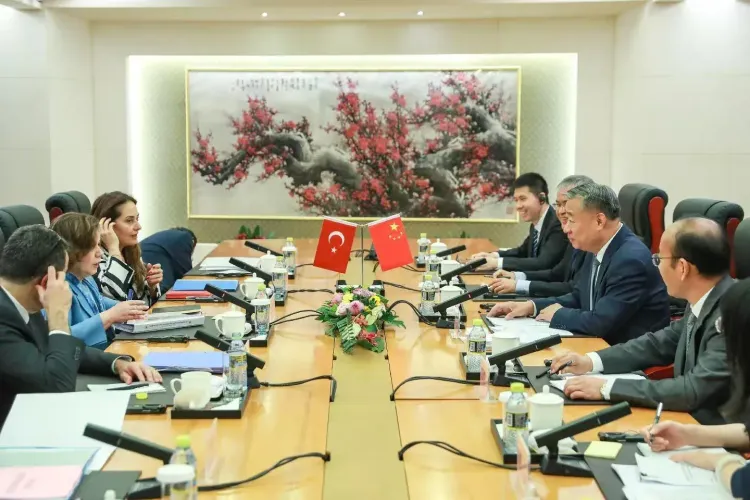
Chinese Vice Foreign Minister Miao Deyu and Turkish Deputy Foreign Minister Berris Ekinci discussed deeper 'law enforcement and security' cooperation.
Turkey reaffirmed the 'one-China principle' and pledged its territory would not be used against Chinese sovereignty claims.
ETGE Foreign Minister Salih Hudayar alleged Turkey has helped Beijing monitor, infiltrate, and suppress East Turkistan's independence movement for nearly three decades .
The ETGE called on the international community to condemn Ankara's role and support East Turkistan's right to national self-determination.
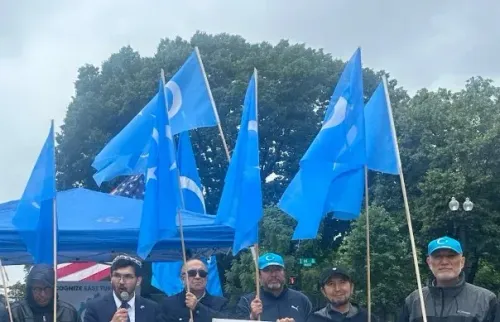
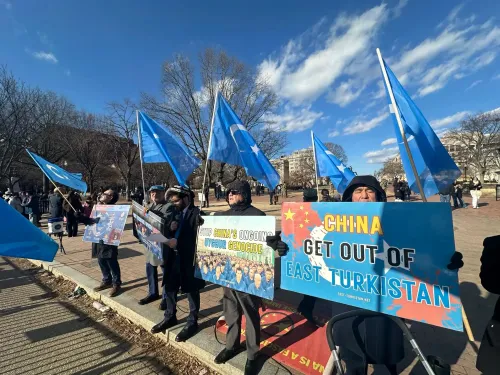
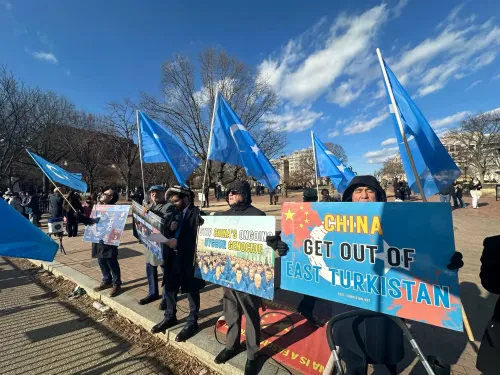
The East Turkistan Government-in-Exile (ETGE), based in Washington, on 18 July sharply condemned recent diplomatic engagement between China and Turkey, alleging that deepening bilateral cooperation emboldens Beijing to intensify what it describes as a 'colonial occupation' and 'genocide' against Uyghur and other Turkic peoples in the Xinjiang Uyghur Autonomous Region, which the ETGE refers to as East Turkistan. The condemnation followed political consultations held on 16 July between Chinese Vice Foreign Minister Miao Deyu and Turkish Deputy Foreign Minister Berris Ekinci in Beijing.
What the China-Turkey Talks Covered
According to the Chinese Foreign Ministry, the 16 July consultations saw Beijing call for deeper 'law enforcement and security' cooperation with Ankara. Turkey, for its part, reaffirmed the 'one-China principle' and pledged not to allow Turkish territory to be used against China's claimed 'sovereignty, security and territorial integrity.' The talks represent a continuation of a security-focused diplomatic track between the two countries that critics say comes at the expense of the Uyghur diaspora.
ETGE's Allegations Against Ankara
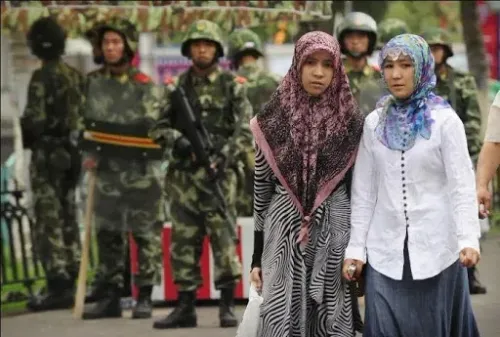
The ETGE characterised Ankara's position as a 'grotesque inversion of the truth', insisting that Xinjiang is 'an occupied country.' In a strongly worded statement, the exiled authority said: 'This is the latest chapter in a decades-long betrayal of the Uyghur, Kazakh, Kyrgyz, and other Turkic peoples suffering under China's genocide and colonial occupation of East Turkistan.'
The ETGE further alleged that 'for nearly three decades, Turkey has helped Beijing monitor, infiltrate, co-opt, criminalise, and suppress East Turkistan's national independence movement,' calling such collaboration 'not diplomacy' but 'complicity.'
ETGE Foreign Minister's Direct Appeal to Turkey
ETGE Foreign Minister Salih Hudayar recalled a prior meeting with Turkish Deputy Foreign Minister Levent Gumrukçu, during which he had urged Turkey to be 'a voice for East Turkistan' and take a stand against what he described as China's ongoing colonial occupation and genocide. 'Instead, Ankara continues deepening cooperation with a genocidal empire bent on eradicating Turkic culture, identity, and existence in East Turkistan,' Hudayar said.
The ETGE alleged that Turkey's cooperation with Beijing effectively makes Ankara a proxy for 'transnational repression,' allowing China to 'co-opt diaspora organisations, coerce East Turkistani refugees, and suppress East Turkistan's national independence movement globally.'
International Community Called to Act
The ETGE urged the international community to formally condemn what it termed Ankara's complicity, take concrete steps to end the 'ongoing genocide,' and support 'East Turkistan's decolonisation and restoration of national independence' under the principle of national self-determination. The statement comes as scrutiny over China's policies in Xinjiang — and the responses of Muslim-majority nations — continues to intensify in international human rights forums. How Turkey navigates its ties with both Beijing and Uyghur diaspora communities will remain a closely watched fault line in global diplomacy.
Point of View
According to the ETGE, spent three decades facilitating Beijing's surveillance and suppression of Uyghurs. The 16 July consultations are not an aberration — they reflect Ankara's calculated prioritisation of economic and geopolitical ties with China over ethnic and religious solidarity with Xinjiang's Turkic Muslims. What makes this moment significant is the ETGE's explicit framing of Turkey not merely as a bystander but as an active enabler of transnational repression. That charge, if substantiated, has implications for how the international community assesses Ankara's human rights commitments — and whether Muslim-majority nations will ever apply meaningful pressure on Beijing over Xinjiang.
NationPress
16 Oct 2026
Frequently Asked Questions
What did the China-Turkey talks on 16 July involve?
Chinese Vice Foreign Minister Miao Deyu and Turkish Deputy Foreign Minister Berris Ekinci met in Beijing on 16 July for political consultations. According to the Chinese Foreign Ministry, Beijing sought deeper law enforcement and security cooperation, while Turkey reaffirmed the one-China principle and pledged not to allow its territory to be used against Chinese sovereignty claims.
Why did the East Turkistan Government-in-Exile condemn the talks?
The ETGE alleged that Turkey's cooperation with China emboldens Beijing to intensify its colonial occupation and genocide against Uyghur, Kazakh, Kyrgyz, and other Turkic peoples in Xinjiang. The exiled authority described Ankara's stance as 'complicity' rather than diplomacy, citing nearly three decades of alleged collaboration in monitoring and suppressing the East Turkistan independence movement.
Who is Salih Hudayar and what did he say?
Salih Hudayar is the Foreign Minister of the East Turkistan Government-in-Exile. He recalled urging Turkish Deputy Foreign Minister Levent Gumrukçu to be 'a voice for East Turkistan,' but said Ankara instead chose to deepen ties with what he called 'a genocidal empire bent on eradicating Turkic culture, identity, and existence.'
What is the East Turkistan Government-in-Exile?
The East Turkistan Government-in-Exile (ETGE) is a Washington-based body that claims to represent the political aspirations of Uyghur and other Turkic peoples in the Xinjiang Uyghur Autonomous Region, which it refers to as East Turkistan. It advocates for the region's independence and has consistently alleged that China is committing genocide there — a charge Beijing denies.
What action is the ETGE calling for internationally?
The ETGE has urged the international community to formally condemn Turkey's alleged complicity in Beijing's transnational repression, take concrete steps to end what it describes as China's ongoing genocide in Xinjiang, and support East Turkistan's right to national self-determination and independence.