East Turkistan Leaders Slam China’s Ethnic Unity Law, Urge Global Action Against Colonial Oppression
Synopsis
The East Turkistan Government in Exile has condemned China's new law as a tool for ethnic suppression and colonialism. They urge the international community to take a stand against these oppressive measures.
Key Takeaways
ETGE condemns China's ethnic unity law.
Law seen as a means of cultural and ethnic suppression.
Mandarin Chinese is prioritized over minority languages.
International action is urged to counter these oppressive measures.
Call for accountability for genocide and human rights violations.
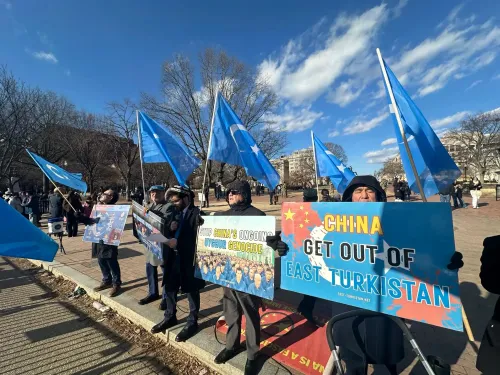
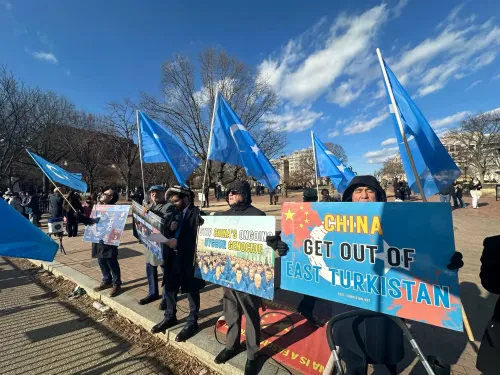
Washington, March 14 (NationPress) The East Turkistan Government in Exile (ETGE) has firmly denounced China's recently enacted "Law on Promoting Ethnic Unity and Progress". The ETGE has called for immediate global action against what it perceives as the larger framework of Chinese imperialism and colonial oppression.
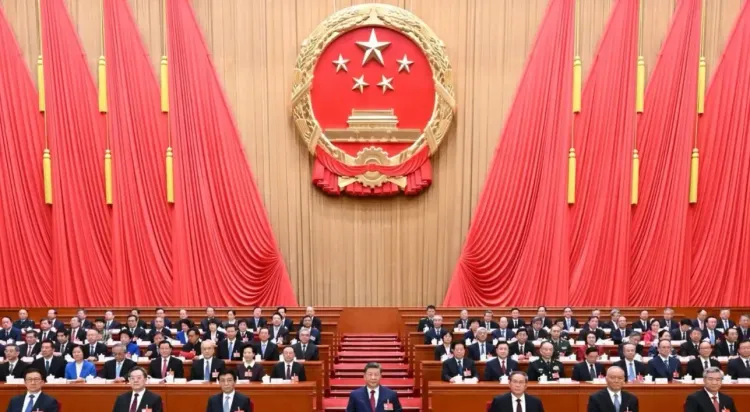
As reported by the ETGE, the law, passed by China's National People's Congress on March 12, is ostensibly aimed at fostering "ethnic unity". However, it establishes a legal structure intended to forcibly impose Han Chinese identity, language, and culture upon non-Chinese communities, fundamentally violating international standards against racial discrimination.
These oppressive measures are described as quintessential examples of "imperialism, fascism, and racism" that codify systematic genocide and colonial oppression under the pretense of "ethnic unity".
“The legislation mandates the proliferation of Mandarin Chinese throughout education, media, and public life, while actively suppressing the use of Uyghur, Tibetan, and Mongolian languages. It enforces policies of forced assimilation, Chinese settler colonialism, and demographic manipulation, which include organized population transfers, state-directed settlement initiatives, and government-imposed inter-ethnic marriages, all aimed at undermining and extinguishing non-Chinese communities in their ancestral lands,” stated the ETGE.
The exiled government claims that these laws align with the definition of genocide as outlined in the Convention on the Prevention and Punishment of the Crime of Genocide.
In condemning the new legislation, the ETGE pointed out that actions labeled as potentially "damaging to ethnic unity" are criminalized under broadly defined legal provisions, exposing peaceful expressions of ethnic and cultural identity, belief systems, religious practices, and cultural preservation of non-Han peoples to harsh penalties.
“Religious entities are coerced into complying with the Chinese Communist Party’s policies of Sinicisation, which place faith, worship, and religious life under direct government oversight, systematically diminishing the freedom of belief for Muslim, Buddhist, and other communities,” the exiled group added.
The ETGE asserts that the new law also extends Beijing’s reach of transnational repression by claiming authority over actions conducted outside China that purportedly threaten "ethnic unity", thereby creating an additional avenue to intimidate diaspora communities, activists, scholars, and journalists who highlight Beijing’s colonial and genocidal practices abroad.
“This legislation serves as a weaponized framework designed to obliterate non-Chinese peoples. The inhabitants of East Turkistan, Tibet, and Southern Mongolia are confronted with systematic annihilation of their identity, language, faith, and very existence. The global community must not remain passive while colonialism and genocide are enshrined in law,” remarked Salih Hudayar, the ETGE's Minister of Foreign Affairs and Security.
Leaders of the exiled Turkistan government have urged the international community to enact targeted sanctions against Chinese officials accountable for these "systematic policies of racism, colonialism, and genocide", while simultaneously resisting Beijing’s transnational repression.
They further called upon global stakeholders to ensure accountability for "genocide and crimes against humanity", uphold the right to national self-determination, and advocate for the "complete decolonization and restoration of independence for colonized peoples" in accordance with United Nations principles.
Point of View
The situation highlights ongoing concerns regarding human rights and ethnic repression in China, emphasizing the need for international scrutiny and intervention.
NationPress
22 Sept 2026
Frequently Asked Questions
What is the Law on Promoting Ethnic Unity and Progress?
It is a law passed by China's National People's Congress aimed at enforcing Han Chinese identity and culture over non-Chinese ethnic groups.
What are the consequences of this law?
The law criminalizes actions perceived to undermine ethnic unity, potentially penalizing peaceful expressions of ethnic and cultural identity.
How does this law affect language use?
It mandates the promotion of Mandarin while suppressing languages like Uyghur, Tibetan, and Mongolian.
What is the ETGE's stance on this legislation?
The ETGE views the law as a tool for systemic genocide and colonial oppression against non-Chinese peoples.
What actions does the ETGE want from the international community?
They are calling for targeted sanctions against Chinese officials and accountability for genocide and crimes against humanity.