Giriraj Singh Bets on AI to Modernise Handloom by 2030
Synopsis
On National Handloom Day 2026, Union Textiles Minister Giriraj Singh declared that AI-driven loom efficiency, instant defect detection, and real-time monitoring are underway, with a goal to connect most of India's weavers to modern technology by 2030–31.
Key Takeaways
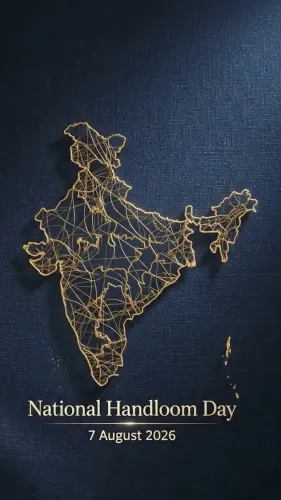
Union Textiles Minister Giriraj Singh announced an AI and automation push for India's handloom sector on National Handloom Day, 7 August 2026 .
The government aims to use AI for loom efficiency gains, real-time defect detection, and live production monitoring .
The stated target is to connect the majority of India's weavers to modern technology by 2030–31 .
National Handloom Day commemorates the Swadeshi Movement of 1905 and has been observed every 7 August since 2015.
The Digital India programme, launched in 2015, provides the broader policy framework for integrating technology into traditional industries including handlooms.
Specific AI pilot projects and rollout mechanisms for handloom clusters have not yet been publicly detailed .
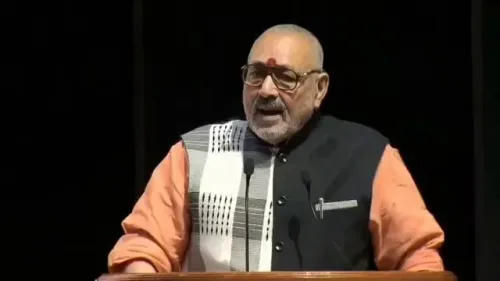
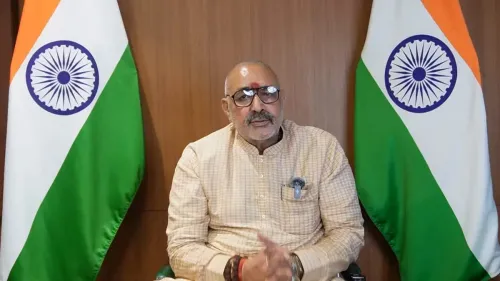
India's 4.35 million handloom weavers — the world's largest such workforce — could soon have artificial intelligence watching over every thread. On National Handloom Day, 7 August 2026, Union Textiles Minister Giriraj Singh announced that the government is taking significant steps to deploy AI and automation across the handloom sector, targeting near-universal technology adoption for weavers by 2030–31.
In his post, Singh outlined a three-pronged technology push: boosting loom efficiency through AI and automation, enabling instant defect detection in weaving, and rolling out real-time monitoring of production. 'हमारा लक्ष्य वर्ष 2030-31 तक अधिकतर बुनकरों को आधुनिक तकनीक से जोड़कर हथकरघा क्षेत्र को अधिक सक्षम, सस्टेनेबल और वैश्विक प्रतिस्पर्धा के लिए तैयार करना है,' he wrote — 'Our goal is to connect most weavers with modern technology by 2030–31 and make the handloom sector more capable, sustainable, and ready for global competition.'
What AI on the Loom Actually Means
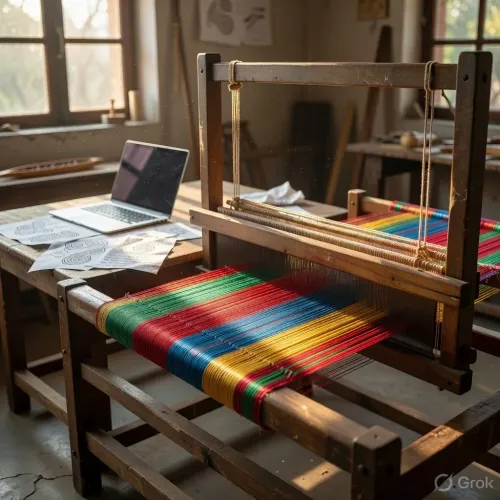
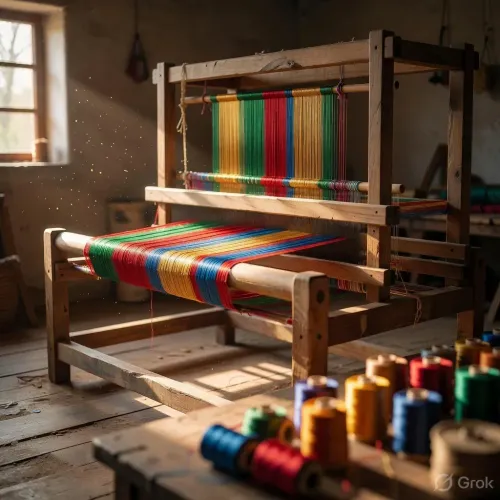
The practical promise here is significant. Defect detection — historically a slow, manual, post-production check — could, through computer-vision tools, flag errors mid-weave and cut waste. Real-time monitoring would give clusters, cooperatives, and ministry officials a live view of output, enabling faster market linkage and quality control. These are not futuristic concepts; they are already deployed in organised textile mills. The ambition is to bring them to cottage-scale handlooms.
National Handloom Day and the Swadeshi Thread Running Through It
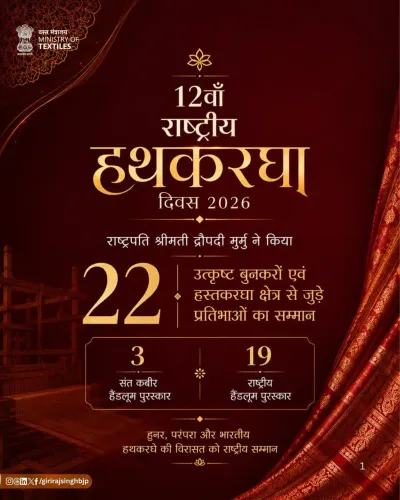
National Handloom Day is observed every 7 August to commemorate the Swadeshi Movement of 1905, when the boycott of foreign cloth galvanised Indian weavers. The day was formally instituted in 2015 — the same year the Digital India programme was launched — making the combination of handloom heritage and digital ambition a recurring government motif. The Ministry of Textiles has, over successive administrations, paired handloom development schemes with technology inputs to raise productivity and export competitiveness, though the scale of AI integration Singh is now describing would mark a step-change from earlier interventions.
The 2030–31 Target: Ambition Meets Execution
The 2030–31 deadline gives the ministry roughly four years to connect the majority of India's weavers — spread across clusters in Varanasi, Assam, Andhra Pradesh, West Bengal and dozens of other states — to digital infrastructure. Connectivity gaps, digital literacy, and the fragmented, home-based nature of handloom work remain the hard variables. Specific pilot projects and rollout mechanisms for AI tools in handloom clusters have not yet been publicly detailed; the watch now is on whether concrete scheme notifications follow this policy direction.
The loom is one of India's oldest machines. Whether it becomes one of its smartest by the end of the decade is the question Singh has now put on the table.
Point of View
Close enough to sound urgent. The deeper test is whether this translates into funded, cluster-level pilots or remains aspirational positioning; successive governments have announced handloom technology initiatives with uneven follow-through. If AI defect detection and real-time monitoring do reach cottage weavers at scale, it would represent a genuine structural shift in how India's handloom sector competes globally — but the connectivity and digital-literacy gaps are formidable, and the minister's post leaves the implementation architecture entirely unspecified.
NationPress
22 Sept 2026
Frequently Asked Questions
What did Giriraj Singh announce on National Handloom Day 2026?
Union Textiles Minister Giriraj Singh announced that the government is deploying AI and automation to improve loom efficiency, detect weaving defects in real time, and enable live production monitoring, with a goal to connect most Indian weavers to modern technology by 2030–31.
Why is National Handloom Day celebrated on 7 August?
National Handloom Day is observed on 7 August to commemorate the Swadeshi Movement launched on that date in 1905, which called for the boycott of foreign cloth and the promotion of Indian handloom. It has been formally observed since 2015.
How will AI help Indian handloom weavers?
According to the Ministry of Textiles, AI tools are being used to boost loom productivity through automation, detect defects mid-weave using computer vision, and provide real-time monitoring of production — reducing waste and improving quality control.
What is the government's handloom technology target for 2030–31?
The Ministry of Textiles has set a goal to connect the majority of India's handloom weavers to modern technology, including AI-driven tools, by the financial year 2030–31.
What is the Digital India connection to handloom modernisation?
Digital India, launched in July 2015, is the national programme promoting digital infrastructure across sectors. The Ministry of Textiles has used it as a policy framework to introduce technology inputs — including digital payments and now AI tools — into traditional handloom clusters.