Giriraj Singh Pushes AI Integration for Assam Handloom Sector
Synopsis
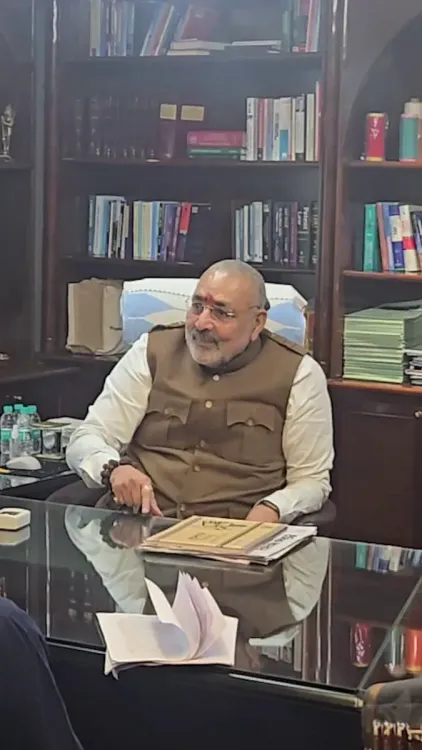
Union Textiles Minister Giriraj Singh convened a high-level meeting with Assam weavers, NHDC, IIT Delhi faculty, and Weaver Service Centres on 14 August 2026 to explore AI-driven design tools and mechanical upgradation for Sivasagar's Maina Automatic Handloom.
Key Takeaways
Union Textiles Minister Giriraj Singh met an Assam weavers' delegation on 14 August 2026 to discuss handloom modernisation.
The Maina Automatic Handloom from Sivasagar, Assam — its speed and technical features — was the focal point of discussions.
The meeting included the MD of NHDC , the Development Commissioner for Handlooms , an IIT Delhi professor , and Weaver Service Centre representatives.
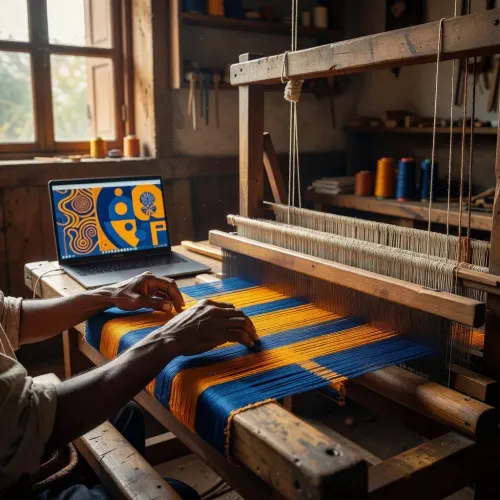
AI integration to generate and deliver better handloom designs faster was a key agenda item alongside mechanical upgradation.
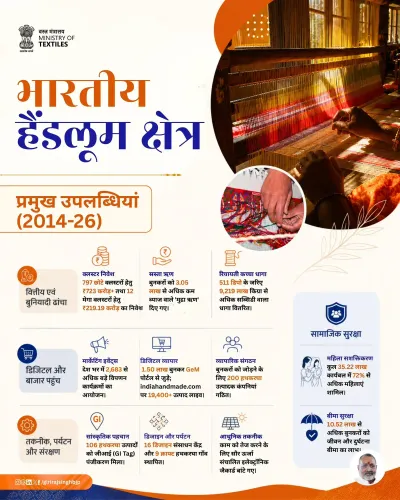
The push builds on the National Handloom Development Programme (NHDP) launched in 2015 , which provides technology upgradation and design innovation support to weavers.
Possible pilot projects and budget allocations for AI-enabled handloom machinery are expected to be watched in the next financial year.
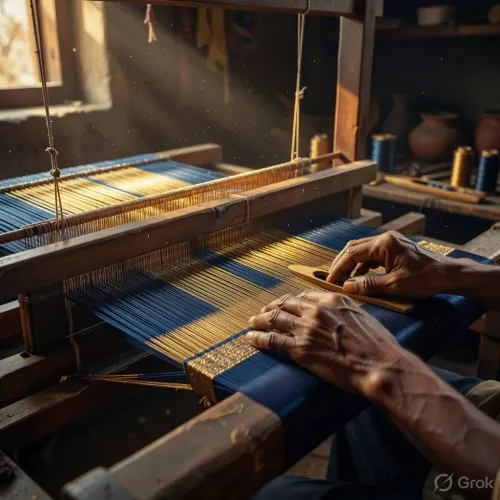
India's handloom heartland is getting a technology intervention. Union Textiles Minister Giriraj Singh met a delegation of weavers from Assam on 14 August 2026 to discuss accelerating the modernisation of the state's storied handloom industry, with artificial intelligence and mechanical upgradation at the centre of the conversation.
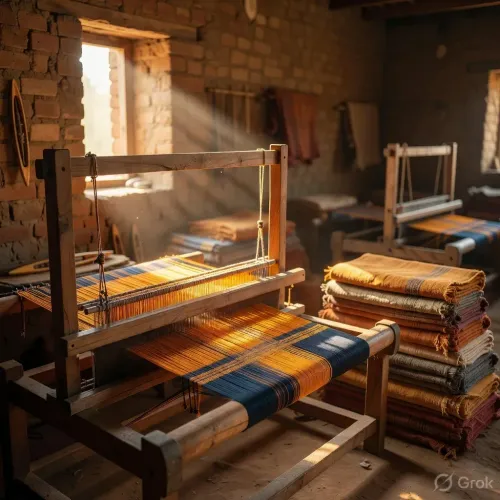
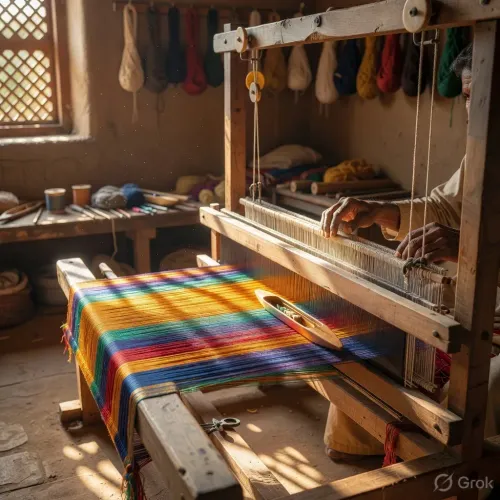
The meeting focused on the Maina Automatic Handloom from Sivasagar, a district in Assam with a centuries-old weaving tradition. Discussions centred on its weaving speed and technical characteristics — and on how far those capabilities can still be pushed. Alongside the minister, the room included the Managing Director of the National Handloom Development Corporation (NHDC), the Development Commissioner for Handlooms, a professor from IIT Delhi, and representatives from Weaver Service Centres (WSCs) — a rare convergence of policy, academia, and on-the-ground craft expertise.
AI Meets the Loom: What the Sivasagar Talks Covered
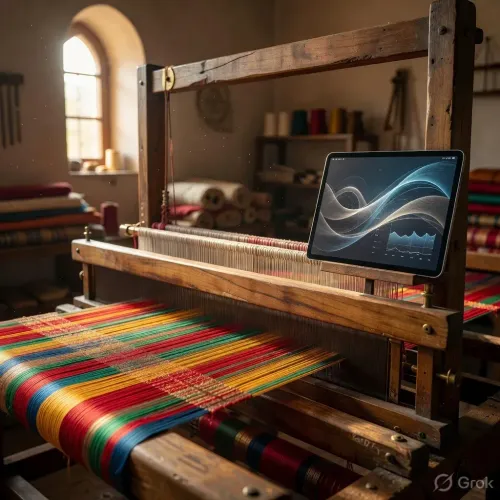
The core agenda was two-pronged: technical and mechanical upgradation of handloom designs, and the integration of AI tools to generate and deliver better designs faster. The minister, in his post, described deliberations on 'AI integration ke madhyam se behtar design ko adhik teji se taiyar aur deliver karne ke upay' — 'measures to prepare and deliver better designs more quickly through AI integration.'
This is not a new ambition for the sector. Successive governments have pushed technology into handloom clusters, from CAD-based design tools to jacquard system adaptations. But the explicit invocation of AI signals a sharper edge to the current push — one that aligns with the broader national agenda of embedding emerging technologies across traditional industries.
Why Sivasagar, Why Now
Sivasagar is not an incidental choice. The district is synonymous with Assam's Muga silk and fine cotton weaving, products that carry both cultural weight and export potential. The National Handloom Development Programme (NHDP), launched in 2015, laid the policy groundwork for exactly this kind of technology-and-design intervention at the cluster level. What is evolving now is the sophistication of the tools being brought to bear.
IIT Delhi's presence in the room is telling. The institute has previously contributed to design and technology projects in textiles, and its involvement suggests the ministry is looking for engineered, scalable solutions — not one-off workshops. Weaver Service Centres, which provide training and design support at the grassroots level, would be the delivery pipeline for whatever emerges.
The Northeast's handloom sector has long been a priority for central textile policy, both for its economic significance to weaver communities and for its role in preserving regional craft identities. Getting AI-assisted design tools into the hands of Assam's weavers — without eroding the artisanal character that makes the product valuable — is the needle this initiative must thread.
Watch for pilot project announcements and possible budget allocations for AI-enabled handloom machinery in the next financial year. The real test is whether the Sivasagar model scales.
Point of View
Replicable solutions, not one-off training camps. For the Northeast, where handloom is both livelihood and identity, the political calculus is equally clear — modernisation that preserves artisanal character can be a durable electoral and diplomatic asset. The real measure will be whether pilot outcomes translate into revised cluster development guidelines and sustained budget lines.
NationPress
29 Sept 2026
Frequently Asked Questions
What is the Maina Automatic Handloom from Sivasagar?
The Maina Automatic Handloom is a handloom machine associated with Sivasagar district in Assam, noted for its weaving speed and technical features. It was the central subject of Union Textiles Minister Giriraj Singh's meeting with Assam weavers on 14 August 2026, though specific technical specifications have not been officially published.
Why is IIT Delhi involved in handloom development?
IIT Delhi faculty have contributed to design and technology projects in the textiles and handloom sector, including work on CAD-based tools and loom adaptations. The institute's involvement in the August 2026 meeting suggests the ministry is seeking engineered, scalable solutions for AI-assisted design in traditional weaving clusters.
What is the National Handloom Development Programme?
The National Handloom Development Programme (NHDP) was launched in 2015 by the central government to provide technology upgradation, design innovation, and market linkages to handloom weavers across India, with a particular focus on clusters in states like Assam.
What role do Weaver Service Centres play in handloom modernisation?
Weaver Service Centres (WSCs), under the Development Commissioner for Handlooms, provide technical training, design support, and upgradation assistance directly to weaver communities. They are the primary ground-level delivery channel for government-backed technology and design interventions.
How is AI being used in India's handloom sector?
The government is exploring AI integration to help weavers generate better designs faster and deliver them more efficiently. The 14 August 2026 meeting in New Delhi discussed specific measures for AI-driven design tools in the context of Assam's handloom clusters, building on earlier CAD and jacquard system adaptations.